
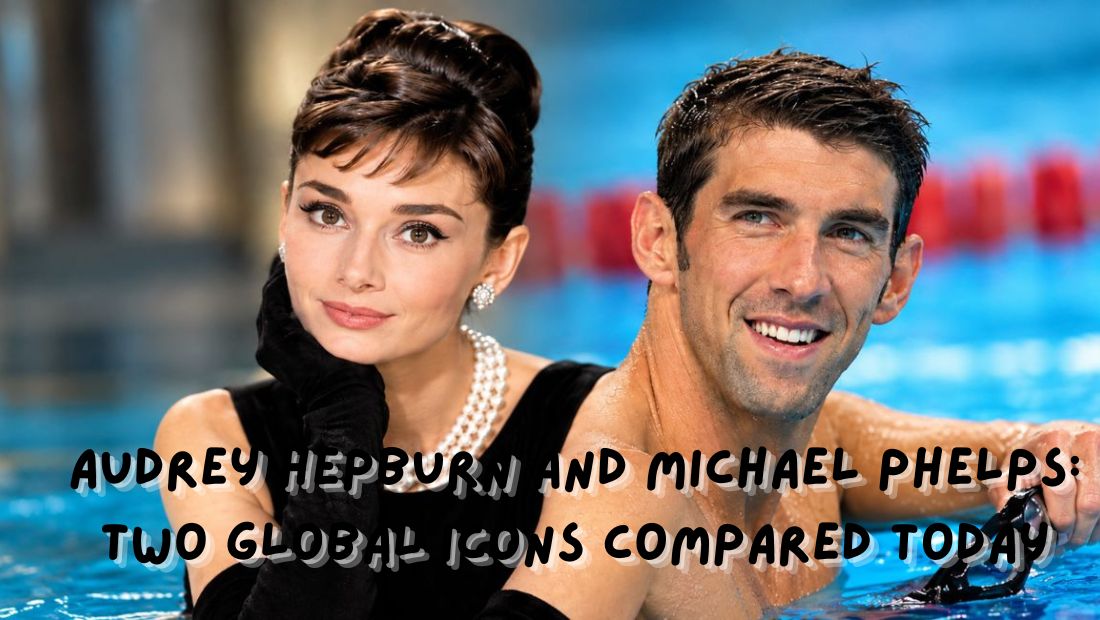
Audrey Hepburn and Michael Phelps represent two extraordinary figures who dominated their respective fields across different generations. Though born 56 years apart and never crossing paths, both achieved legendary status that transcends their original careers. Their stories continue inspiring millions worldwide, making them timeless cultural touchstones.
These remarkable individuals built empires through discipline, excellence, and unwavering commitment to their crafts. Today, understanding their parallel journeys reveals why certain people achieve such monumental impact. Their legacies extend far beyond Hollywood and Olympic pools into humanitarian work and mental health advocacy.
Who Were Audrey Hepburn and Michael Phelps?
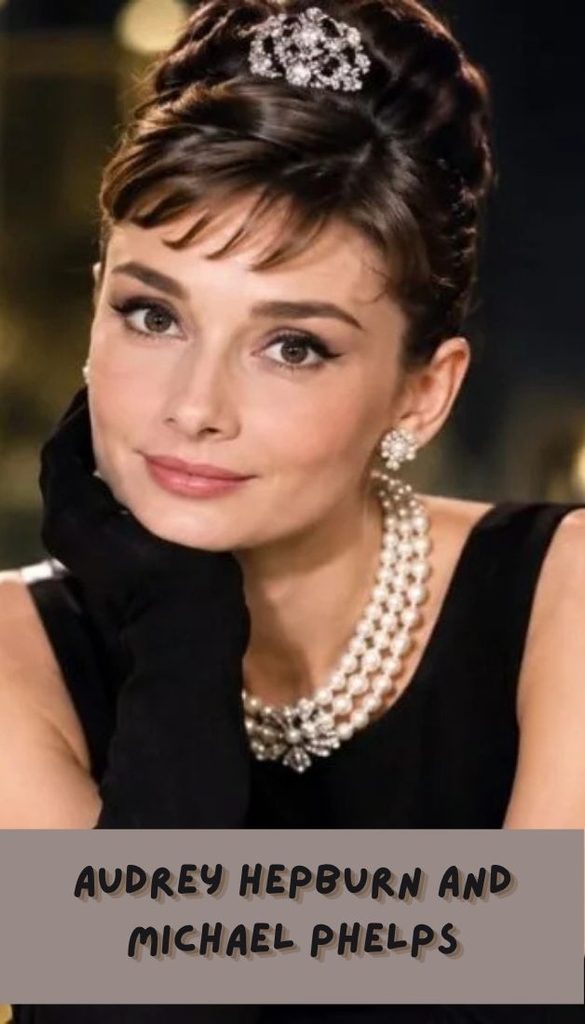
Audrey Hepburn was a British actress and humanitarian who revolutionized classic Hollywood cinema during the 1950s and 1960s. Her elegant screen presence combined with later humanitarian efforts transformed her into a cultural symbol that outlasted her film career by decades. Beyond acting, she became a UNICEF Goodwill Ambassador, dedicating years to children’s welfare globally.
Michael Phelps earned recognition as the greatest Olympian in history, winning an unprecedented 28 Olympic medals across five Games. His competitive swimming career spanned from 2000 to 2016, setting records that remain untouched today. Currently, he advocates for mental health awareness, using his platform to destigmatize depression and anxiety among athletes.
Audrey Hepburn and Michael Phelps Quick Bio Table
| Detail | Audrey Hepburn | Michael Phelps |
| Full Name | Audrey Kathleen Hepburn-Ruston | Michael Fred Phelps II |
| Born | May 4, 1929 | June 30, 1985 |
| Birthplace | Ixelles, Brussels, Belgium | Baltimore, Maryland, USA |
| Occupation | Actress and Humanitarian | Competitive Swimmer |
| Known For | Roman Holiday, Breakfast at Tiffany’s, My Fair Lady | 28 Olympic Medals, 23 Gold |
| Major Honor | Academy Award for Best Actress | Most Decorated Olympian |
| Humanitarian Role | UNICEF Goodwill Ambassador | Mental Health Advocacy Foundation |
| Status | Died January 20, 1993 | Retired from Competition |
Audrey Hepburn: Early Life and Background
Audrey Hepburn was born into Belgian-Dutch nobility on May 4, 1929, in Ixelles, Brussels. Her father worked as a banker while her mother descended from Dutch aristocracy, providing her multicultural European upbringing. This privileged background exposed her to refined culture, languages, and humanitarian values early in life.
Her formative years included living in the Netherlands during World War II, an experience profoundly shaping her compassion for suffering. Before pursuing acting, Audrey Hepburn trained seriously as a ballet dancer, developing the physical discipline and elegance that critics later praised. This rigorous ballet foundation gave her posture and grace that would define her cinematic presence forever.
How Did Audrey Hepburn Become Famous?
Audrey Hepburn’s breakthrough came with Roman Holiday in 1953, opposite Gregory Peck. This remarkable performance earned her the Academy Award for Best Actress, instantly catapulting her to stardom at just 24 years old. The film’s success opened doors to Hollywood’s most prestigious roles and leading-man partnerships.
She followed this triumph with iconic films including Sabrina, Funny Face, War and Peace, Breakfast at Tiffany’s, and My Fair Lady. Each role reinforced her reputation for delivering graceful, understated performances that resonated with audiences. By the late 1960s, she deliberately scaled back acting, prioritizing family life and humanitarian causes over blockbuster productions.
Audrey Hepburn’s Family and Personal Life
Audrey Hepburn married twice during her lifetime, first to actor Mel Ferrer, with whom she had son Sean Hepburn Ferrer. Later, she married Italian psychiatrist Andrea Dotti, welcoming son Luca Dotti into her family. Both marriages reflected her commitment to building meaningful relationships beyond the entertainment industry.
In her later years, she formed a lasting partnership with actor Robert Wolders, who remained devoted to her until her death. Family life became increasingly central to her identity as she deliberately stepped back from full-time filmmaking. Her wartime childhood experiences directly influenced her later dedication to protecting children globally through humanitarian work.
What Did Audrey Hepburn Do for UNICEF?
Audrey Hepburn became a UNICEF Goodwill Ambassador in 1988, using her global recognition to spotlight children affected by poverty, war, and disease. Unlike merely ceremonial roles, she traveled extensively across continents, visiting programs firsthand to understand relief efforts. This active engagement distinguished her from other celebrity ambassadors who maintained distant associations.
She visited more than a dozen countries including Ethiopia, Bangladesh, Vietnam, and Sudan, witnessing children’s welfare challenges directly. Her field visits enabled authentic advocacy work, as she reported back to international audiences about real conditions. Continuing this work until shortly before her death, Audrey Hepburn remained actively fundraising and speaking publicly about children’s urgent needs.
How Did Audrey Hepburn Die?
Audrey Hepburn passed away on January 20, 1993, at her home in Tolochenaz, Switzerland, following a battle with cancer. She was 63 years old, leaving behind an unparalleled legacy spanning decades. Even during her final months, she remained involved in UNICEF work, demonstrating unwavering commitment to her humanitarian mission.
Her lasting legacy rests upon three significant pillars: her classic film achievements, her profound influence on global fashion standards, and her exceptional humanitarian record. UNICEF continues highlighting her dedication in tributes and remembrances today. Her impact on cinema, style, and charitable work ensures her memory remains vibrant across generations worldwide.
Michael Phelps: Early Life and Background
Michael Phelps was born on June 30, 1985, in Baltimore, Maryland, where he discovered his passion for swimming early. He started swimming at age seven, partly to channel excess energy and partly because his older sisters Whitney and Hilary competed competitively. Both sisters influenced his entry into the sport, providing early guidance and family support.
His exceptional talent became obvious during his mid-teens when he trained at elite levels under legendary coach Bob Bowman at the North Baltimore Aquatic Club. At just 15 years old, Michael Phelps qualified for the 2000 Sydney Olympics, becoming the youngest American male swimmer to achieve this distinction in decades. This early qualification foreshadowed his unprecedented rise to dominance.
How Did Michael Phelps Become the Greatest Olympian Ever?
Michael Phelps transformed raw talent into the most decorated Olympic career through relentless training and unusual versatility across swimming strokes. His breakthrough came at the 2004 Athens Olympics, where he won six gold medals and two bronze, establishing himself as a force. Four years later in Beijing 2008, he set the remarkable record of winning eight gold medals at a single Olympics.
He continued adding medals at London 2012 before closing his career at Rio 2016, accumulating an astounding 28 Olympic medals total, with 23 gold, 3 silver, and 2 bronze. No other athlete has approached this extraordinary achievement across five Olympic Games. His competitive excellence and ability to excel across multiple events distinguished him as the greatest Olympian in history.
Michael Phelps’s Family Life
Michael Phelps grew up with his mother Debbie, an educator, and his two older sisters Whitney and Hilary, both swimmers. His family environment fostered athletic achievement and mutual support, with siblings encouraging his swimming pursuits. These formative relationships shaped his character and dedication to excellence throughout his career.
He married Nicole Johnson in 2016, and the couple now has four sons together. Since retiring from competitive swimming, Michael Phelps has deliberately kept his family life away from public scrutiny. Today, fatherhood represents a major part of his identity and personal fulfillment beyond his athletic accomplishments.
Why Is Michael Phelps a Mental Health Advocate?
Michael Phelps has spoken openly about struggling with depression and anxiety, including a critical period after the 2012 Olympics when he contemplated stepping away entirely. Beyond this struggle, he was diagnosed with ADHD as a child, an experience he discusses publicly. His willingness to share these vulnerabilities transformed how athletes view mental health advocacy.
He frequently emphasizes that seeking professional therapy and support is a sign of strength, not weakness, challenging harmful stereotypes. Through his Michael Phelps Foundation, he continues promoting athlete mental health awareness and accessible psychological support. This advocacy now sits alongside his athletic record as equally defining parts of his lasting legacy.
How Much Is Michael Phelps Worth?
Michael Phelps possesses an estimated net worth ranging from $80 million to $120 million, with most sources citing approximately $100 million as the most accurate 2026 figure. No official financial statement confirms exact amounts, but various credible sources consistently estimate within this range. His substantial wealth accumulation reflects decades of strategic business decisions beyond Olympic competition.
His income sources derive primarily from endorsements, sponsorships, and business ventures rather than Olympic prize money, since swimming provides modest competition earnings. Major brand partnerships, long-term endorsement deals, speaking engagements, and foundation activities generate substantial ongoing revenue. This diversified wealth building strategy demonstrates his business acumen extending far beyond his swimming pool achievements.
Are Audrey Hepburn and Michael Phelps Related or Did They Ever Meet?
No documented family connection exists between Audrey Hepburn and Michael Phelps, despite their iconic status in popular culture. Audrey Hepburn died in 1993 when Michael Phelps was only eight years old, making any meeting between them impossible. Their lives unfolded in entirely separate worlds, with different professional domains and generational contexts.
The pairing of these two figures emerges from public curiosity about comparing two record-setting careers rather than documented historical connection. Their comparison reflects widespread interest in understanding how exceptional people achieve dominance across different fields. Media and audiences naturally gravitate toward comparing legendary figures, regardless of their actual historical intersection or relationships.
Audrey Hepburn and Michael Phelps: What Do They Actually Have in Common?
Despite their vastly different fields, Audrey Hepburn and Michael Phelps share several notable qualities that explain their enduring significance. Both achieved instant global recognition that transcends national boundaries and generational divides today. Their names remain immediately recognizable across continents and age groups, signaling their exceptional cultural penetration.
Both pursued elite-level discipline before achieving fame, with Audrey Hepburn training rigorously in ballet before acting professionally. Similarly, Michael Phelps followed demanding swimming schedules from childhood through his entire career. Additionally, both leveraged their platforms for causes beyond their original careers, with Audrey Hepburn’s UNICEF humanitarian work and Michael Phelps’ mental health advocacy extending their influence globally.
Audrey Hepburn vs. Michael Phelps: Achievements, Legacy, and Influence Compared
| Category | Audrey Hepburn | Michael Phelps |
| Field | Acting and Humanitarian Work | Competitive Swimming |
| Peak Years | 1950s to 1960s | 2000s to 2010s |
| Signature Achievement | Academy Award for Roman Holiday | 28 Olympic Medals |
| Humanitarian Role | UNICEF Goodwill Ambassador | Mental Health Advocacy |
| Cultural Footprint | Film, Fashion, Humanitarian Work | Olympic Sport, Athlete Wellbeing |
| Legacy Type | Cinema and Compassion | Excellence and Openness |
Frequently Asked Questions
Are Audrey Hepburn and Michael Phelps related?
No, Audrey Hepburn and Michael Phelps share no documented family connection whatsoever. They were born 56 years apart in completely different countries. No genealogical or historical records indicate any relationship between these two legendary figures.
Why are Audrey Hepburn and Michael Phelps mentioned together?
These figures are grouped together for comparison purposes primarily. Both achieved extraordinary global recognition across different fields. Their shared status as iconic achievers makes them natural subjects for contrasting how excellence manifests across different industries and generations worldwide.
What was Audrey Hepburn most famous for?
Audrey Hepburn gained fame primarily through films like Roman Holiday, Breakfast at Tiffany’s, and My Fair Lady, where she delivered acclaimed performances. Beyond cinema, she became renowned for her UNICEF humanitarian work and lasting influence on fashion standards globally. These three dimensions defined her complete legacy.
How many Olympic medals did Michael Phelps win?
Michael Phelps won 28 Olympic medals across five Olympic Games, comprising 23 gold, 3 silver, and 2 bronze. This unprecedented achievement remains unmatched by any athlete in Olympic history. His Olympic records and medal count established him definitively as the greatest swimmer ever.
What is the main difference between Audrey Hepburn and Michael Phelps?
Audrey Hepburn’s legacy centers on cinema, fashion influence, and humanitarian compassion work. Conversely, Michael Phelps’ legacy focuses on Olympic dominance and mental health advocacy. Their different fields and causes demonstrate how excellence manifests uniquely across human endeavors worldwide.
Conclusion
Audrey Hepburn and Michael Phelps never crossed paths or shared professional connections, yet both shaped their respective eras profoundly. Their achievements transcended original career fields, extending into humanitarian work and mental health awareness respectively. Both demonstrated that exceptional talent combined with genuine purpose creates lasting global influence beyond initial fame.
What ultimately connects these two icons is the scale and authenticity of their accomplishments. Neither merely achieved professional success; each deliberately used their platforms for broader humanitarian good. Their parallel journeys reveal how different paths through different fields can produce equally significant cultural legacies that inspire generations worldwide today.
