
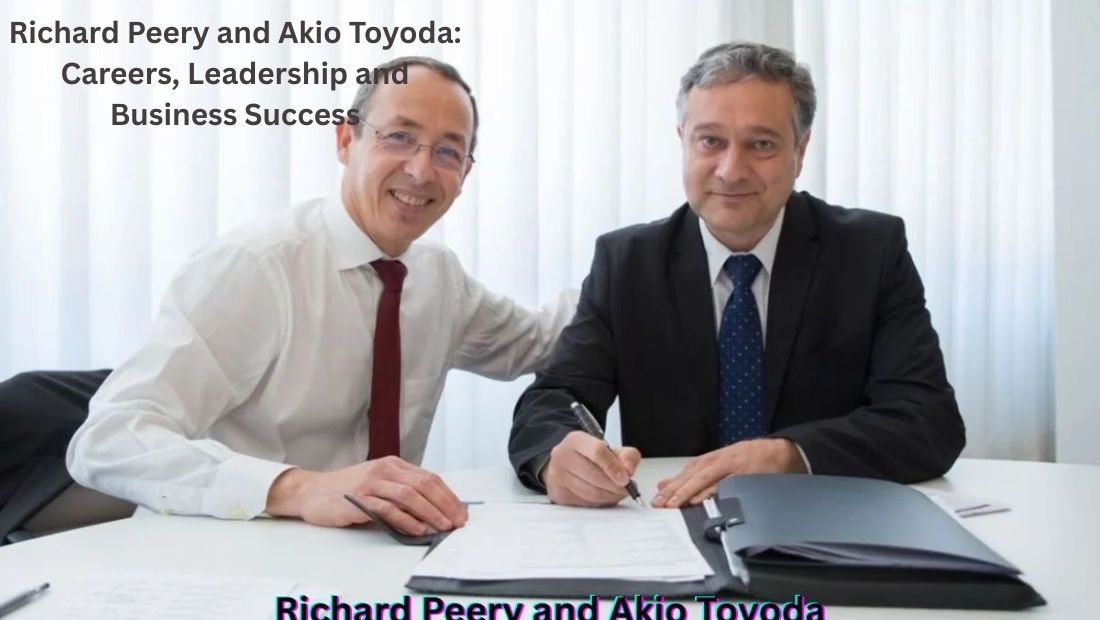
Richard Peery and Akio Toyoda built their careers in very different industries. Peery became known for commercial real estate and Silicon Valley property development, while Toyoda spent decades working in the automotive industry and leading Toyota Motor Corporation.
Their professional journeys did not happen overnight. Peery built his reputation through property investment and development, while Toyoda moved through production, marketing, product development, international operations, and management before becoming Toyota’s president in 2009.
Richard Peery Bio
| Detail | Information |
| Full Name | Richard Peery |
| Profession | Real estate investor and businessman |
| Known For | Silicon Valley commercial real estate |
| Main Industry | Commercial property and real estate investment |
| Business Association | John Arrillaga and Peery-Arrillaga |
| Philanthropic Connection | Peery Foundation |
| Country | United States |
| Notable Focus | Property development, investment, and philanthropy |
| Estimated Wealth | About $3.5 billion, according to Forbes |
| Son | Dave Peery |
Who Is Richard Peery?
Richard Peery is an American real estate investor and businessman known for his role in Silicon Valley’s commercial property market. He became closely associated with John Arrillaga, and their partnership developed during the region’s early technology expansion.
Peery learned about the property business through his family’s portfolio before working with Arrillaga. During the 1960s, the two recognized the potential of land around Silicon Valley and began developing farmland into office properties for growing technology companies.
Peery’s career is notable because he did not build a technology company himself. Instead, he focused on the physical business environment that technology companies needed. His work shows how commercial real estate can grow alongside major economic and technological changes.
Richard Peery and the Growth of Silicon Valley Real Estate
The rapid growth of Silicon Valley created strong demand for office space, research facilities, and corporate campuses. Peery and Arrillaga positioned their Peery-Arrillaga partnership around this demand by acquiring land and developing commercial properties.
Their work contributed to the transformation of parts of the Santa Clara Valley as technology companies expanded. Major companies such as Intel, Apple, Facebook, and Google became associated with office properties developed or leased through the broader Peery-Arrillaga real estate story.
Over several decades, the partnership built a substantial commercial property portfolio. Its strategy focused on developing and leasing buildings rather than competing directly with the technology companies that occupied them.
In 2006, Peery and Arrillaga sold many of their buildings for approximately $1.1 billion. The transaction reflected the value that had been created through decades of property investment and development in Silicon Valley.
Richard Peery’s Business Approach
Peery’s career illustrates the importance of recognizing demand created by a growing industry. As technology companies expanded, they needed offices and corporate facilities, creating opportunities in commercial real estate.
Instead of focusing on technology products, Peery concentrated on land, buildings, tenants, development, and location. This allowed his business to benefit from Silicon Valley’s economic expansion without operating a technology company.
Real estate also requires patience because major developments can take years to mature. Peery’s long partnership with Arrillaga demonstrates the role of long-term thinking, market knowledge, and careful property decisions in building a large portfolio.
His career also highlights how supporting industries can benefit from the success of a major economic sector. Technology companies drove innovation, while property developers helped provide some of the physical infrastructure needed for that growth.
Richard Peery and Philanthropy
Richard Peery’s professional story also includes philanthropy through the Peery Foundation, a family-run private grantmaking foundation.
The foundation was established in 1978 and has supported initiatives involving youth, families, social entrepreneurs, poverty, and community development. Its work has included organizations in the San Francisco Bay Area as well as projects in other parts of the world.
Peery’s son Dave Peery has played an important role in the foundation and is listed as its president in public nonprofit records. The foundation’s 2024 filing reported approximately $63.9 million in net assets and nearly $3 million in charitable disbursements.
This adds another dimension to Peery’s public profile. His legacy is associated not only with real estate development and investment but also with a family approach to charitable giving.
Akio Toyoda Bio
| Detail | Information |
| Full Name | Akio Toyoda |
| Date of Birth | May 3, 1956 |
| Profession | Business executive |
| Main Industry | Automotive |
| Education | Keio University; Babson College |
| Toyota Career Began | 1984 |
| Known For | Leadership at Toyota Motor Corporation |
| Toyota President | 2009–2023 |
| Current Role | Chairman of Toyota Motor Corporation |
| Motorsport Name | Morizo |
| Motorsport Association | Toyota Gazoo Racing |
| Family | Member of the Toyoda family |
Who Is Akio Toyoda?
Akio Toyoda is a Japanese business executive and member of the Toyoda family, which is associated with Toyota. He was born on May 3, 1956, graduated from Keio University with a law degree, and later earned an MBA from Babson College.
Toyoda joined Toyota Motor Corporation in April 1984. Over his career, he worked across several areas of the automotive industry, including production, marketing, product development, international operations, and corporate management.
Before reaching Toyota’s highest leadership position, Toyoda gained international manufacturing experience through NUMMI, Toyota’s joint venture with General Motors in California. He became an executive vice president and board member there in 1998.
His later responsibilities included work involving Asia, China, Japan, overseas sales, quality, purchasing, information technology, and international operations. This broad experience preceded his appointment as Toyota president.
Akio Toyoda’s Rise at Toyota
Toyoda became president of Toyota in June 2009 after progressing through increasingly senior positions within the company. His experience across different areas of the business gave him exposure to many aspects of automotive operations before reaching the top executive role.
During his presidency, Toyota operated in a rapidly changing global market. Automakers faced changing customer expectations, new technologies, manufacturing challenges, environmental concerns, and increasingly complex international competition.
Toyoda remained president until April 2023, when he became chairman of Toyota Motor Corporation and Koji Sato became president and CEO.
His career has therefore involved much more than traditional corporate management. It has included manufacturing, product development, overseas operations, global automotive leadership, and involvement in the changing mobility industry.
Why Akio Toyoda Is Associated With Motorsport
Another recognizable part of Toyoda’s career is his connection with motorsport. He has participated in driving and racing activities using the name Morizo.
Toyoda has also been closely associated with Toyota Gazoo Racing, Toyota’s motorsport organization. Toyota has described motorsport as a way to develop better vehicles and improve the skills of its people through demanding real-world conditions.
His involvement goes beyond corporate sponsorship. Toyoda has personally driven race cars and development vehicles as Morizo, including vehicles connected with Nürburgring testing and Toyota’s performance programs.
This involvement has also influenced automotive development, with Toyota using lessons from racing and track testing in performance-focused vehicles.
Is There a Connection Between Richard Peery and Akio Toyoda?
There is no well-established public evidence that Richard Peery and Akio Toyoda are family members, business partners, or close professional associates. Their documented careers developed independently in different countries and industries.
Peery’s professional history is centered on Silicon Valley commercial real estate, property investment, and his partnership with John Arrillaga. Toyoda’s career is centered on Toyota, automotive manufacturing, international operations, and corporate leadership.
The two names can still be discussed together because both have long professional histories and significant roles in their respective industries. However, appearing together in an article or search result does not establish a personal relationship.
The clearest connection is therefore comparative: Peery represents commercial real estate and investment, while Toyoda represents global automotive management, manufacturing, mobility, and motorsport.
Richard Peery vs. Akio Toyoda
| Category | Richard Peery | Akio Toyoda |
|---|---|---|
| Main Industry | Commercial real estate | Automotive industry |
| Country | United States | Japan |
| Best Known For | Silicon Valley property development and investment | Leadership at Toyota |
| Major Association | John Arrillaga and Peery-Arrillaga | Toyota Motor Corporation |
| Career Focus | Property investment and development | Automotive operations and corporate leadership |
| Additional Influence | Philanthropy | Motorsport and automotive development |
| Public Profile | Relatively private | International business figure |
The comparison shows two very different routes through the business world. Peery created value through land, office properties, tenants, and investment, while Toyoda worked within a large global manufacturer.
Their careers also reflect different business environments. A property investor studies location, demand, development, and market cycles, while an automotive leader must consider products, manufacturing, technology, customers, employees, and international competition.
What Peery’s Career Shows About Business
Richard Peery’s career demonstrates that investors can benefit from growth without operating directly within the most visible industry. Silicon Valley’s technology boom created demand for offices and corporate facilities, giving commercial property developers an important opportunity.
His work with Arrillaga also shows the importance of location in real estate investment. Suitable land, strong demand, development, and regional growth can combine to create long-term value.
Another important factor is patience. Large property portfolios usually take years to build. Peery and Arrillaga spent decades developing their holdings before the 2006 sale highlighted the scale of their business.
For business readers, Peery’s story shows that opportunities can exist in industries that support major economic sectors. Technology may receive the public attention, but the buildings and infrastructure surrounding technology companies can also become substantial businesses.
What Toyoda’s Career Shows About Leadership
Akio Toyoda’s career provides a different business example because he progressed through many areas of a global manufacturing company. His experience included production, marketing, product development, international operations, quality, purchasing, and sales.
This broad exposure allowed him to understand different sides of Toyota’s business before becoming president. His time at NUMMI also gave him experience within an international manufacturing partnership involving General Motors in California.
Toyoda’s leadership period coincided with major changes in the automotive market. Automakers increasingly had to consider software, electrification, connectivity, mobility needs, manufacturing efficiency, and global competition.
His continuing connection with Gazoo Racing adds another element to his career. Through his Morizo identity, Toyoda maintained a hands-on relationship with driving and vehicle development.
Their Biggest Difference
The biggest difference between Richard Peery and Akio Toyoda is the type of business they built or led. Peery’s career centers on property, while Toyoda’s career centers on a global manufacturing organization.
Peery’s work involved land, commercial buildings, tenants, development costs, and market cycles. His business depended heavily on understanding where companies wanted to operate and how regional growth could affect property values.
Toyoda faced a much wider range of operational responsibilities. His work involved vehicles, manufacturing, technology, customers, employees, suppliers, quality, international markets, and global competition.
In simple terms, Peery’s career is mainly about building value through property, while Toyoda’s is about leading and developing an established global automotive organization.
Their Most Important Similarity
Although their industries differ, both careers developed over a long period. Peery spent decades building his position in Silicon Valley real estate, while Toyoda spent more than three decades progressing through Toyota before becoming chairman.
Neither story is based on a sudden rise. Their professional influence developed through years of experience, changing markets, business decisions, and continued involvement in their respective industries.
Both also responded to long-term industry trends. Peery recognized the commercial needs created by technology growth, while Toyoda worked through changes affecting the global automobile industry.
Their careers therefore provide two different examples of business influence: one through investment and property development, and the other through corporate management, manufacturing, and automotive development.
Why People Search for Richard Peery and Akio Toyoda Together
The unusual pairing of Richard Peery and Akio Toyoda can naturally lead to questions about whether the two know each other. However, available public information does not establish a strong direct personal or professional connection.
Peery is linked to Silicon Valley, American commercial property, and John Arrillaga, while Toyoda is linked to Toyota, Japan, global manufacturing, and automotive technology.
A comparison can still be useful because it shows how business careers can develop through very different paths. Their stories also provide examples of long-term investment, organizational experience, market awareness, and industry-specific decision-making.
For readers searching both names, the key point is simple: the connection is primarily a comparison of their careers, rather than evidence of a shared company, partnership, or family relationship.
Key Lessons From Their Careers
Look Beyond the Most Visible Industry
Peery’s career shows that major opportunities can exist outside the industry receiving the most public attention. Silicon Valley became famous for technology, yet its growth also created substantial demand for commercial property.
That demand helped developers build office parks, corporate campuses, and other facilities. The example shows why businesses can benefit from examining the supporting infrastructure around a growing industry.
Roberta Gonzales Age, height, salary, net worth, husband, career
Understand the Business From Different Angles
Toyoda’s career included production, marketing, product development, international operations, quality, purchasing, and sales. These experiences covered many sides of the automotive business before he became president.
A broad understanding can help executives see how different parts of an organization connect. Toyoda’s career demonstrates how experience across multiple departments can form part of a long corporate career.
Long-Term Thinking Matters
Both careers developed over decades rather than months. Peery’s property development work grew alongside Silicon Valley, while Toyoda spent decades moving through Toyota before becoming chairman.
Long-term thinking cannot guarantee a particular result, but it can help businesses prepare for changing markets. Real estate projects, manufacturing systems, corporate careers, and product development often require decisions whose effects become visible much later.
Different Industries Need Different Leadership
Real estate and automotive manufacturing involve very different risks. A property investor considers land, tenants, construction, demand, financing, and market cycles, while an automaker considers products, manufacturing, technology, safety, customers, and competition.
Their careers show how professional responsibilities can vary significantly depending on the market, organization, assets, and customers involved.
Frequently Asked Questions
Who is Richard Peery?
Richard Peery is an American real estate investor known for Silicon Valley commercial properties, his partnership with John Arrillaga, and the Peery Foundation.
Who is Akio Toyoda?
Akio Toyoda is a Japanese business executive who joined Toyota in 1984, became president in 2009, and became chairman in 2023.
What is Richard Peery known for?
Richard Peery is known for developing Silicon Valley commercial real estate with John Arrillaga, including office properties associated with major technology companies.
What is Akio Toyoda known for?
Akio Toyoda is known for leading Toyota as president, later serving as chairman, and participating in motorsport activities through his Morizo identity.
Are Richard Peery and Akio Toyoda related?
There is no well-established public evidence showing that Richard Peery and Akio Toyoda are related by family, business partnership, or close professional association.
Final Thoughts
Richard Peery and Akio Toyoda built influential careers through very different industries. Peery helped shape Silicon Valley’s commercial property landscape, while Toyoda spent decades developing his career within Toyota and global automotive leadership.
Their stories share a focus on long-term development, industry knowledge, and changing markets. However, there is no well-established public evidence of a direct relationship between them.
Their real connection is the comparison between two different paths to business influence: real estate investment and development on one side, and global automotive leadership on the other.
Genevieve Mecher: Inside the Private Life of Jen Psaki’s Daughter
