What Is Entertainment Law? Definition, Practice Areas & Pay
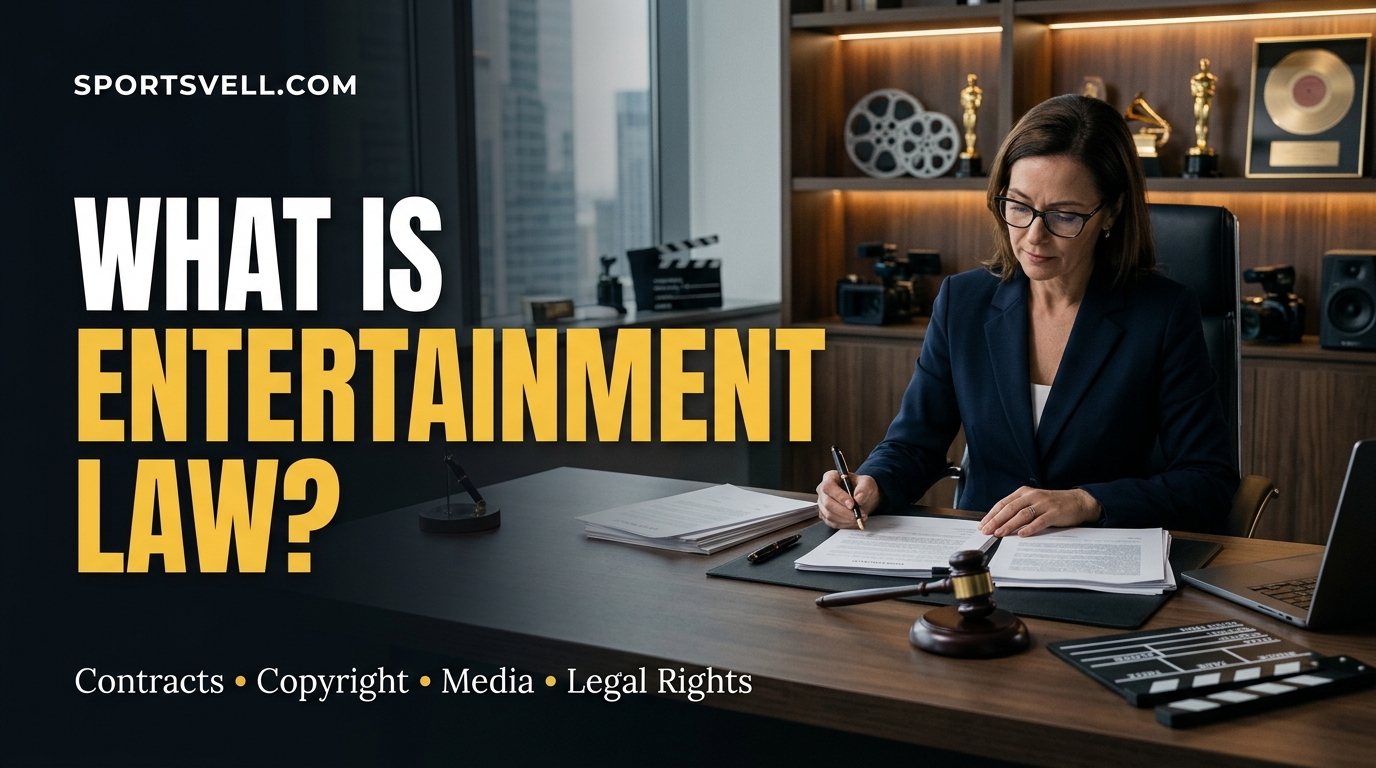
What is entertainment law? It is the body of law that serves the entertainment industry, covering contracts, copyright, trademarks, and the right of publicity.
Entertainment law protects the people who create entertainment and the companies that sell it. It covers musicians, actors, filmmakers, authors, studios, record labels, and streaming services.
Most entertainment law work is transactional, not courtroom work. Lawyers draft contracts, negotiate deals, clear rights, and settle disputes before they reach a judge.
General information only, not legal advice. Entertainment law varies by state, and no page can replace a lawyer who knows the facts of a specific deal.
Readers who want the career angle can also see the companion page on what entertainment lawyers do day to day, while the definition, practice areas, contracts, and pay are covered in the sections below.
What Is Entertainment Law?
Entertainment law is legal services provided to the entertainment industry. The definition comes from Wikipedia’s entertainment law reference, and it covers every kind of media.
That media includes film, television, music, publishing, advertising, theater, radio, and the internet. It now also includes streaming, video games, social media, and live events.
Three areas sit at the core of the practice. Contracts govern the deals, intellectual property protects the work, and the right of publicity protects a person’s name and likeness.
Other areas of law feed into the practice constantly. Employment, labor, tax, bankruptcy, immigration, securities, privacy, defamation, and insurance all appear in entertainment deals.
The word entertainment has many synonyms, and the page on another word for entertainment lists more than 65 of them with examples.
The field took shape in the early 20th century alongside the film and music industries. Landmark cases and new media platforms have kept changing it ever since.
Digital distribution changed the field again. Streaming, downloads, and online platforms created new frameworks for digital rights management and online distribution agreements.
Entertainment law vs media law
Entertainment law is often called media law, but the two are not the same thing. The difference matters, and searchers confuse the two terms more than any other pair in the field.
Media law is regulatory law. It covers broadcasting rules, censorship, freedom of information, contempt, confidentiality, and the rules that govern communications.
Entertainment law is transactional law. It covers the deals, the contracts, and the intellectual property that sit behind a film, a song, or a television show.
A media lawyer may argue about what a broadcaster can air. An entertainment lawyer negotiates what an actor gets paid and who owns the finished film.
| Feature | Entertainment law | Media law |
|---|---|---|
| Main focus | Deals, contracts, intellectual property | Regulation of communications |
| Typical work | Drafting, negotiation, mediation | Broadcast rules, censorship, freedom of information |
| Key clients | Artists, studios, labels, producers | Broadcasters, publishers, news organizations |
| Core doctrines | Copyright, trademark, right of publicity | First Amendment, defamation, privacy, contempt |
| Where it appears | Film, music, TV, streaming, games | Broadcast, print, internet regulation |
The two fields overlap in practice. A film deal can raise both a contract question and a censorship question, and the same lawyer may handle both.
Why it is defined by industry, not by practice
Most legal practice areas are defined by what the lawyer does. An employment attorney handles employment issues in any industry, and a tax attorney handles tax issues anywhere.
Entertainment law works the other way around. It is defined by the industry it serves, not by a single legal skill, and that makes it unusual among practice areas.
An entertainment attorney may work on labor and employment in the morning, technology law at noon, and corporate finance in the afternoon.
Tax, trusts and estates, family law, and even criminal law can appear in the same week.
Sekou Campbell, a partner whose practice includes entertainment and media law, calls it a hub practice. Many different social and hard legal skills are necessary to succeed in it.
That hub shape is why entertainment lawyers are generalists and specialists at once. They are specialists in a handful of industries, and generalists across many legal fields.
The University of Pennsylvania Career Services guide quotes the practitioners who explain the hub shape of the field.
Lawyers in the field represent both sides of the industry. They advise artists and the companies that hire artists, and they may move between those roles over a career.
The Core of Entertainment Law: Contracts and Intellectual Property
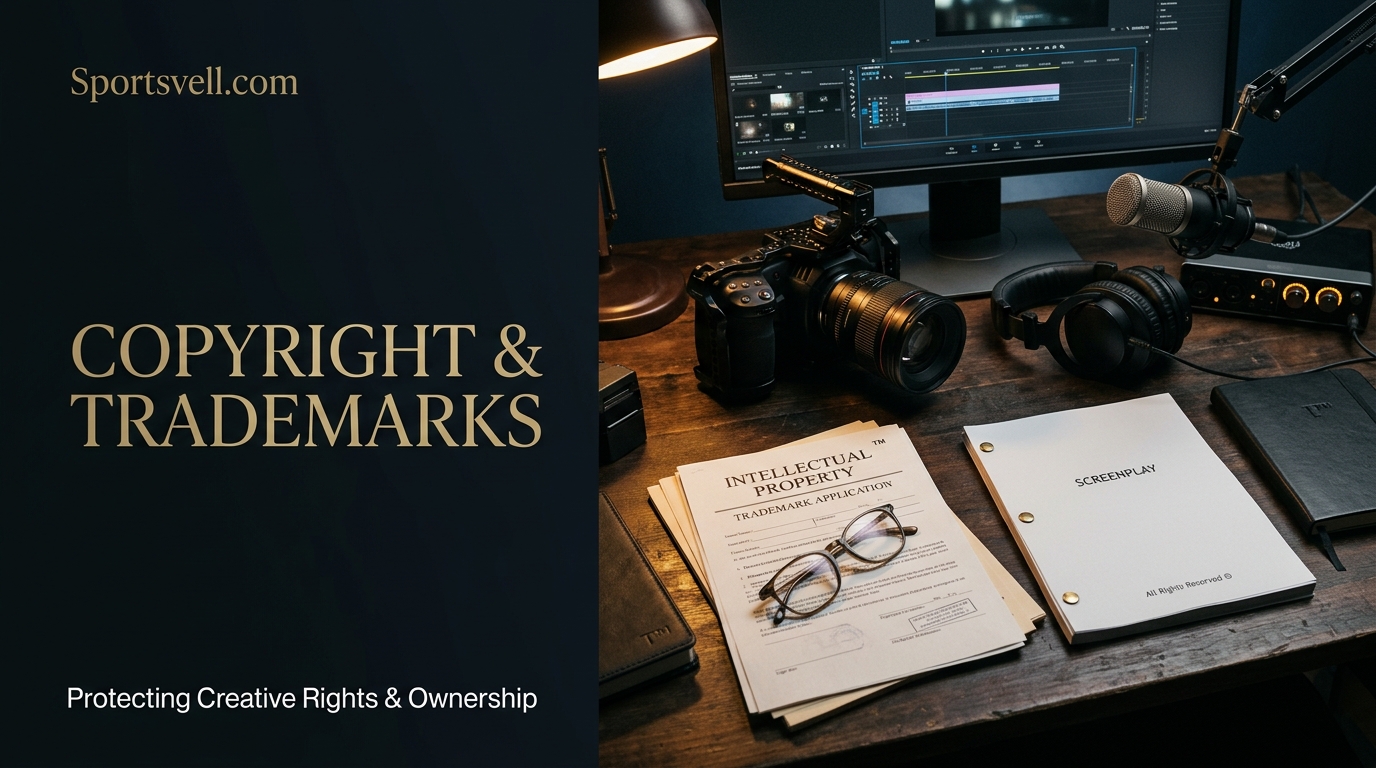
Two pillars hold up the whole practice. Contracts govern the money and the obligations, while intellectual property protects the creative work itself.
The entertainment industry exists in a state of economic uncertainty. Companies form, merge, dissolve, and reform, so contracts are drafted to protect against that risk.
Intellectual property is the industry’s primary product. A song, a script, a film, or a brand has value because the law protects it from copying and misuse.
Encyclopedia.com explains that the industry’s primary product is intellectual property, protected by copyrights, trademarks, and the right of publicity.
Contract law in entertainment
Contract law governs the agreements that set the terms for talent, content, money, and delivery. Every entertainment deal starts with a contract, and most disputes end with one.
Labor and employment contracts spell out the terms of engagement for talent by studios. They fix pay, working conditions, and the obligations of both sides.
Licensing agreements permit third parties to use content. A streaming service needs a license to show a film, and a brand needs one to use a song in an advert.
Financing agreements fund the work. A film needs money before cameras roll, and the financing agreement sets who provides it and what they get back.
Distribution contracts decide how entertainment reaches audiences. They set the territories, the windows, and the revenue split between the owner and the distributor.
Copyright
Copyright is the foundation of intellectual property protection in the entertainment industry. It gives creators exclusive rights over their original work.
When someone creates a script, a film, a song, a painting, or a photograph, the creator holds exclusive rights to it. Those rights cover reproduction, distribution, display, and derivative works.
Copyright law has provisions aimed directly at the entertainment industry. Music, film, and publishing each have their own rules inside the same statute.
Registration matters in practice, even though copyright exists from the moment of creation. Registration is usually needed before a creator can sue for infringement in the United States.
Infringement disputes are a daily part of the practice.
A song that copies another song, a film that uses a script without permission, or a stream that plays a recording without a license all raise copyright questions.
Fair use is the most misunderstood limit on copyright. It allows limited use of copyrighted work without permission, but the test is narrow and fact specific.
Trademarks
Trademark law protects a person or company’s ability to brand and market a product or service. It defends logos, names, and brand identity in a crowded marketplace.
A band name, a film title, a studio logo, and a celebrity brand are all trademark questions. The owner must protect the mark or risk losing the right to enforce it.
Trademarks differ from copyright in one key way. Copyright protects creative work, while trademark protects the commercial identity attached to goods and services.
Registration with the United States Patent and Trademark Office strengthens the protection. It gives nationwide notice and makes enforcement easier in court.
Merchandising depends on trademark law. A studio that sells toys, clothing, and posters based on a film needs trademark rights to stop copycats.
Marketing a brand is a legal question as well as a business one, and the sports and entertainment marketing guide explains how leagues and studios sell attention.
Right of publicity
The right of publicity is the right to control the commercial use of a person’s name, image, and likeness. It is a right to take legal action when that control is violated.
An advertiser cannot use a celebrity’s face to sell a product without permission. A video game cannot use an athlete’s likeness without a license.
The right of publicity differs from the right of privacy. Privacy protects against intrusion, while publicity protects the commercial value of identity.
State law controls the right of publicity, and the rules vary widely. Some states protect the right after death, and others limit it to living persons.
Unauthorized use of an artist’s name and likeness is one of the most common litigation claims in the field. It appears in advertising, merchandising, and digital media cases.
Patents and technology
Patents play a smaller role than copyright or trademark, but they matter for new technology. They protect inventions, including new formats and digital media technology.
Video game engines, streaming technology, and new recording formats can all involve patent questions. A company that builds a new way to deliver content may patent it.
Software licensing sits at the edge of patent and copyright law. A game developer licenses software, and the license sets who can use it and on what terms.
Artificial intelligence has made technology law central to the field. Questions about who owns AI generated music and video now sit at the top of the agenda.
Practice Areas by Industry
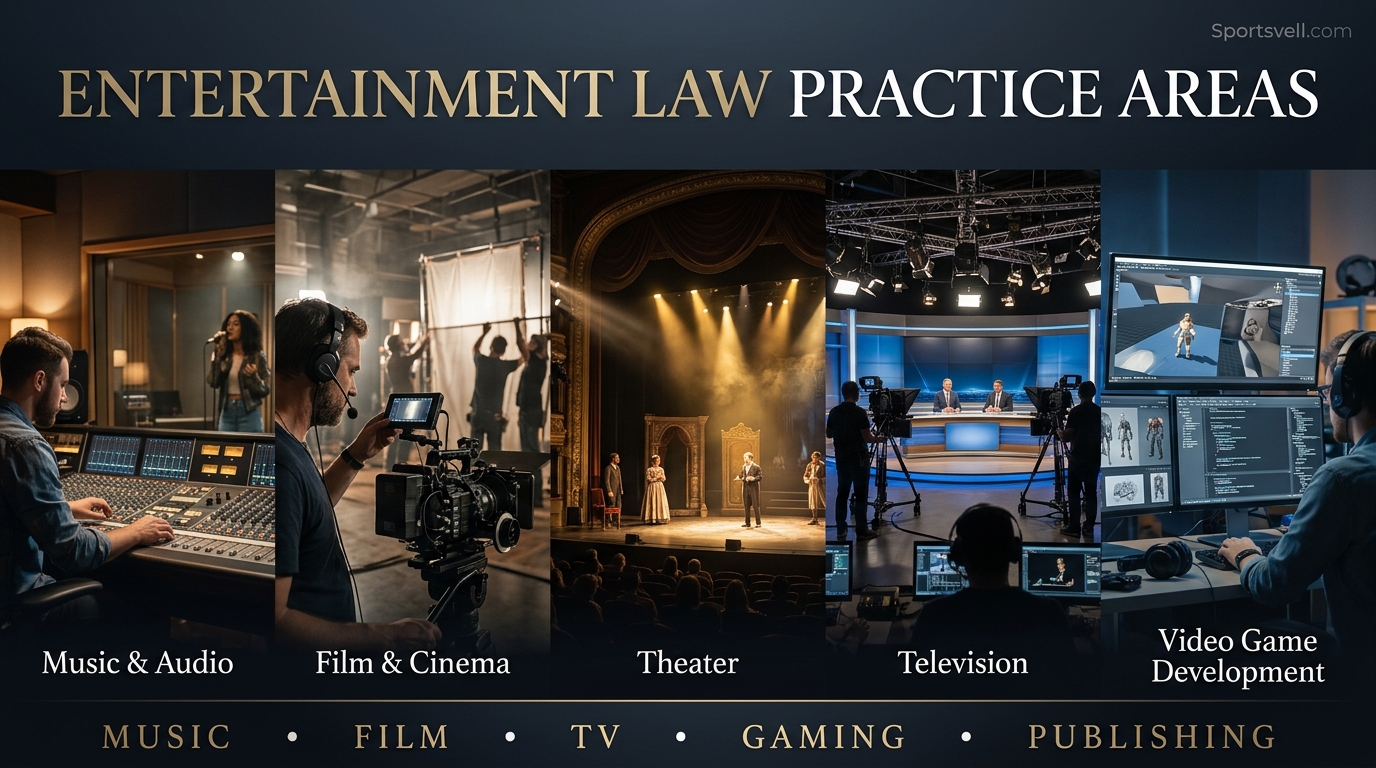
Entertainment law splits into areas by industry, because each industry has its own unions, production methods, customs, case law, and negotiation strategies. The table below gives the map at a glance.
| Industry | Core legal work | Key agreements | Main IP issue |
|---|---|---|---|
| Music | Recording deals, royalties, licensing | Talent agreements, producer agreements | Copyright, synchronization rights |
| Film | Financing, production, distribution | Option agreements, talent agreements | Copyright, chain of title |
| Television and streaming | Broadcast and streaming deals | Broadcast licensing, distribution deals | Copyright, licensing |
| Publishing and print | Author deals, advertising | Author agreements | Copyright |
| Internet and social media | Content, privacy, platform deals | Influencer and endorsement deals | Copyright, privacy |
| Video games and multimedia | Development, licensing, esports | Software licenses, developer contracts | Copyright, trademark |
| Theater and live events | Performance and touring deals | Performance agreements | Copyright, trademark |
Music
Music is where entertainment law touches the most people. Recording contracts, publishing deals, and licensing agreements all run through lawyers.
Lawyers negotiate recording contracts between artists and labels. They also manage music licensing agreements and make sure royalty payments reach the right people.
Producer agreements set the terms for the people who make the records. They fix fees, royalty points, and credit on the finished work.
Synchronization rights let a song be used with moving images. A film, a television show, or an advert needs a sync license before it can use a recording.
Copyright infringement is harder to police as digital distribution grows. Streaming and downloads make copying easy, and enforcement is a constant part of the work.
Film
Film lawyers work on every stage of a production. They option literary works, secure financing, clear rights, and negotiate distribution deals.
Option agreements give a producer the right to buy a book or script for film. Chain of title proves that the producer owns every right needed to make and sell the film.
Talent agreements cover screenwriters, directors, actors, composers, and production designers. Each one sets pay, credit, and the scope of the work.
Production and post production raise union and guild questions. The Screen Actors Guild, the Writers Guild, and the Directors Guild all have rules that shape the deals.
Distribution issues decide how a film reaches audiences. Theatrical release, streaming, and international sales each need their own agreement.
Television and streaming
Television and streaming lawyers negotiate deals with actors, directors, and producers. They also secure distribution rights and make sure the production complies with the law.
Broadcast licensing governs what can air and when. Streaming has added new questions about territories, windows, and exclusivity.
Digital streaming has reshaped how content is consumed. Distribution matters have grown more complex as platforms compete for exclusive rights.
A show made for streaming may involve agreements across several continents. Each territory has its own compliance requirements and market terms.
Publishing and print media
Publishing lawyers handle author agreements, advertising, and model releases. They protect the rights of writers, illustrators, and publishers.
Author agreements set advances, royalties, and rights. They decide who controls foreign sales, film rights, and audiobook rights.
Advertising law appears in print media deals. A magazine or newspaper must clear the rights to the images and text it publishes.
Models and photographers raise their own questions. A photo of a person used in an advert needs a release, or the publisher risks a right of publicity claim.
Internet and social media
Internet law covers censorship, copyright, freedom of information, privacy, and telecommunications. It is the fastest changing part of the practice.
Social media influencers need contracts for endorsements and brand deals. Lawyers negotiate those deals and handle compliance with consumer protection rules.
Platform terms shape what creators can do. A creator who builds an audience on a platform still needs to own the rights to the content itself.
Privacy law now sits at the center of online entertainment. Data collection, tracking, and targeted advertising all raise legal questions for platforms and creators.
Video games and multimedia
Multimedia law covers software licensing, video game development and production, and information technology law. It is one of the largest parts of the practice by revenue.
Video game developer contracts set who owns the code, the art, and the story. Licensing agreements decide how the game is sold and on which platforms.
Esports adds athlete sponsorship and team agreements. Players, teams, leagues, and sponsors each need their own contracts.
Virtual items and in game purchases raise new questions. Ownership of a digital item is still unsettled law in many places.
Theater and live events
Theater law covers performance agreements, touring deals, and venue contracts. A touring production needs agreements in every city it visits.
Live events raise safety, ticketing, and liability questions. A concert promoter needs insurance, permits, and clear contracts with the performers.
Merchandising at live events is a trademark question. A tour that sells branded clothing needs the rights to the name and the artwork.
Streaming of live events has blurred the line between theater and television. A filmed stage production needs both theater and broadcast agreements.
Types of Contracts in Entertainment Law
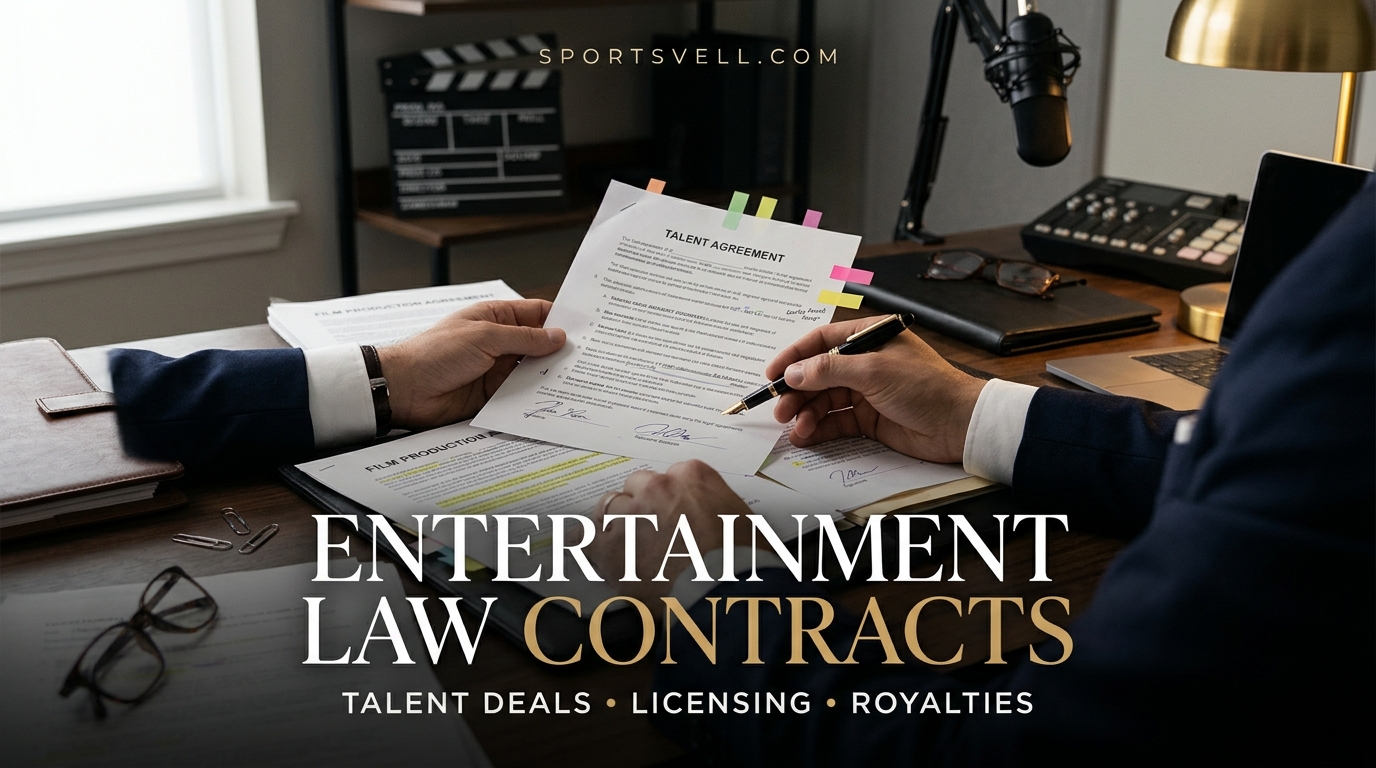
Contracts are the working tools of the practice. A lawyer who cannot read and draft them cannot practice entertainment law, whatever else they know.
| Contract type | What it does | Who uses it |
|---|---|---|
| Personal service agreement | Sets the terms for a person’s work, pay, and obligations | Actors, musicians, writers, directors |
| Contract for rights | Transfers or licenses rights in a work | Authors, studios, producers |
| Option agreement | Gives a producer the right to buy a work later | Producers, authors, screenwriters |
| Talent agreement | Engages an artist for a specific project | Studios, labels, production companies |
| Recording contract | Sets the terms for making and selling records | Artists, record labels |
| Producer agreement | Sets fees, points, and credit for a producer | Producers, artists, labels |
| Licensing agreement | Permits a third party to use content | Streaming services, brands, broadcasters |
| Distribution agreement | Sets how content reaches audiences | Studios, distributors, platforms |
| Publishing agreement | Sets advances, royalties, and rights for a book | Authors, publishers |
| Endorsement deal | Pays a person to promote a product | Celebrities, influencers, brands |
| Synchronization license | Permits a song to be used with images | Filmmakers, advertisers, labels |
| Mechanical license | Permits a song to be reproduced and distributed | Labels, streaming services, publishers |
Personal service agreements are the primary legal instrument in the industry. They bind a person to perform, and they set the pay and the conditions.
Contracts for rights transfer the rights in a work from the creator to a company. A book author sells film rights, and a songwriter assigns publishing rights.
Entertainment contracts have features that ordinary contracts do not. They often run for years, they tie pay to future revenue, and they include morality and exclusivity clauses.
Exclusivity clauses stop an artist from working for a competitor during the term. Morality clauses let a company end a deal if the artist damages the brand.
Royalty clauses are the most fought over part of any entertainment contract. They decide what share of revenue reaches the creator, and how it is calculated.
Transactional Work vs Litigation
Most entertainment law work is transactional. Lawyers draft contracts, negotiate deals, and mediate disputes, and only a small share of matters reach a courtroom.
Some practitioners focus on transactions alone. They handle licenses, grants of rights, and talent engagements, and they rarely see the inside of a courtroom.
Other attorneys focus on litigation. They handle breach of contract, royalty collections, copyright and trademark infringement, and unauthorized use of a name and likeness.
| Feature | Transactional work | Litigation |
|---|---|---|
| Main task | Drafting and negotiating deals | Resolving disputes in court or arbitration |
| Typical matters | Licenses, grants of rights, talent deals | Breach of contract, royalty claims, infringement |
| Client goal | Close the deal on good terms | Win the claim or settle it well |
| Time horizon | Weeks to months before a project starts | Months to years after a dispute arises |
| Key skill | Negotiation and drafting | Advocacy and evidence |
Arbitration sits between the two. Many entertainment contracts require arbitration instead of court, because it is private and faster than litigation.
Mediation is common too. A mediator helps the two sides reach a deal, and the process stays confidential, which matters for public figures.
A lawyer who drafts a contract well prevents litigation later. Clear royalty language and clear rights language stop most disputes before they start.
Who Entertainment Lawyers Represent
Entertainment lawyers represent both sides of the industry. They advise artists and the companies that hire artists, and the work is different on each side.
On the artist side, clients include musicians, actors, writers, directors, and influencers. The lawyer protects the creator’s rights and negotiates the best deal.
On the company side, clients include record labels, studios, production companies, publishers, and streaming services. The lawyer protects the company’s investment and its rights.
Lawyers can move between the two sides over a career. An artist’s lawyer may later join a studio’s business affairs department, or a studio lawyer may open a practice for artists.
Record labels, celebrities, reality television talent, production companies, authors, and film and television production companies all use entertainment lawyers. Songwriters, music producers, artist managers, promoters, and other entrepreneurs do too.
Conflicts of interest are a constant risk when one firm serves both sides. A lawyer must disclose a conflict and withdraw if it would impair the representation.
The fiduciary duty case of Joel v. Grubman sets the standard. An attorney must act solely in the client’s best interests and disclose any potential conflict.
What Does an Entertainment Lawyer Do Day to Day?
A typical day mixes drafting, calls, and negotiation. The lawyer reviews a contract in the morning, negotiates a deal by phone at noon, and clears rights in the afternoon.
Deal memos come first in most transactions. A short memo sets the key terms, and the full contract follows once both sides agree.
Rights clearance is a daily task. A film needs music rights, a book needs photo rights, and a show needs location rights, all before release.
Client calls fill much of the day. Artists ask whether to sign a deal, studios ask whether a script is clear, and managers ask how a clause will work in practice.
Reading the trade press is part of the job. Deals, disputes, and new platforms appear in the trades first, and a lawyer who misses them falls behind.
The full day to day picture, with duties and fees, is covered on the companion page about what entertainment lawyers do.
That page owns the career and duties angle, and the definition is the focus here.
How to Become an Entertainment Lawyer
There is no separate license for entertainment law. The path is the same as for any lawyer, with industry experience added on top.
Most entertainment lawyers have a creative background that led them to the field. Musicians, artists, and filmmakers often become the lawyers who serve them.
The work is a career of passion, but it is also a business. Entertainment law requires a lawyer to be entrepreneurial and business minded, almost more than any other area of law.
Education path
Step one is a bachelor’s degree in any discipline. Law schools do not require a specific major, and creative majors are common among entertainment lawyers.
Step two is a Juris Doctor degree from a law school accredited by the American Bar Association. Nearly all states require that degree before a candidate can sit for the bar.
Step three is passing the bar exam in the state where the lawyer intends to practice. A lawyer licensed in New York cannot practice in California without passing that state’s bar.
Step four is gaining industry experience. Employers usually prefer two to three years of experience, often at a talent agency, a studio business affairs department, or an entertainment focused firm.
Step five is optional but common: an LL.M. in entertainment or intellectual property law. The extra degree signals specialization and can open doors at larger firms.
California, Vermont, Virginia, and Washington allow alternatives to an ABA accredited law degree. Those paths exist, but they are rare and harder to complete.
Entertainment and intellectual property law electives matter in law school. Internships at entertainment firms, record labels, or streaming services matter even more.
Skills that matter
Negotiation is the most valuable skill in the practice. Most work is transactional, and the lawyer who negotiates well protects the client best.
Drafting comes second. A contract must be clear enough to prevent disputes years later, when the people who signed it have moved on.
Industry knowledge is the third skill. A lawyer must understand how a recording contract works, how a film is financed, and how streaming royalties are calculated.
Communication matters because clients are creative people, not companies. A lawyer must explain a complex clause in plain language that an artist can act on.
Networking is not optional in this field. Deals come through relationships, and a lawyer who knows the agents, managers, and executives gets the work.
Getting industry experience
Internships are the best way into the field. Most companies and firms offer summer internships, and they increase a candidate’s desirability for permanent roles.
Early experience often comes from a talent agency or a studio business affairs department. Those jobs teach the deal terms before a lawyer has to negotiate them alone.
Building a niche helps a new lawyer stand out. Knowledge about the metaverse and Web 3.0 puts newer practitioners on far more equal footing with older ones.
Attending film, music, and media conferences builds the network. Conferences are where lawyers meet the managers, producers, and executives who hire them.
Entertainment Lawyer Salary
Entertainment lawyer pay varies widely by experience, location, and clientele. The figures below are labelled by source and date, and the conflicts are shown, never merged.
ZipRecruiter data from August 2026 puts the national average at 121,094 dollars a year.
The median is 109,400 dollars, with the 25th percentile at 85,500 dollars and the 75th at 132,000 dollars.
Top earners at the 90th percentile make 169,000 dollars a year, according to the same ZipRecruiter data. The full range runs from 55,000 dollars to 278,000 dollars.
Pepperdine Caruso School of Law reports a similar picture. Its guide puts the national average near 121,000 dollars, with the same range of 55,000 to 278,000 dollars.
| Source and date | Average | Median | 25th percentile | 75th percentile | 90th percentile | Range |
|---|---|---|---|---|---|---|
| ZipRecruiter, August 2026 | 121,094 dollars | 109,400 dollars | 85,500 dollars | 132,000 dollars | 169,000 dollars | 55,000 to 278,000 dollars |
| Pepperdine, 2026 | About 121,000 dollars | Not stated | Not stated | Not stated | Not stated | 55,000 to 278,000 dollars |
| LegalCoat, 2026 | Not stated | Not stated | Not stated | Not stated | Not stated | 70,000 to 250,000 dollars and up |
| Careers in Film, 2026 | 121,094 dollars | Not stated | Not stated | Not stated | Not stated | 50,000 to 278,000 dollars |
The range is wide because the work is wide. A small firm generalist earns far less than a lawyer who negotiates for A list clients on a percentage basis.
| Career stage | Typical annual pay | Source |
|---|---|---|
| Early career, 1 to 4 years | Around 75,000 dollars | Fashion Law Journal, August 2026 |
| Entry level | 70,000 to 100,000 dollars | LegalCoat, 2026 |
| Mid career, 5 to 9 years | Around 115,000 dollars | Fashion Law Journal, August 2026 |
| Mid level | 120,000 to 200,000 dollars | LegalCoat, 2026 |
| Senior or partner level | 250,000 dollars and up | LegalCoat, 2026 |
| National average, August 2026 | 121,094 dollars | ZipRecruiter |
| National median, August 2026 | 109,400 dollars | ZipRecruiter |
| Top 10 percent | 169,000 dollars and up | ZipRecruiter |
What affects pay
Experience is the biggest factor. A new graduate earns a modest salary, and each year of experience and each new client raises the ceiling.
Location matters almost as much. Los Angeles and New York City pay more than smaller markets, because the industry is centered there.
Clientele decides the top end. A lawyer with A list clients can earn far more than one who serves independent artists, because the deals are bigger.
Specialization raises pay too. A lawyer who owns a niche, such as music licensing or film finance, is in higher demand than a generalist.
Firm size shapes the structure. Large firms pay higher base salaries, while boutique firms and solo practice offer a bigger share of each fee.
Percentage deals change the math. Some lawyers take a percentage of a client’s deal instead of an hourly fee, and a single hit can pay more than a year of salary.
Non-Lawyer Careers in Entertainment Law
Entertainment law needs more than lawyers. Non lawyer legal professionals fill roles that keep deals moving and rights clear.
| Role | What the role does |
|---|---|
| Paralegal | Assists attorneys with contract management, intellectual property filings, and research |
| Contract administrator | Manages contracts through their lifecycle, renewals, and terminations |
| Rights and clearances specialist | Secures rights and licenses for music, film, and television projects |
| Licensing coordinator | Negotiates and executes distribution and merchandise licenses |
| Production coordinator | Ensures production complies with labor law, union rules, and permits |
| Talent agent assistant | Prepares deal memos and coordinates with legal teams |
| Business and legal affairs assistant | Helps negotiate deals and manage legal documents at a studio or agency |
| Compliance officer | Makes sure a company follows regulations and internal policies |
| Legal coordinator | Manages daily operations of a legal department |
These roles do not require a law degree. The University of Pittsburgh offers a Sports, Entertainment, and Arts Law Certificate and an online Master of Studies in Law for non lawyers.
Paralegals in the field assist with contract management and intellectual property filings. They may also help draft agreements and track regulatory compliance.
Rights and clearances specialists are the people who stop a film from being sued. They negotiate licenses and permissions for copyrighted material before release.
Compliance officers have grown more important as regulation has grown. They oversee internal and external policies and work to reduce legal risk.
Entertainment Law Around the World
Entertainment now crosses borders, and the law must follow it. A film made in the United States may have distribution agreements on several continents.
Each country has its own licensing and distribution rules. A deal that works in the United States may need different terms in Europe or Asia.
Intellectual property protection varies by country too. Piracy and unauthorized distribution are global problems, and enforcement needs international cooperation.
The World Intellectual Property Organization plays a central role in standardizing international intellectual property law. Its treaties set the baseline that member states follow.
Legal differences remain wide, and vigilance is necessary. A lawyer who guides a global release must understand the norms and the cultural differences in each market.
Private international law governs cross border disputes. It decides which country’s law applies and which court hears the case.
Emerging Issues: AI, NFTs, and the Metaverse
Artificial intelligence is the biggest new question in the field. AI generated music and video raise hard questions about authorship and copyright ownership.
Who holds the rights to an AI created song? The artist, the developer, or the AI company all have claims, and the law has not settled the answer.
AI also challenges licensing and royalty models. AI driven platforms can streamline licensing, but they need new rules to make sure creators are paid fairly.
NFTs created a new market for digital ownership. A buyer who owns an NFT may not own the copyright in the underlying work, and that confusion has produced disputes.
The metaverse and Web3 are creating new areas of practice. Virtual land, digital fashion, and in world concerts all need contracts that did not exist five years ago.
Decentralized finance and cryptocurrency have entered entertainment financing. New ways to finance, consume, and experience entertainment keep appearing.
Streaming continues to reshape distribution. Each new platform changes the windows, the territories, and the royalty calculations.
Influencer endorsement deals now sit at the center of advertising law. Regulators require clear disclosure, and lawyers handle the compliance.
Esports has grown from a niche into a real industry. Player contracts, team agreements, and sponsorship deals all need lawyers who understand the space.
Banks define entertainment their own way for rewards, and the page on Capital One entertainment purchases shows how one issuer draws the line.
Do You Need an Entertainment Lawyer?
Not every creative person needs a lawyer, but some moments demand one. The table below gives a plain decision guide.
| Situation | Do you need a lawyer? | Why |
|---|---|---|
| Signing a recording contract | Yes | The terms bind you for years and set your royalties |
| Signing a film or TV deal | Yes | Pay, credit, and rights all turn on the contract |
| Someone used your name or likeness | Yes | Right of publicity claims need a lawyer to pursue |
| Royalty dispute | Yes | Collections often need formal demands and accounting |
| Registering a copyright | Usually no | Registration is simple, though a lawyer helps with complex works |
| Posting your own work online | Usually no | Ownership is yours, but read the platform terms first |
| Distribution deal for a finished film | Yes | Territories, windows, and revenue splits decide the return |
| Starting a production company | Yes | Formation, contracts, and insurance need legal setup |
A lawyer before signing is worth more than a lawyer after a dispute. A bad clause signed in haste can cost years of royalties.
Hiring a lawyer is not the only entertainment cost to plan for, and a separate guide breaks down how much entertainment costs per month in 2026.
Bring the full contract to the first meeting, plus any emails or messages about the deal. A lawyer needs the whole picture, not just the signature page.
Cost varies by lawyer and by deal. Some charge hourly, some take a percentage, and some offer a flat fee for a contract review.
If the budget is tight, a short consultation is still worth it. An hour of review can catch the one clause that matters most.
Common Mistakes to Avoid
Signing without reading the contract is the most common mistake. A signature binds the signer, even if they never read the royalty clause.
Confusing media law with entertainment law is the second mistake. The two fields overlap, but they answer different questions, and the wrong lawyer can miss the real issue.
Giving away rights forever is the third mistake. A contract that assigns all rights in perpetuity leaves nothing to renegotiate when the work succeeds.
Ignoring the royalty definition is the fourth mistake. Net profits and gross receipts are not the same thing, and the definition decides what the creator is paid.
Skipping rights clearance is the fifth mistake. A film that uses a song without a license can be blocked from release, and the cost of fixing it late is far higher.
Trusting a handshake deal is the sixth mistake. Entertainment runs on relationships, but a deal that is not written down is a dispute waiting to happen.
Key Takeaways
- Entertainment law is legal services for the entertainment industry, built on contracts, copyright, trademarks, and the right of publicity.
- It is defined by industry, not by legal practice, and it is mostly transactional work.
- Entertainment law and media law are different: one is transactional, the other is regulatory.
- Practice areas split by industry: music, film, television and streaming, publishing, internet, video games, and theater.
- The national average pay for an entertainment attorney was 121,094 dollars in August 2026, with a median of 109,400 dollars, according to ZipRecruiter.
- There is no separate license: the path is a bachelor’s degree, a JD, and the bar exam, plus two to three years of industry experience.
- AI authorship, NFTs, the metaverse, and streaming are the emerging issues reshaping the field.
- General information only, not legal advice: talk to a lawyer before signing a contract.
Frequently Asked Questions
What is entertainment law?
Entertainment law is legal services provided to the entertainment industry. It covers contracts, copyright, trademarks, and the right of publicity for film, music, television, publishing, and streaming.
What is the definition of entertainment law?
The definition is simple: entertainment law is the body of law that governs the entertainment industry. It is mostly transactional work, drafting and negotiating deals for artists, studios, labels, and production companies.
What does entertainment law cover?
It covers music, film, television, streaming, publishing, theater, radio, advertising, video games, and social media. It also touches employment, labor, tax, bankruptcy, immigration, and insurance law.
What is the difference between entertainment law and media law?
Entertainment law is transactional, covering deals and intellectual property. Media law is regulatory, covering broadcasting rules, censorship, and freedom of information.
Is entertainment law the same as intellectual property law?
No. Intellectual property is a core part of entertainment law, but entertainment law also covers contracts, labor, finance, and distribution. It is defined by industry, not by a single legal field.
What is the difference between entertainment law and sports law?
Sports law governs athletes, leagues, and teams, while entertainment law governs film, music, television, and publishing. The two overlap in sports entertainment and in endorsement deals.
What are the practice areas of entertainment law?
The practice areas split by industry: music, film, television and streaming, publishing and print, internet and social media, video games and multimedia, and theater and live events.
What does an entertainment lawyer do?
An entertainment lawyer drafts contracts, negotiates deals, clears rights, protects intellectual property, and resolves disputes. Most of the work is transactional, with some litigation and arbitration.
What does an entertainment lawyer do for musicians?
A music lawyer negotiates recording contracts, producer agreements, and publishing deals. The lawyer also manages licensing agreements and makes sure royalty payments reach the artist.
What does an entertainment lawyer do for actors?
A film and television lawyer negotiates talent agreements, sets pay and credit, and clears the rights for a production. The lawyer also handles distribution and merchandising questions.
What types of contracts do entertainment lawyers handle?
They handle personal service agreements, contracts for rights, option agreements, talent agreements, recording contracts, licensing agreements, distribution agreements, and endorsement deals.
What is a personal service agreement?
A personal service agreement is the primary legal instrument in the industry. It sets the terms for a person’s work, pay, and obligations, and it binds the person to perform.
What is a contract for rights in entertainment law?
A contract for rights transfers or licenses the rights in a work. A book author sells film rights, and a songwriter assigns publishing rights, through this kind of agreement.
What is chain of title?
Chain of title is the documented history of ownership in a work. A film producer must prove chain of title to show that every right needed to make and sell the film is owned.
What is the right of publicity?
The right of publicity is the right to control the commercial use of a person’s name, image, and likeness. An advertiser cannot use a celebrity’s face to sell a product without permission.
What is the difference between copyright and trademark in entertainment?
Copyright protects creative work, such as a song or a script. Trademark protects the commercial identity attached to goods and services, such as a band name or a studio logo.
How much does an entertainment lawyer make?
ZipRecruiter data from August 2026 puts the national average at 121,094 dollars a year, with a median of 109,400 dollars. The full range runs from 55,000 dollars to 278,000 dollars.
How much does an entertainment lawyer make per year in 2026?
The August 2026 average is 121,094 dollars, and the median is 109,400 dollars. Early career lawyers earn around 75,000 dollars, while senior and partner level lawyers earn 250,000 dollars and up.
Do entertainment lawyers make good money?
They can. The average is above the average for lawyers generally, but the range is wide. Pay depends on experience, location, clientele, and whether the lawyer takes percentage deals.
How do you become an entertainment lawyer?
Earn a bachelor’s degree, then a JD from an ABA accredited law school, then pass the bar exam in the state of practice. Employers usually prefer two to three years of industry experience.
Do you need a law degree to become an entertainment lawyer?
Yes. A Juris Doctor from an ABA accredited law school is required, followed by the bar exam. There is no separate license for the specialty itself.
Is there a separate license for entertainment law?
No. There is no separate license or certification for entertainment law. The license is the state bar admission, and the specialization comes from experience and study.
How long does it take to become an entertainment lawyer?
About seven years of school: four years for a bachelor’s degree and three years for the JD. Bar preparation and early industry experience add one to three more years.
Is entertainment law a good career?
It is a good career for people who love the industry and the business side of it. Demand is rising with the growth of streaming, gaming, and social media, but the field is competitive.
Is entertainment law hard to get into?
Yes, it is competitive. The field is small, the hubs are Los Angeles and New York City, and employers prefer candidates with industry experience. Internships and a niche help a new lawyer stand out.
Conclusion
What is entertainment law? It is the law of the entertainment industry, built on contracts and intellectual property, and defined by the industry it serves rather than by a single legal skill.
It covers film, music, television, publishing, streaming, video games, and live events. It protects the people who create entertainment and the companies that sell it.
The field is changing fast. Artificial intelligence, streaming, NFTs, and the metaverse are creating questions that did not exist five years ago, and the lawyers who answer them will shape the next decade.
General information only, not legal advice. Laws vary by state, and every deal has its own facts. Talk to a licensed attorney before signing a contract or acting on a legal question.