India National Cricket Team vs New Zealand National Cricket Team Match Scorecard
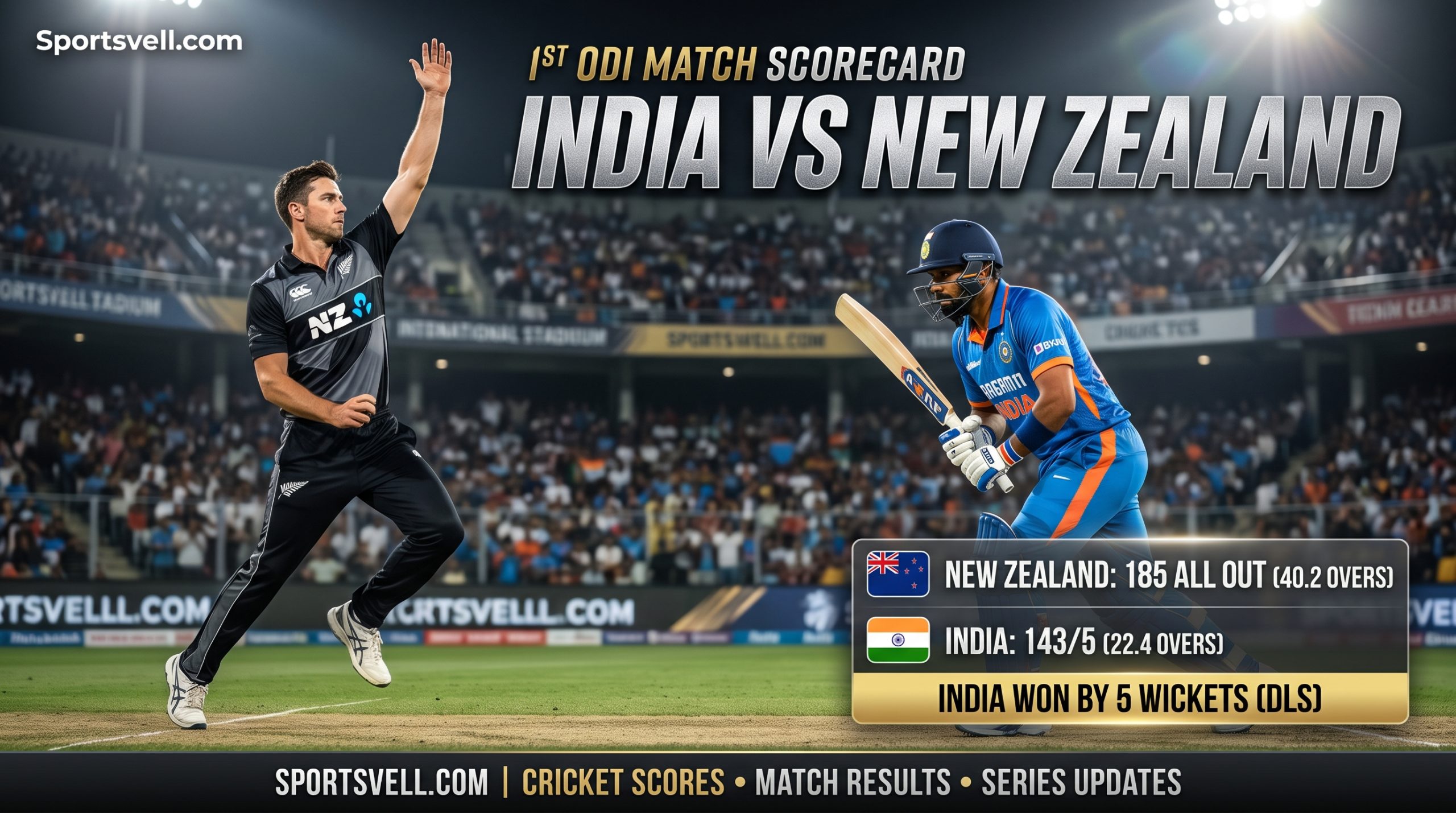
India won the latest match. India beat New Zealand by 5 wickets (DLS method) in the 1st ODI on November 4, 2026, at Eden Park, Auckland.
New Zealand scored 185 all out in 40.2 overs. India replied with 143 for 5 in 22.4 overs, chasing a rain-revised target of 143.
India lead the five-match ODI series 1-0. The 2nd ODI is on Saturday, November 7, 2026, at Sky Stadium, Wellington.
Last checked and updated on November 6, 2026. The ODI series is live, so the result table below changes after every match.
India national cricket team vs New Zealand national cricket team match scorecard is the page fans open first after every meeting between these two sides. It carries the full score, the wickets, the result, and the series score in one place.
Below you will find the latest result first, then the full ODI series table, the completed T20I series, the upcoming Tests, the big finals, and the head-to-head record. Every score carries a date and a venue.
New Zealand and India have now played 225 senior men’s internationals. India have won 108, New Zealand have won 81, and 36 matches ended in a draw, a tie, or no result.
The rivalry is famous for ICC finals. The two teams have met in six ICC knockout matches, and the tally is level at three wins each.
Latest Result: 1st ODI, November 4, 2026, Eden Park, Auckland
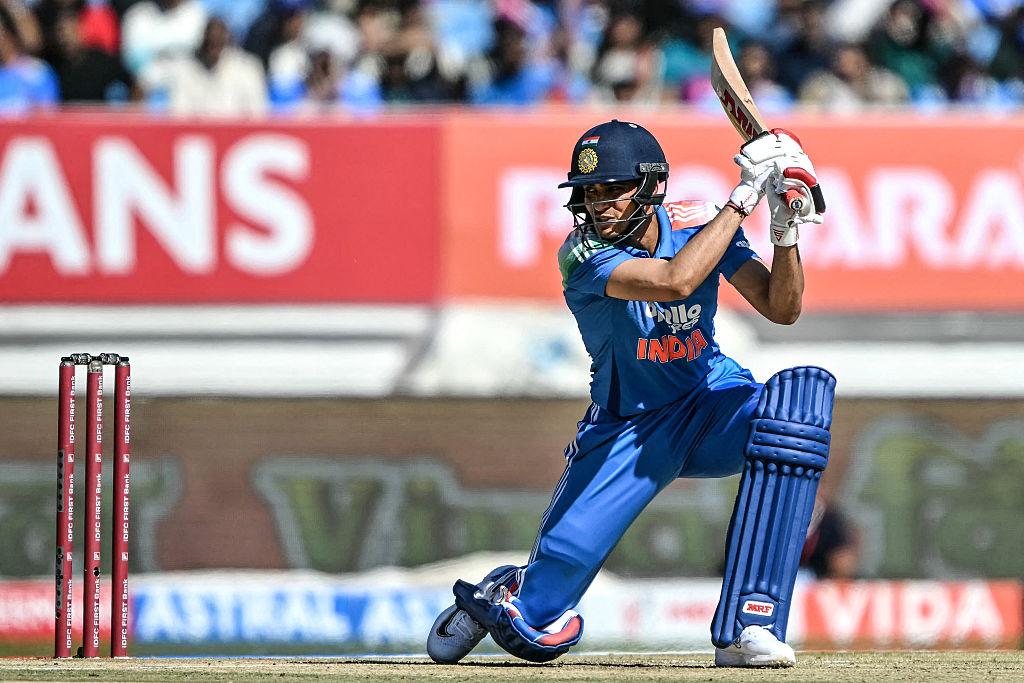
India won by 5 wickets (DLS method). Rain cut the match to 32 overs per side, and the Duckworth-Lewis-Stern method set India a revised target of 143.
New Zealand batted first after India won the toss. Shubman Gill chose to bowl, and his bowlers kept New Zealand to 185 in 40.2 overs.
Virat Kohli settled the chase with 74 off 51 balls. He shared a 113-run stand with Gill, and India reached the target with 56 balls to spare.
Arshdeep Singh was the pick of the bowlers. He took 4 wickets for 70 runs, while Gurnoor Brar took 3 for 44 and Anshul Kamboj took 2 for 22.
New Zealand Innings: 185 All Out in 40.2 Overs
New Zealand never built a big partnership. The top score was Tim Seifert with 38, and only four batters passed 25.
The innings lost wickets in clusters. New Zealand fell from 97 for 4 to 115 for 7, and the lower order could not rebuild.
| Batter | Dismissal | Runs | Balls |
|---|---|---|---|
| Will Young | c Shreyas Iyer b Arshdeep Singh | 9 | – |
| Tim Seifert | Top scorer for New Zealand | 38 | 43 |
| Blair Tickner | Second top scorer | 34 | 23 |
| Glenn Phillips | Middle order runs | 30 | – |
| Daryl Mitchell | Middle order runs | 28 | – |
| Jacob Duffy | Lower order runs | 15 | – |
| Total | All out, 40.2 overs | 185 | – |
Only six batting scores are listed here because those are the figures verified in match reporting. The full batting card, with every dismissal, is on the CricTracker scorecard for the 1st ODI.
Extras added 13 runs to the New Zealand total. The extras included wides and a no ball, and they mattered on a low-scoring pitch.
India Innings: 143 for 5 in 22.4 Overs, Target 143
India lost Rohit Sharma for 0 in the first over. Kyle Jamieson removed him early, and the chase could have wobbled at 1 for 1.
Kohli and Gill then took control. Their 113-run stand for the second wicket put India firmly ahead, and the target never looked in doubt after that.
Jacob Duffy took three late wickets. He removed Kohli, Axar Patel, and Shreyas Iyer, but India were already close to the target by then.
Naman Dhir hit the winning runs. He finished 5 not out off 3 balls, with KL Rahul 3 not out at the other end.
| Batter | Dismissal | Runs | Balls | Fours | Sixes |
|---|---|---|---|---|---|
| Rohit Sharma | c Mitchell Santner b Kyle Jamieson | 0 | – | 0 | 0 |
| Shubman Gill (c) | Second wicket, 113-run stand with Kohli | 37 | 56 | – | – |
| Virat Kohli | c Tim Seifert b Jacob Duffy | 74 | 51 | 13 | 1 |
| Shreyas Iyer | c Henry Nicholls b Jacob Duffy | 15 | – | – | – |
| Naman Dhir | Not out, hit the winning runs | 5 | 3 | – | – |
| KL Rahul | Not out | 3 | 5 | – | – |
| Total | 5 wickets, 22.4 overs | 143 | – | – | – |
Kohli reached his fifty off 35 balls. It was his 80th ODI fifty, and his 13 fours kept the required rate under control from the start.
Gill played the anchor role with 37 off 56 balls. His calm innings let Kohli attack, and the pair added 113 runs together.
Bowling Figures That Decided the Match
India used five bowlers, and four of them took wickets. The attack shared the work, and no New Zealand batter faced an easy spell.
| Bowler | Overs | Maidens | Runs | Wickets | Economy |
|---|---|---|---|---|---|
| Arshdeep Singh (IND) | 10 | 0 | 70 | 4 | 7.00 |
| Anshul Kamboj (IND) | 10 | 2 | 22 | 2 | 2.20 |
| Gurnoor Brar (IND) | 9.2 | 0 | 44 | 3 | 4.71 |
| Auqib Nabi (IND) | 6 | 0 | 33 | 0 | 5.50 |
| Axar Patel (IND) | 5 | 0 | 12 | 0 | 2.40 |
| Jacob Duffy (NZ) | 7 | 0 | 49 | 3 | 7.00 |
| Kyle Jamieson (NZ) | – | – | 34 | 1 | – |
| Nathan Smith (NZ) | 4.4 | 0 | 21 | 1 | 4.50 |
Kamboj bowled two maidens in a ten-over spell. His 2 for 22 was the most economical bowling of the match, and it choked the middle overs.
Arshdeep went for 70 runs but took four wickets. His wickets mattered more than his economy, because he removed batters at both ends of the innings.
Duffy was New Zealand’s best bowler by far. His 3 for 49 included Kohli, and he was the only New Zealand bowler to take more than one wicket.
Fall of Wickets: New Zealand
The fall of wickets tells the story of the innings. New Zealand lost wickets at regular intervals and never had a partnership longer than a short stand.
| Wicket | Score | Batter out |
|---|---|---|
| 1 | 22 | Will Young |
| 2 | 40 | Henry Nicholls |
| 3 | 73 | Tim Seifert |
| 4 | 84 | Tom Latham |
| 5 | 97 | Daryl Mitchell |
| 6 | 113 | Mitchell Santner |
| 7 | 115 | Nathan Smith |
| 8 | 131 | Kyle Jamieson |
| 9 | 146 | Glenn Phillips |
| 10 | 185 | Last wicket, 40.2 overs |
The collapse from 97 for 4 to 115 for 7 decided the match. Three wickets fell for 18 runs, and New Zealand lost their captain and their lower middle order in one passage.
Fall of Wickets: India
| Wicket | Score | Batter out |
|---|---|---|
| 1 | 1 | Rohit Sharma |
| 2 | 114 | Shubman Gill |
| 3 | 124 | Virat Kohli |
| 4 | 124 | Axar Patel |
| 5 | 136 | Shreyas Iyer |
India lost only one wicket in the first 114 runs. That is why the chase felt comfortable even after Duffy took three wickets near the end.
Two wickets fell at the same score of 124. Kohli and Patel departed in quick succession, but the target was only 19 runs away by then.
Turning Points, Over by Over
Five moments decided the 1st ODI. Each one shifted the match toward India, and together they explain the five-wicket margin.
- Jamieson removes Rohit for 0. New Zealand had a dream start, but it was the only early joy they had with the ball.
- Kohli and Gill add 113 runs. The second-wicket stand took India from 1 for 1 to 114 for 2, and the chase was effectively won there.
- Kamboj and Brar squeeze the middle overs. Their combined figures kept New Zealand below 200, and 185 was never enough at Eden Park.
- Arshdeep takes four wickets. His strikes at both ends of the innings stopped New Zealand from batting out the overs with wickets in hand.
- Duffy takes three wickets too late. He removed Kohli, Patel, and Iyer, but India needed only a handful of runs by then.
The rain also shaped the match. Two interruptions cut the game to 32 overs per side, and the revised target of 143 suited a strong chasing side.
Toss, Playing XIs, and Match Details
Toss: India won and chose to bowl. Gill read the Auckland conditions correctly, and his bowlers used the early moisture.
Captains: Shubman Gill for India, Mitchell Santner for New Zealand. Gill leads India for the first three ODIs of the series, and Shreyas Iyer is reported to lead the last two.
Venue: Eden Park, Auckland. The match was a day-night ODI, starting at 3:00 PM local time, 7:30 AM IST, and 9:00 PM ET on the previous day in the USA.
Match number: ODI 5058. The match was the first of five ODIs on the India tour of New Zealand 2026/27.
Umpires and officials were not listed in the reporting used here. Check the full scorecard link above for the officials if you need them.
Player of the Match Note
The player of the match is not confirmed in mainstream reporting. Social media infographics name Anshul Kamboj, but no major match report in the research names a winner.
Kamboj has a fair claim if the award is his. His 2 for 22 in ten overs, with two maidens, was the most economical spell of the match.
Kohli has the other claim. His 74 off 51 balls was the only fifty of the match, and it won the game.
Do not treat the Kamboj award as fact until it is confirmed. Check the official match page before quoting it.
What the DLS Method Meant in the 1st ODI
DLS stands for Duckworth-Lewis-Stern. It is the official rain rule in limited-overs cricket, and it recalculates the target when overs are lost.
The 1st ODI was reduced to 32 overs per side. Rain interrupted play twice, and the match could not be completed as a 50-over game.
New Zealand scored 185 in 40.2 overs. India then chased a revised target of 143 in 32 overs, not the full 186 that a straight chase would need.
Why the Target Was 143, Not 186
DLS does not simply scale the target down by overs. It uses the resources remaining, which means wickets in hand and overs left both count.
New Zealand used 40.2 overs to score 185. India had only 32 overs, so the method set a lower target that reflected the fewer resources available.
The target of 143 meant India needed 4.47 runs per over. That is a comfortable asking rate in modern ODI cricket, and it suited a deep batting side.
India finished the chase in 22.4 overs. They had 56 balls to spare, which shows how comfortable the revised target was once Kohli got going.
How the Rain Breaks Changed the Match
Rain stopped play twice during the India chase. Each break gave the bowlers a rest and the batters a chance to reset.
The breaks did not help New Zealand. India were ahead of the DLS par score at every interruption, so the rain only shortened their task.
Rain is a familiar factor in New Zealand cricket. Auckland weather can change quickly, and teams plan for reduced matches on this tour.
Readers who want the full rain rules can check what suspended means in cricket, which explains interruptions, no results, and abandoned matches.
ODI Series 2026: Schedule and Results
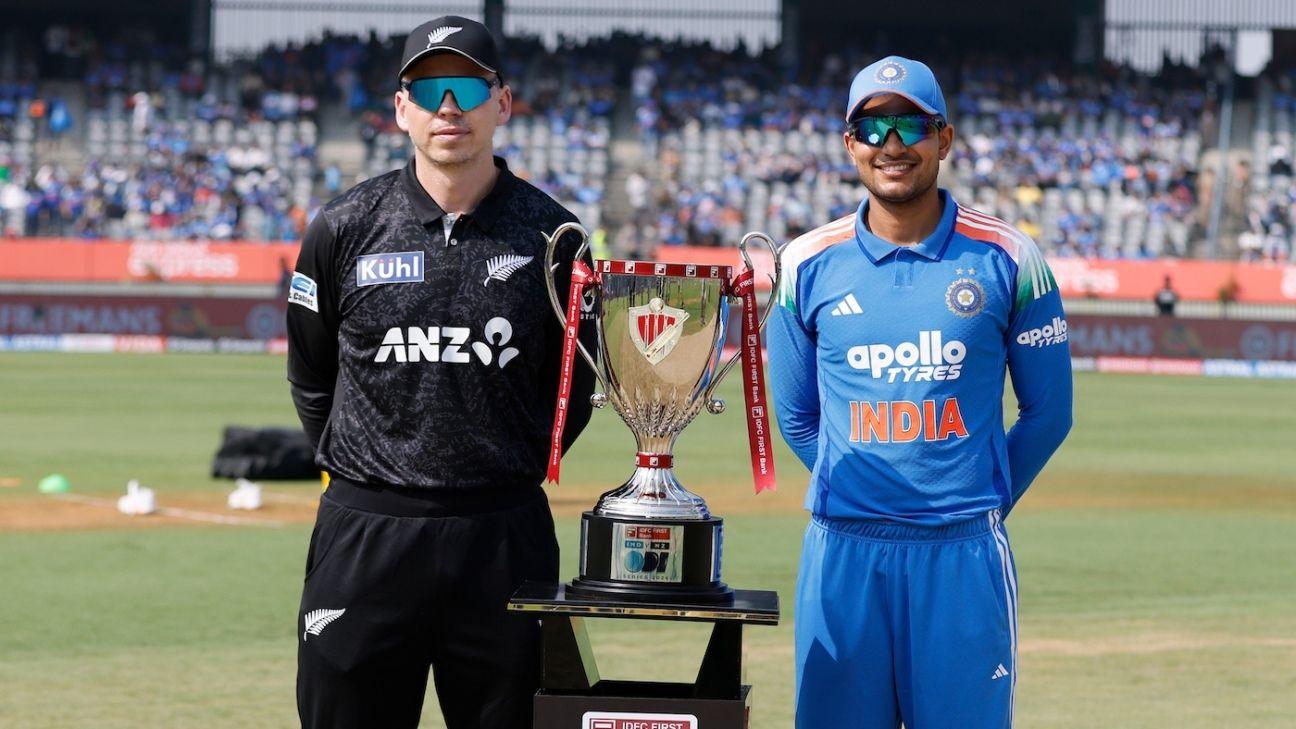
The ODI series has five matches, from November 4 to 15, 2026. India lead 1-0 after the first match, and four matches remain.
All five ODIs start at 3:00 PM local time in New Zealand. That is 7:30 AM IST, and 9:00 PM ET on the previous day in the USA.
Gill captains India for the first three ODIs. Shreyas Iyer is reported to captain the last two matches, at Bay Oval.
| Match | Date (2026) | Venue | Result |
|---|---|---|---|
| 1st ODI | Wednesday, November 4 | Eden Park, Auckland | India won by 5 wickets (DLS) |
| 2nd ODI | Saturday, November 7 | Sky Stadium, Wellington | To be played |
| 3rd ODI | Tuesday, November 10 | Seddon Park, Hamilton | To be played |
| 4th ODI | Friday, November 13 | Bay Oval, Mount Maunganui | To be played |
| 5th ODI | Sunday, November 15 | Bay Oval, Mount Maunganui | To be played |
The series moves from Auckland to Wellington to Hamilton. It finishes with two matches at Bay Oval, Mount Maunganui, on November 13 and 15.
New Zealand need to win in Wellington to stay level. A 2-0 lead for India after two matches would leave New Zealand needing three straight wins.
The ODI series is bilateral, not part of a championship. The two Tests that follow are part of the World Test Championship 2025-27.
2nd ODI: November 7, Sky Stadium, Wellington
The 2nd ODI is the next match on the tour. It starts at 3:00 PM local time in Wellington, 7:30 AM IST, and 9:00 PM ET on Friday, November 6, in the USA.
Wellington is a different challenge from Auckland. Sky Stadium has a larger outfield than Eden Park, and big hitting counts for less there.
New Zealand will want a better batting show. Their 185 in Auckland was well below par, and the middle order must score more in Wellington.
3rd ODI: November 10, Seddon Park, Hamilton
The 3rd ODI is at Seddon Park, Hamilton. It is the middle match of the series, and it often decides which team carries momentum into the final two games.
Hamilton hosted the 5th T20I on November 1. New Zealand won that match by 7 wickets, so they will have good memories of the ground.
4th ODI: November 13, Bay Oval, Mount Maunganui
The 4th ODI starts the Bay Oval double-header. Two matches at the same ground in three days test squad depth and adaptability.
Shreyas Iyer is reported to captain India here. The change comes after the first three ODIs, which Gill leads.
5th ODI: November 15, Bay Oval, Mount Maunganui
The 5th ODI closes the white-ball leg of the tour. The teams then move to red-ball cricket, with the 1st Test starting on November 19.
A deciding match at Bay Oval would be a fitting end. If the series is level at 2-2, the final ODI becomes a winner-takes-all game.
T20I Series 2026: India Won 3-2
India won the five-match T20I series 3-2. They won the first three matches, then lost the last two after the series was already sealed.
The series ran from October 22 to November 1, 2026. It was the opening leg of the 12-match tour, and it set the tone for the ODIs.
Glenn Phillips was named player of the series. He scored heavily in every match, and his series tally is reported as 337 runs by one source and 341 by another.
That conflict is not resolved in the reporting used here. Both figures are shown below, labelled by source, and neither is presented as the only truth.
| Match | Date (2026) | Venue | Result |
|---|---|---|---|
| 1st T20I | Thursday, October 22 | Hagley Oval, Christchurch | India won by 4 wickets |
| 2nd T20I | Saturday, October 24 | Hagley Oval, Christchurch | India won by 4 wickets |
| 3rd T20I | Tuesday, October 27 | Sky Stadium, Wellington | India won by 6 wickets |
| 4th T20I | Friday, October 30 | Eden Park, Auckland | New Zealand won by 87 runs |
| 5th T20I | Sunday, November 1 | Seddon Park, Hamilton | New Zealand won by 7 wickets |
1st T20I, October 22, Christchurch: India Won by 4 Wickets
New Zealand scored 225 for 4 in 20 overs. Glenn Phillips made 82 not out off 40 balls, and the total looked strong at Hagley Oval.
India chased it down with two balls to spare. They finished on 230 for 6 in 19.4 overs, with Sanju Samson scoring 67 off 33 balls.
The win gave India an early lead on tour. It was also a statement chase, because 226 is a big target in New Zealand conditions.
2nd T20I, October 24, Christchurch: India Won by 4 Wickets
New Zealand scored 180 for 5 in 20 overs. India replied with 181 for 6 in 19.5 overs to take a 2-0 lead.
The match was closer than the first. India needed almost the full 20 overs, and the series was still alive for New Zealand.
3rd T20I, October 27, Wellington: India Won by 6 Wickets
New Zealand scored 198 for 3 in 20 overs. India chased it in only 13.2 overs, finishing on 199 for 4 to seal the series.
The chase was the fastest of the series. India scored at more than 15 runs per over, and the match was over with 40 balls to spare.
India led 3-0 with two matches left. The series was decided, and the last two games became dead rubbers.
4th T20I, October 30, Auckland: New Zealand Won by 87 Runs
New Zealand scored 259 for 7 in 20 overs. It was the biggest total of the series, and it came at Eden Park, where short boundaries reward big hitting.
India were bowled out for 172 for 9. The 87-run margin was the largest of the series, and it gave New Zealand pride back.
5th T20I, November 1, Hamilton: New Zealand Won by 7 Wickets
India scored 191 for 8 in 20 overs. Shreyas Iyer and Ishan Kishan both made fifties, but India faded in the death overs.
New Zealand chased 192 in only 18 overs. Tim Seifert scored 93 off 50 balls, and Glenn Phillips finished 65 not out off 38 balls.
Adam Milne took 4 for 19 and was named player of the match. His spell broke India’s innings open, and New Zealand finished the series with a flourish.
The chase was the fastest of 190 or more against India in T20Is. That record is reported by Outlook India, and it shows how well New Zealand batted on the day.
Glenn Phillips and the Series Runs Record
Phillips was the standout batter of the T20I series. He scored in every match, and he finished the series as its top scorer by a wide margin.
One report puts his series tally at 337 runs. Another report puts it at 341 runs, and calls it the most runs by any batter in a bilateral T20I series.
The difference is four runs, and it is not resolved here. Check the official scorecards before quoting either figure as the record.
Either way, Phillips owned the series with the bat. His 82 not out in Christchurch and his 65 not out in Hamilton were the two most important innings for New Zealand.
Test Series 2026: November 19 to December 1
The Test series has two matches, from November 19 to December 1, 2026. Both Tests are part of the World Test Championship 2025-27.
India will want revenge for the 2024 whitewash. New Zealand won 3-0 in India in October and November 2024, the first time any team had done that.
New Zealand will want to defend their home record. They have not lost a home Test series to India since 2009, and their bowlers suit home conditions.
| Match | Dates (2026) | Venue | Start (IST) |
|---|---|---|---|
| 1st Test | November 19-23 | Basin Reserve, Wellington | 3:30 AM |
| 2nd Test | November 27-December 1 | Hagley Oval, Christchurch | 3:30 AM |
The 1st Test is at the Basin Reserve, Wellington. It is one of the windiest Test grounds in the world, and swing bowling often decides matches there.
The 2nd Test is at Hagley Oval, Christchurch. It closes the tour on December 1, after 40 days and 12 international matches.
What the Tests Mean for the World Test Championship
Every Test on this tour carries WTC points. The 2025-27 cycle runs across two years, and each series shapes the final standings.
India need away wins to reach the final. Their 2024 home whitewash against New Zealand hurt their last cycle, and away points are precious.
New Zealand also need home wins. They reached the first WTC final in 2021 and won it, and they want to return to the final.
Check the ICC points table at the time of reading. The standings change after every Test, so no table printed here stays true for long.
India vs New Zealand Head-to-Head Record
India lead the overall head-to-head in every format. The lead is clearest in T20Is, narrowest in Tests, and steady in ODIs.
The totals below are current to November 6, 2026. They include the five T20Is from October 2026 and the 1st ODI from November 4, 2026.
Head-to-head totals change after every match. Re-check them on ESPNcricinfo Statsguru before quoting them, and always state the cutoff date.
Head-to-Head by Format
| Format | Matches | India won | New Zealand won | Other results |
|---|---|---|---|---|
| Tests | 65 | 22 | 16 | 27 drawn |
| ODIs | 124 | 64 | 52 | 1 tied, 7 no result |
| T20Is | 36 | 22 | 13 | 1 tied |
| Total | 225 | 108 | 81 | 36 |
The arithmetic is simple to check. Before this tour, the teams had played 219 matches: 65 Tests, 123 ODIs, and 31 T20Is.
The tour added five T20Is and one ODI so far. India won three T20Is and one ODI, and New Zealand won two T20Is, which gives the current totals above.
One published table shows 35 T20Is instead of 36. That figure is a miscount, because 31 pre-tour matches plus 5 tour matches equals 36.
Head-to-Head at Home and Away
India are stronger at home in Tests. They have won 17 of their 22 Test wins against New Zealand at home, and only 5 away.
New Zealand have won 10 Tests at home. They have also won 5 away and 1 at a neutral venue, which was the 2021 WTC final in Southampton.
New Zealand broke two droughts in India in 2026 and 2024. They won their first Test series in India in 2024, and their first ODI series in India in January 2026.
India have never won a Test series in New Zealand since 2009. That away record is the one gap in India’s dominance of the fixture.
ICC Knockout Meetings: Level at 3-3
ICC knockout matches are the heart of this rivalry. New Zealand won the first three, India have won the last three, and the tally is level.
| Tournament | Match | Winner | Margin |
|---|---|---|---|
| Champions Trophy 2000 | Final, Nairobi | New Zealand | 4 wickets |
| ODI World Cup 2019 | Semi-final, Manchester | New Zealand | 18 runs |
| World Test Championship 2021 | Final, Southampton | New Zealand | 8 wickets |
| ODI World Cup 2023 | Semi-final, Mumbai | India | 70 runs |
| Champions Trophy 2025 | Final, Dubai | India | 4 wickets |
| T20 World Cup 2026 | Final, Ahmedabad | India | 96 runs |
New Zealand were India’s bogey team in knockouts for 21 years. From 2000 to 2021, India could not beat them when a trophy was on the line.
India have won the last three knockout meetings. The 2023 semi-final, the 2025 final, and the 2026 final turned the rivalry around.
In T20 World Cups alone, New Zealand still lead 3-1. They won in 2007, 2016, and 2021, and India won only the 2026 final.
Last 10 India vs New Zealand Meetings
The last 10 meetings show how fast the rivalry moves. India have won 7 of them, New Zealand have won 3, and the margins have been wide.
| Date | Match | Result |
|---|---|---|
| November 4, 2026 | 1st ODI, Auckland | India won by 5 wickets (DLS) |
| November 1, 2026 | 5th T20I, Hamilton | New Zealand won by 7 wickets |
| October 30, 2026 | 4th T20I, Auckland | New Zealand won by 87 runs |
| October 27, 2026 | 3rd T20I, Wellington | India won by 6 wickets |
| October 24, 2026 | 2nd T20I, Christchurch | India won by 4 wickets |
| October 22, 2026 | 1st T20I, Christchurch | India won by 4 wickets |
| March 8, 2026 | T20 World Cup Final, Ahmedabad | India won by 96 runs |
| January 31, 2026 | 5th T20I, Thiruvananthapuram | India won by 46 runs |
| January 28, 2026 | 4th T20I, Visakhapatnam | New Zealand won by 50 runs |
| January 25, 2026 | 3rd T20I, Guwahati | India won by 8 wickets |
Seven of the last 10 meetings were T20Is. The two teams have played more short-format cricket than any other format in 2026.
The biggest margin in the last 10 was the 2026 final. India won by 96 runs, which was also their biggest win margin in T20 World Cup history.
The Big Finals Between These Two Teams
India and New Zealand have met in six ICC knockout matches. Three were finals, two were semi-finals, and one was a World Test Championship final.
Each final below has its own scorecard. Together they explain why this fixture matters more than most bilateral series.
T20 World Cup Final 2026: India Won by 96 Runs, Ahmedabad
India scored 255 for 5 in 20 overs. It was the highest total ever scored in a T20 World Cup final, and it came at Narendra Modi Stadium, Ahmedabad, on March 8, 2026.
Sanju Samson led the way with 89 off 46 balls. Abhishek Sharma smashed 52 off 21 balls, including the fastest fifty of the tournament off 18 balls, and Ishan Kishan made 54 off 25.
New Zealand were bowled out for 159 in 19 overs. Jasprit Bumrah took 4 wickets and was named player of the match, and Axar Patel took 3 wickets.
New Zealand won the toss and chose to bowl. The decision backfired, because India posted a total no team had ever chased in a T20 World Cup final.
India became the first team to win three T20 World Cups. They won in 2007, 2024, and 2026, and they were the first team to defend the title.
The 96-run margin was India’s biggest in T20 World Cup history. It beat their previous best of 93 runs against Namibia in Delhi earlier in the same tournament.
See the full card on the Cricbuzz scorecard for the final, and the tournament hub on the ICC T20 World Cup site.
Champions Trophy Final 2025: India Won by 4 Wickets, Dubai
New Zealand scored 251 for 7 in 50 overs. Daryl Mitchell made 63, and Michael Bracewell finished 53 not out at Dubai International Cricket Stadium on March 9, 2025.
India chased it down with six balls to spare. They finished on 254 for 6 in 49 overs, with Rohit Sharma scoring 76 off 83 balls.
Rohit was named player of the match. His 76 set up the chase, and Shreyas Iyer added 48 in the middle overs.
Kuldeep Yadav took 2 for 40 for India. His spell kept New Zealand below 260, and the total proved just short of enough.
Rachin Ravindra was named player of the series. He was the tournament’s standout batter, even though his team lost the final.
New Zealand won the toss and chose to bat. India had played all their matches in Dubai, which was a talking point, but the final was won on the field.
India also beat New Zealand in the group stage of the same tournament. They won by 44 runs on March 2, 2025, with Varun Chakravarthy taking 5 for 42.
See the full card on the Cricbuzz scorecard for the final.
ODI World Cup Semi-Final 2023: India Won by 70 Runs, Mumbai
India scored 397 for 4 in 50 overs at Wankhede Stadium. It was the highest total in a World Cup knockout match, and it came on November 15, 2023.
Virat Kohli scored 117, his 50th ODI hundred. He passed Sachin Tendulkar’s record of 49 ODI hundreds in front of a home crowd, with Tendulkar watching.
Shreyas Iyer scored 105 off 70 balls. His century gave India the late surge that took them past 390.
New Zealand replied with 327 all out. Daryl Mitchell scored 134, and Kane Williamson made 69, but the target was too big.
Mohammed Shami took 7 for 57. It was the best bowling in a World Cup knockout match, and it broke New Zealand’s chase open.
The win sent India to the final. It was also the first time India had beaten New Zealand in a World Cup knockout match.
World Test Championship Final 2021: New Zealand Won by 8 Wickets
New Zealand won the first World Test Championship final. They beat India by 8 wickets at Southampton in June 2021, in a rain-affected match.
The final used a reserve day because of rain. New Zealand chased a small target on the sixth day to lift the Test mace.
The win gave New Zealand their first ICC trophy in 21 years. Their previous ICC title was the 2000 Champions Trophy, also won against India.
ODI World Cup Semi-Final 2019: New Zealand Won by 18 Runs
New Zealand beat India by 18 runs at Manchester. The semi-final ran over two days because of rain, and India fell short chasing 240.
The match is famous for two moments. Martin Guptill ran out MS Dhoni, and India lost their last hopes with that wicket.
New Zealand went on to lose the final to England. The final ended in a tie and was decided by a boundary countback.
Champions Trophy Final 2000: New Zealand Won by 4 Wickets
New Zealand beat India by 4 wickets in Nairobi. It was their first ICC trophy, and it started their long run of knockout wins over India.
Chris Cairns was the hero with an unbeaten hundred. He chased down India’s total and gave New Zealand a famous win.
The January 2026 Series in India
New Zealand toured India in January 2026 for eight white-ball matches. The tour ran from January 11 to 31, and it was the last series before the T20 World Cup.
New Zealand won the ODI series 2-1. It was their first ODI series win on Indian soil, and it was a major result.
India won the T20I series 4-1. The T20Is were preparation for the World Cup, and India used them to settle their best XI.
ODI Series, January 2026: New Zealand Won 2-1
| Match | Date (2026) | Venue | Result |
|---|---|---|---|
| 1st ODI | January 11 | Kotambi Stadium, Vadodara | India won by 4 wickets |
| 2nd ODI | January 14 | Niranjan Shah Stadium, Rajkot | New Zealand won by 7 wickets |
| 3rd ODI | January 18 | Holkar Cricket Stadium, Indore | New Zealand won by 41 runs |
India won the first ODI by 4 wickets. They chased 301, finishing on 306 for 6 in 49 overs at Vadodara.
New Zealand won the second ODI by 7 wickets. Daryl Mitchell scored 131 not out, and Will Young made 87, as New Zealand chased 285 in 47.3 overs.
New Zealand won the third ODI by 41 runs. They scored 337 for 8, with hundreds from Mitchell and Glenn Phillips, and bowled India out for 296.
Virat Kohli scored 124 off 108 balls in the third ODI. It was not enough, because New Zealand had too many runs on the board.
Daryl Mitchell was the ODI series’ top scorer with 352 runs. Kohli was India’s top scorer with 240 runs, and Mitchell was named player of the series.
T20I Series, January 2026: India Won 4-1
| Match | Date (2026) | Venue | Result |
|---|---|---|---|
| 1st T20I | January 21 | VCA Stadium, Nagpur | India won by 48 runs |
| 2nd T20I | January 23 | Shaheed Veer Narayan Singh Stadium, Raipur | India won by 7 wickets |
| 3rd T20I | January 25 | Barsapara Stadium, Guwahati | India won by 8 wickets |
| 4th T20I | January 28 | ACA-VDCA Stadium, Visakhapatnam | New Zealand won by 50 runs |
| 5th T20I | January 31 | Greenfield Stadium, Thiruvananthapuram | India won by 46 runs |
India scored 238 for 7 in the first T20I. Abhishek Sharma made 84 off 35 balls, and New Zealand managed only 190 for 7 in reply.
India won the second T20I by 7 wickets. Ishan Kishan scored 76 off 32 balls, and Suryakumar Yadav finished 82 not out off 37 balls.
India won the third T20I by 8 wickets in only 10 overs. New Zealand scored 153 for 9, and India chased it down with Abhishek 68 not out and Suryakumar 57 not out.
New Zealand won the fourth T20I by 50 runs. Tim Seifert scored 62 off 36 balls, and Mitchell Santner took 3 for 26.
India won the fifth T20I by 46 runs. Ishan Kishan scored a century off 42 balls, and Arshdeep Singh took 5 for 51.
Suryakumar Yadav was the T20I series’ top scorer with 242 runs. Glenn Phillips was New Zealand’s top scorer with 176 runs, and Suryakumar was named player of the series.
Records in the India vs New Zealand Fixture
Records give the rivalry its scale. They show which players and teams have owned the fixture over 70 years.
Every record below is labelled by source. Check the current figures on ESPNcricinfo Statsguru before quoting them, because records change after every series.
Most Runs in the Fixture
Sachin Tendulkar holds the ODI record against New Zealand. He scored 1,750 runs in 42 matches, with 5 centuries, according to competitor research.
Virat Kohli is climbing the same list. He scored 240 runs in the January 2026 ODI series alone, and he has passed 50 against New Zealand many times.
Daryl Mitchell scored 352 runs in the January 2026 ODI series. It was the highest aggregate in that series, and it included an unbeaten 131 and a hundred in the decider.
Glenn Phillips owns the T20I series record for now. His tally of 337 or 341 runs in October-November 2026 is reported as the most by any batter in a bilateral T20I series.
For the full career lists, see the most runs in international cricket page and the most wickets in all formats page.
Most Wickets in the Fixture
Mohammed Shami owns the most famous bowling in the fixture. His 7 for 57 in the 2023 World Cup semi-final is the best bowling in a World Cup knockout match.
Jasprit Bumrah owns the most famous T20 bowling in the fixture. His 4 wickets in the 2026 T20 World Cup final won him the player of the match award.
Arshdeep Singh took 5 for 51 in the January 2026 T20I finale. It was his best return in the fixture, and it sealed a 4-1 series win.
Varun Chakravarthy took 5 for 42 in the 2025 Champions Trophy group match. His mystery spin undid New Zealand in Dubai, and it set up the final rematch.
Highest and Lowest Team Totals
| Record | Figure | Match |
|---|---|---|
| Highest ODI total, India vs New Zealand | 397 for 4 | India, World Cup semi-final, Mumbai, 2023 |
| Highest T20I total, India vs New Zealand | 271 for 5 | India, 5th T20I, Thiruvananthapuram, January 2026 |
| Highest T20I total in a final | 255 for 5 | India, T20 World Cup final, Ahmedabad, 2026 |
| Lowest completed ODI total in the recent series | 185 all out | New Zealand, 1st ODI, Auckland, November 2026 |
| Lowest T20I total in the October 2026 series | 172 for 9 | India, 4th T20I, Auckland, October 2026 |
India’s 397 for 4 in Mumbai is the highest ODI total in the fixture. It came in a World Cup semi-final, which makes it the most valuable high total too.
India’s 255 for 5 in Ahmedabad is the highest total in any T20 World Cup final. No team had ever scored that many in a final before.
Biggest Wins by Runs and by Wickets
| Margin type | Margin | Match |
|---|---|---|
| Biggest win by runs, India | 96 runs | T20 World Cup final, Ahmedabad, 2026 |
| Biggest win by runs, New Zealand | 87 runs | 4th T20I, Auckland, October 2026 |
| Biggest win by wickets, India | 8 wickets | 3rd T20I, Guwahati, January 2026 |
| Biggest win by wickets, New Zealand | 7 wickets | 2nd ODI, Rajkot, January 2026; 5th T20I, Hamilton, November 2026 |
The 96-run win in the 2026 final is India’s biggest margin over New Zealand. It was also India’s biggest win margin in T20 World Cup history.
New Zealand’s 87-run win in Auckland was their biggest margin of the current tour. It came after India had already sealed the T20I series 3-0.
How to Read an India vs New Zealand Scorecard
A scorecard looks complicated at first, but it has only three parts. Batting, bowling, and fall of wickets tell you everything about a match.
Use the November 4, 2026 scorecard as your worked example. Every idea below is shown in that real match, so you can check it against the tables above.
The Batting Table, Column by Column
The batting table lists every batter in order. It shows how each batter got out, how many runs they scored, and how many balls they faced.
Runs is the score, balls is the number of deliveries faced. Kohli’s 74 off 51 balls means he scored 74 runs from 51 deliveries.
Fours and sixes count the boundaries. Kohli hit 13 fours and 1 six, which means 58 of his 74 runs came in boundaries.
Strike rate shows scoring speed. Kohli’s strike rate was 145.1, which means he scored 145 runs per 100 balls faced.
Not out means the batter was still batting at the end. Naman Dhir was 5 not out, and KL Rahul was 3 not out, when India won.
The Bowling Table, Column by Column
The bowling table lists every bowler used. It shows overs, maidens, runs conceded, wickets taken, and economy rate.
Overs are written with a decimal for balls. Brar’s 9.2 overs means 9 complete overs plus 2 balls, not 9 overs and 20 balls.
Maidens are overs with no runs scored. Kamboj bowled 2 maidens in his 10 overs, which is why his economy was only 2.20.
Economy rate is runs per over. Kamboj conceded 22 runs in 10 overs, so his economy was 2.20 runs per over.
Wickets are the batters dismissed by that bowler. Arshdeep took 4 wickets, which is written as 4 for 70, or 4/70.
Fall of Wickets and What It Tells You
Fall of wickets lists the score when each wicket fell. It shows whether a team collapsed, rebuilt, or lost wickets steadily.
New Zealand’s card shows a steady fall. They lost wickets at 22, 40, 73, 84, 97, 113, 115, 131, and 146, and never had a long stand.
India’s card shows one big stand. They lost only one wicket in the first 114 runs, which is why the chase felt safe.
A cluster of wickets close together means a collapse. New Zealand lost three wickets for 18 runs between 97 and 115, and that passage decided the match.
Worked Example: The November 4, 2026 Scorecard
Start with the result line. India won by 5 wickets (DLS method), which tells you India chased and New Zealand lost 5 wickets.
Read the totals next. New Zealand 185 all out in 40.2 overs, India 143 for 5 in 22.4 overs, target 143.
Find the top scorer. Kohli made 74 off 51 balls, which was the only fifty of the match and the innings that won it.
Find the best bowler. Arshdeep took 4 for 70 for India, and Duffy took 3 for 49 for New Zealand.
Check the fall of wickets. New Zealand fell steadily, India had one big stand, and the story of the match is clear in five lines.
The Laws of Cricket explain every term on the card. They are published by MCC, and they are the official source for definitions like not out, no ball, and wide.
Venues on the 2026 Tour
The tour uses six grounds across New Zealand. Each one plays differently, and the venue often shapes the result.
| Venue | City | Matches on this tour | Known for |
|---|---|---|---|
| Eden Park | Auckland | 4th T20I, 1st ODI | Short boundaries, drop-in pitch, high scores |
| Hagley Oval | Christchurch | 1st T20I, 2nd T20I, 2nd Test | Seam movement, even bounce, good crowds |
| Sky Stadium | Wellington | 3rd T20I, 2nd ODI | Large outfield, wind, swing bowling |
| Seddon Park | Hamilton | 5th T20I, 3rd ODI | True bounce, good batting pitch |
| Bay Oval | Mount Maunganui | 4th ODI, 5th ODI | Small ground, high scores, sea breeze |
| Basin Reserve | Wellington | 1st Test | Wind, swing, historic Test ground |
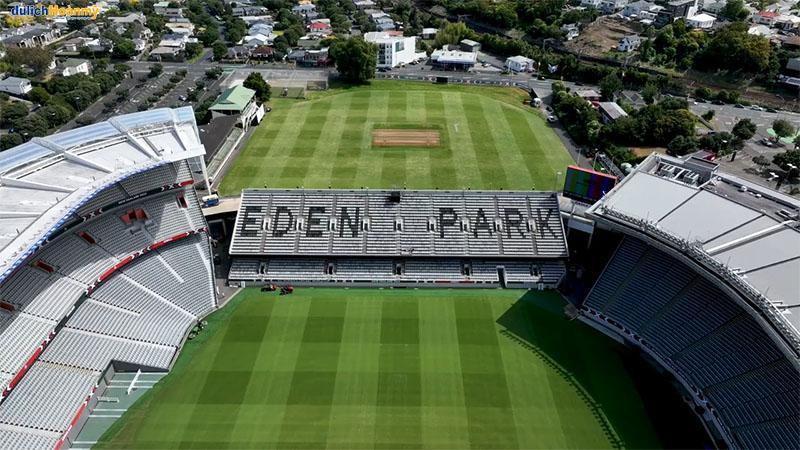
Eden Park has the shortest boundaries in international cricket. Its straight boundaries are famously short, which is why 259 for 7 was possible there in the 4th T20I.
Hagley Oval is New Zealand’s newest Test ground. It hosted the first two T20Is of this tour, and it hosts the 2nd Test in December.
The Basin Reserve is the spiritual home of New Zealand Test cricket. The 1st Test there starts on November 19, and the wind is always a factor.
For the venue of the 2026 final, see the Narendra Modi Stadium page. It hosted the T20 World Cup final in Ahmedabad, where India scored 255 for 5.
India vs New Zealand in the USA: Times and Where to Watch
Fans in the USA watch this tour on Willow TV. Willow TV carries the series on television, and Willow by Cricbuzz carries it for streaming.
India watches on Sony Sports Network and SonyLIV. New Zealand watches on Sky Sport NZ, and the UK watches on TNT Sports.
Start times are friendly for USA evenings. The ODIs start at 9:00 PM ET on the previous day, so USA fans watch at night.
USA Time Conversion for Every Remaining Match
All times below are reported from schedule guides. Re-check them on the broadcaster page before match day, because times can change.
| Match | Date (2026) | Start (IST) | Start (ET, USA) |
|---|---|---|---|
| 2nd ODI | Saturday, November 7 | 7:30 AM | 9:00 PM Friday, November 6 |
| 3rd ODI | Tuesday, November 10 | 7:30 AM | 9:00 PM Monday, November 9 |
| 4th ODI | Friday, November 13 | 7:30 AM | 9:00 PM Thursday, November 12 |
| 5th ODI | Sunday, November 15 | 7:30 AM | 9:00 PM Saturday, November 14 |
| 1st Test, Day 1 | Thursday, November 19 | 3:30 AM | 5:00 PM Wednesday, November 18 |
| 2nd Test, Day 1 | Friday, November 27 | 3:30 AM | 5:00 PM Thursday, November 26 |
The ET date is one day earlier than the IST date. That is because New Zealand is 17 to 18 hours ahead of the USA East Coast.
USA clocks changed from EDT to EST on November 1. The ET times above use EST, which applies for the rest of the tour.
USA Broadcast and Streaming
Willow TV is the USA television home for this tour. It carries every match of the ODI and Test series live.
Willow by Cricbuzz is the streaming option. It works on the web and on apps, and it carries the same live coverage as the TV channel.
Willow is also available through some USA TV bundles. Sling TV carries Willow through its Desi Binge Plus and Dakshin Flex plans, according to reporting.
Check subscription and availability on the broadcaster site before the match. Rights and packages can differ between the USA and Canada.
More Coverage on SportsVell
The India vs South Africa hub is the sister page to this one. Read the India vs South Africa match scorecard for the same dated-hub format, with the latest result first.
The India vs Australia timeline covers the other great rivalry. Read the India vs Australia timeline for every meeting between those two teams.
Records pages put the numbers in context. The most runs in international cricket page and the most wickets in all formats page list the career leaders.
Key Takeaways
India lead the live ODI series 1-0. They won the 1st ODI by 5 wickets (DLS) at Eden Park on November 4, 2026, with Kohli scoring 74.
India won the T20I series 3-2. They won the first three matches, and New Zealand won the last two after the series was sealed.
India won the 2026 T20 World Cup final by 96 runs. It was the biggest margin in the fixture, and it made India the first team to win three T20 World Cups.
The head-to-head is 225 matches: India 108, New Zealand 81. ICC knockout meetings are level at 3-3.
The next match is the 2nd ODI on November 7 in Wellington. The hub will be updated after it is played.
Frequently Asked Questions
Who won the latest India vs New Zealand match?
India won the latest match. They beat New Zealand by 5 wickets (DLS method) in the 1st ODI on November 4, 2026, at Eden Park, Auckland.
What was the score in the India vs New Zealand 1st ODI?
New Zealand scored 185 all out in 40.2 overs. India replied with 143 for 5 in 22.4 overs, chasing a rain-revised target of 143.
Who won the toss in the 1st ODI on November 4, 2026?
Shubman Gill won the toss for India and chose to bowl. His bowlers then kept New Zealand to 185, and the decision paid off.
Who scored the most runs in the 1st ODI?
Virat Kohli scored the most runs, with 74 off 51 balls. It was his 80th ODI fifty, and he reached the fifty off 35 balls.
Who took the most wickets in the 1st ODI?
Arshdeep Singh took the most wickets, with 4 for 70. Gurnoor Brar took 3 for 44, and Anshul Kamboj took 2 for 22.
Who was player of the match in the 1st ODI?
The player of the match is not confirmed in mainstream reporting. Social media infographics name Anshul Kamboj, but no major match report in the research names a winner, so treat it as unconfirmed.
What is the DLS method?
DLS stands for Duckworth-Lewis-Stern. It is the official rain rule that recalculates the target when overs are lost, using wickets in hand and overs left.
Why was India’s target 143 and not 186?
Rain reduced the match to 32 overs per side. DLS set a revised target of 143 from New Zealand’s 185, because India had fewer overs to bat.
When is the India vs New Zealand 2nd ODI?
The 2nd ODI is on Saturday, November 7, 2026. It is at Sky Stadium, Wellington, and starts at 7:30 AM IST, which is 9:00 PM ET on Friday, November 6, in the USA.
Who won the T20I series in October-November 2026?
India won the five-match T20I series 3-2. They won the first three matches in Christchurch and Wellington, and New Zealand won the last two in Auckland and Hamilton.
Who won the 2026 T20 World Cup final?
India beat New Zealand by 96 runs in the final. India scored 255 for 5, New Zealand were bowled out for 159, and the match was played on March 8, 2026, in Ahmedabad.
Who won the Champions Trophy 2025 final?
India beat New Zealand by 4 wickets in the final. New Zealand scored 251 for 7, India chased 254 for 6, and the match was played on March 9, 2025, in Dubai.
Who won the 2023 World Cup semi-final?
India beat New Zealand by 70 runs in Mumbai. India scored 397 for 4, with Kohli making 117 and Iyer 105, and Shami took 7 for 57.
What is the head-to-head record between India and New Zealand?
The teams have played 225 senior men’s internationals. India have won 108, New Zealand have won 81, and 36 matches ended in a draw, a tie, or no result, as of November 6, 2026.
What is the Test head-to-head record?
The teams have played 65 Tests. India have won 22, New Zealand have won 16, and 27 Tests have ended in a draw.
What is the ODI head-to-head record?
The teams have played 124 ODIs. India have won 64, New Zealand have won 52, with 1 tie and 7 no results, after the November 4, 2026 match.
What is the T20I head-to-head record?
The teams have played 36 T20Is. India have won 22, New Zealand have won 13, with 1 tie, after the November 1, 2026 match.
Who has won more ICC knockout matches?
The ICC knockout tally is level at 3-3. New Zealand won in 2000, 2019, and 2021, and India won in 2023, 2025, and 2026.
Has New Zealand ever beaten India in a World Cup final?
Yes, once, in the 2000 Champions Trophy final in Nairobi. New Zealand won by 4 wickets, but India won the 2025 Champions Trophy final and the 2026 T20 World Cup final.
What is New Zealand’s record in India?
New Zealand won their first Test series in India 3-0 in 2024. They also won their first ODI series in India 2-1 in January 2026, which was a major result.
Who is India’s captain on the New Zealand tour?
Shubman Gill captains India for the first three ODIs. Shreyas Iyer is reported to captain the last two ODIs, and Suryakumar Yadav captained the T20Is.
Who is New Zealand’s captain?
Mitchell Santner is New Zealand’s captain. He leads the team in all three formats on this tour.
When do the Tests start?
The 1st Test starts on November 19, 2026, in Wellington. The 2nd Test starts on November 27, 2026, in Christchurch, and the tour ends on December 1.
What time does the 2nd ODI start in the USA?
The 2nd ODI starts at 9:00 PM ET on Friday, November 6. The match itself is on Saturday, November 7, in New Zealand, at 7:30 AM IST.
Where can I watch India vs New Zealand in the USA?
Fans in the USA can watch on Willow TV. Streaming is available through Willow by Cricbuzz, and the series is also carried through some USA TV bundles.
Conclusion
India vs New Zealand is one of cricket’s best rivalries. The teams have played 225 times, the ICC knockout tally is level at 3-3, and the last three finals have all gone to India.
The latest result is India by 5 wickets in Auckland. Kohli’s 74 and Arshdeep’s four wickets gave India a 1-0 lead in the ODI series, and the T20I series already ended 3-2 to India.
The tour is far from over. Four ODIs and two Tests remain, and the 2nd ODI in Wellington on November 7 is the next chance for New Zealand to hit back.
Check back after every match. The scorecard hub above is updated after each game, with the latest result first and the full archive below it.
Last checked and updated on November 6, 2026. Scores are verified on Cricbuzz, CricTracker, and ESPNcricinfo, and head-to-head totals are recomputed with a stated cutoff date.