
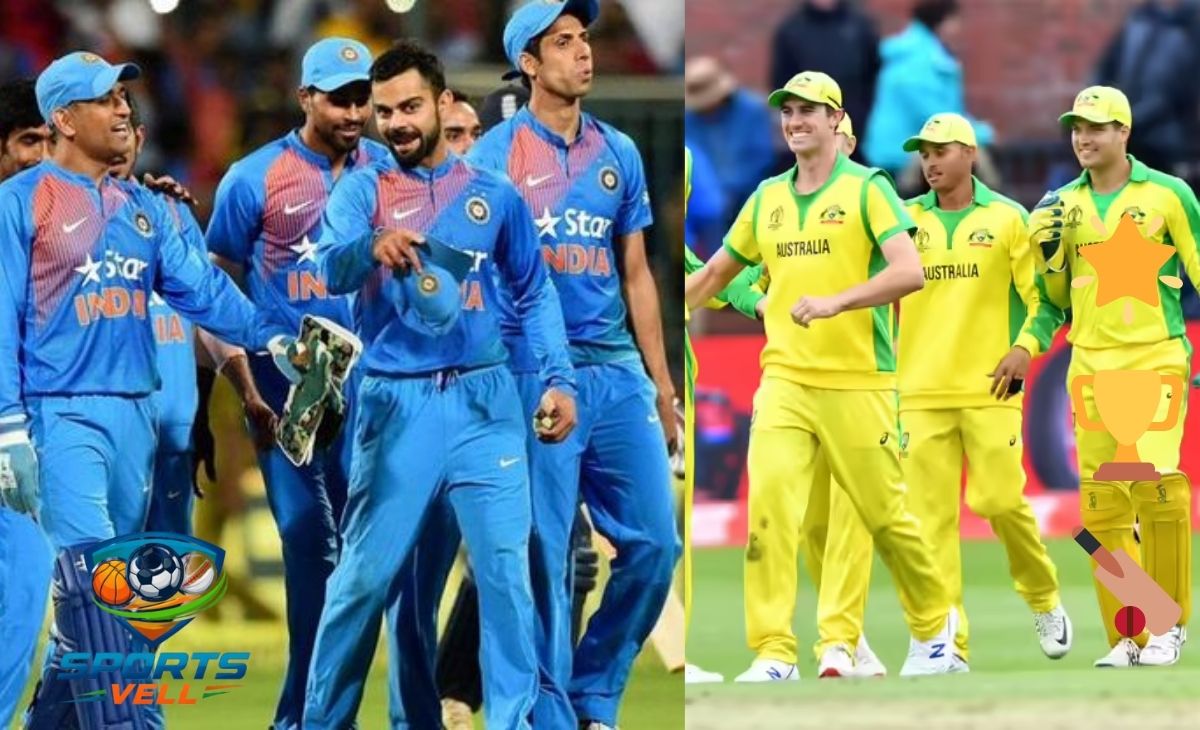
Two nations. One sport. A rivalry that has grown bigger than the game itself. The India vs Australia cricket story isn’t just a collection of match results and statistical records — it is a living, evolving battle between contrasting philosophies, generational talents, and two cricketing cultures that have spent decades pushing each other to extraordinary heights.
From a one-sided thrashing in Brisbane in 1947 to the absolute knife-edge drama of the 2023 World Cup Final in Ahmedabad, this rivalry has produced moments that define what cricket can be at its most electric. If you want the full timeline — the history, the turning points, the legendary matches, and the stats that frame it all — this is where you find it.
Explore the complete india national cricket team vs australian men’s cricket team timeline — Test history, head-to-head stats, legendary matches, Border-Gavaskar Trophy battles and ODI World Cup encounters.
Read more: What Does Suspended Mean in Cricket?
🕰️ Early Beginnings: Post‑Independence Showdowns
India’s first Test series as a fully independent nation didn’t go gently. It went straight to Australia — the most formidable cricketing nation on the planet at the time — for a five-match series in 1947-48. That series set the immediate tone for a relationship between these two nations that would spend the next several decades rebalancing itself before eventually becoming the greatest rivalry in world cricket.
The early years were defined by Australian dominance, Indian grit, and individual performances that hinted at what India would eventually become. The infrastructure wasn’t there yet. The depth wasn’t there. But the defiance was visible from the very beginning.
Stay with us to know everything about india national cricket team vs australian men’s cricket team timeline.
🏏 1947‑48: First Test Series in Australia
November 28, 1947. Brisbane. India and Australia met in Test cricket for the very first time. Don Bradman led Australia. Lala Amarnath captained India. And the result was comprehensive in a way that tells you everything about the gulf between the sides at that moment.
Australia won the five-match series 4-0. The first Test at Brisbane ended with India dismissed for 58 and 98, losing by an innings and 226 runs. Australia posted 382/8 declared. The second Test in Sydney was one of the genuinely surprising results of the series — a draw, with India posting 188 and 61/7 while Australia managed 107, a match where India actually had the better of the contest.
The third Test in Melbourne swung back to Australia with a 233-run win, the fourth in Adelaide produced an innings victory with Australia posting 674 and India unable to follow on successfully, and the fifth at Melbourne ended with another innings defeat as Australia made 575/8 declared.
The 4-0 result was harsh but honest. India was a new nation still organising itself in every dimension of public life. Their cricket team reflected that reality. What mattered more than the result was what those five Tests produced in terms of character, experience, and the beginning of an education in Test cricket at the highest level. Players like Vijay Hazare, who scored centuries in that series, demonstrated that quality existed — the system around it simply hadn’t caught up yet.
🏆 Classic Encounters: Tests, ODIs, and T20 Introductions
The decades that followed the 1947-48 tour were characterised by India gradually closing the gap in Tests while the ODI format opened a completely new dimension to the rivalry from the 1980s onwards. The T20 format would eventually arrive in 2007 and add a third layer that India would come to dominate almost from the outset.
🏆 Border‑Gavaskar Trophy and Test Clashes
The Border-Gavaskar Trophy, established in 1996 to honour both Allan Border and Sunil Gavaskar, formalised what had already become the most anticipated Test series in cricket. Named after two men who between them shaped the game’s batting history across two continents, the trophy gave the rivalry an official monument worth fighting for.
The 1999-2000 Australian tour to India produced one of the most celebrated series in the competition’s history. After Australia won the first Test, India’s response in Kolkata was built around one of the most astonishing individual performances Test cricket has ever witnessed. VVS Laxman’s 281 and Rahul Dravid’s 180 in a fourth-innings partnership of 376 — after India had been forced to follow on — ended Australia’s 16-match winning streak in Tests.
It remains one of the defining results in the history of Indian cricket, not just in this rivalry specifically. The series ended 2-1 to India. The psychological impact of that defeat on Australian cricket was enormous and long-lasting.
The 2008 series between the two nations was complicated by the infamous “Monkeygate” controversy involving Harbhajan Singh and Andrew Symonds during the Sydney Test. What made India’s campaign more remarkable was that despite the off-field noise, they won in Perth — a venue that had historically been among the most hostile for visiting batsmen in the world — to level the series. Ishant Sharma’s spell to Ricky Ponting in that Perth Test, repeatedly finding the outside edge with late movement, is one of the most celebrated bowling spells of the modern era.
The 2018-19 Border-Gavaskar series in Australia represented the first time India had ever won a Test series on Australian soil. Virat Kohli led a team that won 2-1. The first Test in Adelaide was a masterclass from India — winning by 31 runs after conceding the first innings advantage — and the third Test in Melbourne was settled by a margin of 137 runs. It was a genuinely historic achievement and one that changed how the cricketing world assessed India’s ability to perform outside subcontinental conditions.
The 2020-21 series that followed produced something even more dramatic. India arrived at the Adelaide Oval for the first Test and were dismissed for 36 all out in their second innings — their lowest-ever total in Test cricket. They then lost several key players to injury during the series, including Virat Kohli who returned to India for the birth of his child. What followed was one of the most remarkable Test series outcomes in cricket history.
India won the series 2-1, with the decisive moment coming at the Gabba in Brisbane — a venue where Australia had not lost a Test since 1988. India’s young and patched-up team, featuring several uncapped players, chased 328 on the final day to win the series. Shubman Gill, Washington Sundar, Shardul Thakur, and the composed finishing of Rishabh Pant produced a result that felt genuinely impossible until the moment it happened.
🌍 Landmark Matches in ODI and T20 Cricket
🏅 ODI World Cup Finals
India and Australia have met twice in ODI World Cup finals. Both times, the result went the same way — but the contexts and implications could not have been more different.
The 2003 Cricket World Cup Final in Johannesburg was one-sided in a way that hurt. Australia were at the absolute peak of their powers. Ricky Ponting batted as well as anyone has ever batted in a final, making 140 not out in an Australian total of 359/2. India were bowled out for 234 in response. The 125-run margin of defeat was not reflective of the quality India had shown throughout that tournament — Sachin Tendulkar had been the dominant batting presence across the group stages — but on the day, in the final, Australia were simply untouchable.
The 2023 Cricket World Cup Final in Ahmedabad carried an entirely different weight. India were hosting, India were favourites having won all ten of their group and knockout matches before the final, and the Narendra Modi Stadium was packed with a crowd of over 130,000 people overwhelmingly supporting the home side. India posted 240/10. Australia, seemingly against the momentum of the entire tournament, chased it down with six wickets to spare.
Travis Head’s 137 from 120 balls and David Warner’s 66-run partnership with him dismantled India’s bowling attack in a way that had simply not happened to India throughout the tournament. Pat Cummins’ captaincy, Cummins’ own bowling, and Mitchell Starc’s disciplined opening spells gave Australia’s batters the platform they needed. It was Australia’s sixth ODI World Cup title and India’s third consecutive World Cup final defeat.
⚡ T20I Milestones
The T20 chapter of this rivalry began with a result that still resonates. The 2007 ICC T20 World Cup semi-final in Durban produced Yuvraj Singh’s six sixes off Stuart Broad in a single over — the most famous six balls in the format’s history. India won by 15 runs and went on to win the inaugural T20 World Cup. Australia have not beaten India in a T20 World Cup knockout encounter since.
India’s T20I record against Australia is their strongest across all formats in the bilateral rivalry. From 32 T20Is, India have won 20 while Australia have managed 11 victories. Australia are yet to win a T20I series in India. India have swept series in Australia twice — 3-0 in 2016 and 2-1 in 2020. The most recent major T20 World Cup encounter, in the Super Eights of the 2024 T20 World Cup in the West Indies and USA, saw India win comfortably by 24 runs. The T20 format is where India have established the clearest and most consistent dominance in this rivalry.
📅 India vs Australia Timeline (Key Events)
Walking through the major chronological markers of this rivalry tells a story of shifting power, evolving formats, and individual brilliance.
1947 — First Test series. Australia win 4-0 under Don Bradman. India’s post-independence education begins at the highest level.
1956 — India host Australia for a three-Test series. Australia win 2-0 but India are more competitive, with Vinoo Mankad’s all-round contributions demonstrating the quality that was emerging.
1977-78 — India tour Australia and the series goes 3-2 to Australia — a genuinely competitive result that confirmed India’s growth as a Test nation.
1981 — India win their first Test series on Australian soil, a milestone 1-1 result that included individual heroics from Sunil Gavaskar.
1983 — India win the ODI World Cup, transforming cricket’s economic and cultural centre of gravity toward the subcontinent permanently.
1986 — Tied Test at Chennai. One of only two tied Tests in history. Australia need six runs off the last over with one wicket remaining. Maninder Singh’s last ball dismissal of Greg Matthews produces cricket’s most celebrated tied result.
1996 — Border-Gavaskar Trophy formally established, giving the Test rivalry its defining trophy and institutional identity.
1999-2000 — Laxman’s 281 and Dravid’s 180 in Kolkata. India end Australia’s 16-match Test winning streak. One of the most momentous results in the rivalry’s history.
2003 — Australia defeat India in the World Cup final in Johannesburg by 125 runs. Ponting scores 140 not out.
2007 — Yuvraj Singh’s six sixes off Stuart Broad in the T20 World Cup semi-final. India win the inaugural T20 World Cup.
2008 — “Monkeygate” series. India win in Perth, level the series, and leave Australia having demonstrated they can compete in the most hostile batting environments on the planet.
2011 — India beat Australia in the World Cup quarter-final at Ahmedabad. India go on to win the World Cup — their second ODI title.
2018-19 — India win their first-ever Test series in Australia, 2-1. A watershed moment in the history of Indian cricket overseas.
2020-21 — India win the Border-Gavaskar Trophy in Australia again, this time after being dismissed for 36 in Adelaide. The Gabba result — India winning a 32-year fortress Test — is the single most dramatic result in the rivalry’s modern era.
2023 — Australia beat India in the WTC Final at The Oval by 209 runs. Travis Head scores 163. Then Australia beat India in the ODI World Cup Final in Ahmedabad by 6 wickets.
2024-25 — Australia win the Border-Gavaskar Trophy 3-1, ending India’s run of successive series wins on Australian soil. Travis Head is again the decisive batting presence.
🔍 Rivalry Insights Across Formats
🎯 Test Cricket: Grit and Strategy
Tests remain the format where this rivalry carries the most weight and produces the most enduring memories. The head-to-head record across all Tests stands at Australia 48 wins, India 33 wins, with 31 draws from 112 Tests. Australia’s historical dominance is real, but the modern era — from approximately 2001 onwards — tells a different and far more balanced story. India have won in Adelaide, in Melbourne, in Sydney, and most dramatically in Brisbane.
They’ve built a touring team capable of competing under swing conditions in England as well as on the quick Australian pitches. The Border-Gavaskar Trophy has become genuinely the most prestigious bilateral Test prize in world cricket, drawing audiences and media attention that no other Test series, including the Ashes, consistently matches in terms of global viewership.
Stay with us to know everything about india national cricket team vs australian men’s cricket team timeline.
🏆 One Day Internationals: Big‑Stage Drama
Australia’s ODI dominance in this rivalry is statistically clear — 84 wins to India’s 57 from 151 matches. In World Cup encounters specifically, Australia lead 9-5 across 14 meetings. But two caveats matter. India’s performances in non-World Cup bilateral ODI series have been far more competitive, particularly on home soil where India have consistently been the stronger team. And the 2023 World Cup Final, painful as the result was, demonstrated that India are capable of reaching the pinnacle of major ODI tournaments consistently — the challenge now is converting those tournament appearances into titles.
⚡ T20 Cricket: Modern Clashes
Twenty20 cricket is India’s format in this rivalry and the numbers support that emphatically. Twenty wins from 32 T20Is against Australia. Two series wins in Australia. India’s dominance of the powerplay batting phase, their depth of quality spin bowling, and their ability to bat deep while maintaining high strike rates across the order have made them consistently better equipped for T20 cricket than Australia across the rivalry’s modern history.
📊 Records and Rivalry Stats
The statistical landscape of this rivalry rewards closer examination because the numbers tell multiple different stories depending on which era and format you look at.
Overall Head-to-Head (All Formats): Australia lead 143-111 from approximately 296 matches.
Tests: Australia lead 48-33 with 31 draws from 112 Tests.
ODIs: Australia lead 84-57 from 151 ODIs.
T20Is: India lead 20-11 from 32 T20Is.
ICC Tournaments: Australia lead narrowly 18-17 from 38 ICC tournament encounters across all formats.
Border-Gavaskar Trophy history: India hold the overall record in the modern era, winning six of the last eleven series. Australia reclaimed it in 2024-25.
Highest individual Test innings in the rivalry: Don Bradman’s 201 at Lord’s and VVS Laxman’s 281 in Kolkata remain the two most iconic individual batting performances.
Most Test wickets against the opposition: Anil Kumble leads for India with 111 wickets against Australia across his Test career. Glenn McGrath leads for Australia with 71 wickets against India.
Most ODI runs: Sachin Tendulkar with over 3,000 runs against Australia in ODI cricket, the most by any batsman against a single opponent in the history of the format.
Most T20I runs in the rivalry: Virat Kohli leads for India; David Warner has the best Australian numbers in bilateral T20Is.
Highest team total in bilateral T20Is: India posted 211/4 in a 2019 series encounter. Australia have crossed 200 on multiple occasions in return.
The Tied Test: The 1986 Madras Test remains one of only two tied Tests in the history of the game — a result so extraordinary that it required every single component of probability to align across five days of play.
Stay with us to know everything about india national cricket team vs australian men’s cricket team timeline.
🌟 Legendary Matches That Defined the Rivalry
Certain matches in any rivalry transcend the standard category of memorable result and enter something more permanent. In the India-Australia rivalry, several encounters have genuinely shaped what came after them.
The 1986 Tied Test in Chennai was the rivalry’s first genuinely historic moment in the modern era. India needed just 348 to win. They collapsed to 331/9 with four balls remaining. Then Maninder Singh was run out off the last ball of the match with scores level. A tied Test. India had posted 397 in their first innings, anchored by Sunil Gavaskar’s 90. Australia’s David Boon made 122 in their first innings. The final over remains one of the most analysed sequences of play in Test cricket history.
The Kolkata Test of 2001 is the rivalry’s most celebrated individual match and one of the most remarkable Tests ever played. India were asked to follow on, trailing by 274 runs, with Australia’s 16-match Test winning streak seemingly safe. Then VVS Laxman and Rahul Dravid batted for most of the fourth day in a partnership that added 376 runs, restructured the entire match, and eventually set Australia 384 to win. They were dismissed for 212. Harbhajan Singh took 6/73 to complete one of the most extraordinary reversals in Test history.
The Perth Test of 2008, played during the “Monkeygate” series, produced an India win at WACA — one of the quickest, bounciest pitches in world cricket and historically among the most difficult venues for Indian teams. Ishant Sharma’s bowling to Ricky Ponting across that match remains a masterclass in sustained high-pace pressure. India won by 72 runs and levelled a series that had been played in genuinely tense circumstances throughout.
The Gabba Test of January 2021 was the most dramatic result of the rivalry’s modern era. Australia had not lost at The Gabba since 1988 — 32 years. India arrived without Virat Kohli, Jasprit Bumrah, Mohammed Shami, and Hanuma Vihari, all unavailable due to injury. The target was 328. Shubman Gill made 91. Washington Sundar, playing only his second Test, contributed 22.
Rishabh Pant, still not fully trusted by everyone as a Test player at that point, batted with the audacity of someone who had decided the psychological weight of fortress Gabba simply did not apply to him. His unbeaten 89 off 138 balls finished the match with three wickets in hand and one over to spare. The dressing room celebrations were the kind usually reserved for World Cups.
❓ FAQs
1. 🏏 When did India and Australia first play each other in cricket?
India and Australia first met in Test cricket on November 28, 1947, in Brisbane during what was India’s first Test series as an independent nation. Australia, led by Don Bradman, won the five-match series 4-0. It was an education for India’s cricket system as much as a competitive series, and it planted the seeds for a rivalry that would eventually become the biggest bilateral cricket contest in the world.
2. 🌟 What are the most iconic matches in this rivalry?
Five matches stand clearly above the rest. The 1986 Tied Test in Chennai — one of only two tied Tests in history. The 2001 Kolkata Test where India overturned a follow-on to end Australia’s 16-match winning streak. The 2007 T20 World Cup semi-final featuring Yuvraj Singh’s six sixes. The 2021 Gabba Test where an injury-depleted India chased 328 to win. And the 2023 ODI World Cup Final in Ahmedabad where Australia won by six wickets to claim their sixth title despite India having dominated the entire tournament.
3. 📊 Who leads the head‑to‑head record?
Australia lead the overall all-format head-to-head with approximately 143 wins to India’s 111 from around 296 matches. In Tests specifically, Australia lead 48-33. In ODIs, Australia lead 84-57. India dominate T20Is with 20 wins to Australia’s 11. In ICC tournament matches across all formats, the record is almost perfectly level at 18-17 in Australia’s favour.
4. 🏆 What’s the most memorable ODI World Cup match between them?
The 2003 World Cup Final in Johannesburg holds historical significance as Australia’s most dominant performance. But the 2023 World Cup Final in Ahmedabad carries the most emotional and dramatic weight — India hosting, India favourites, India losing a World Cup Final for the third time in front of 130,000 people. Travis Head’s innings that day and Pat Cummins’ captaincy in pulling off what felt like an improbable result against the momentum of the entire tournament make it the rivalry’s defining ODI World Cup moment.
5. 🇮🇳 Has India won a series in Australia?
Yes, and it is one of Indian cricket’s most celebrated achievements. India first won a Test series in Australia in 2018-19, winning 2-1 under Virat Kohli’s captaincy. They then retained the Border-Gavaskar Trophy in 2020-21 with a 2-1 win despite an injury crisis that removed most of their first-choice players. Australia reclaimed the trophy in the 2024-25 series, winning 3-1. India have also won two T20I series in Australia — a 3-0 sweep in 2016 and a 2-1 series win in 2020.
🎯 Conclusion
The India vs Australia cricket rivalry is not simply the biggest bilateral contest in the game today — it is also the most narratively rich, the most statistically complex, and the most culturally significant. It spans an era from Don Bradman dismissing India’s ambitions in Brisbane in 1947 to Rishabh Pant racing to an impossible target at the Gabba in 2021, and every decade between those bookmarks has added chapters worth retelling.
Australia’s overall head-to-head advantage reflects decades of genuine dominance in Tests and ODIs. India’s modern surge — particularly the 2001 Kolkata miracle, the historic 2018-19 series win, the 2020-21 Gabba triumph, and India’s consistent T20I superiority — reflects how completely the balance of power has shifted in the 21st century. The current era, with both nations routinely ranked in the top three across all formats, produces matches where any result is genuinely possible and the margin of victory is frequently minimal.
The Border-Gavaskar Trophy sits at the centre of this rivalry as its greatest prize in the longest format. The ODI and T20I encounters continue to deliver the kind of individual performances and dramatic finishes that define great sporting rivalries. And the ICC tournament meetings, from the 2003 World Cup Final to the 2023 WTC Final and the 2023 ODI World Cup Final, have given this rivalry its most permanent moments.
Both nations have shaped each other by competing with such consistent intensity across so many decades. The next chapter is already being written.
