
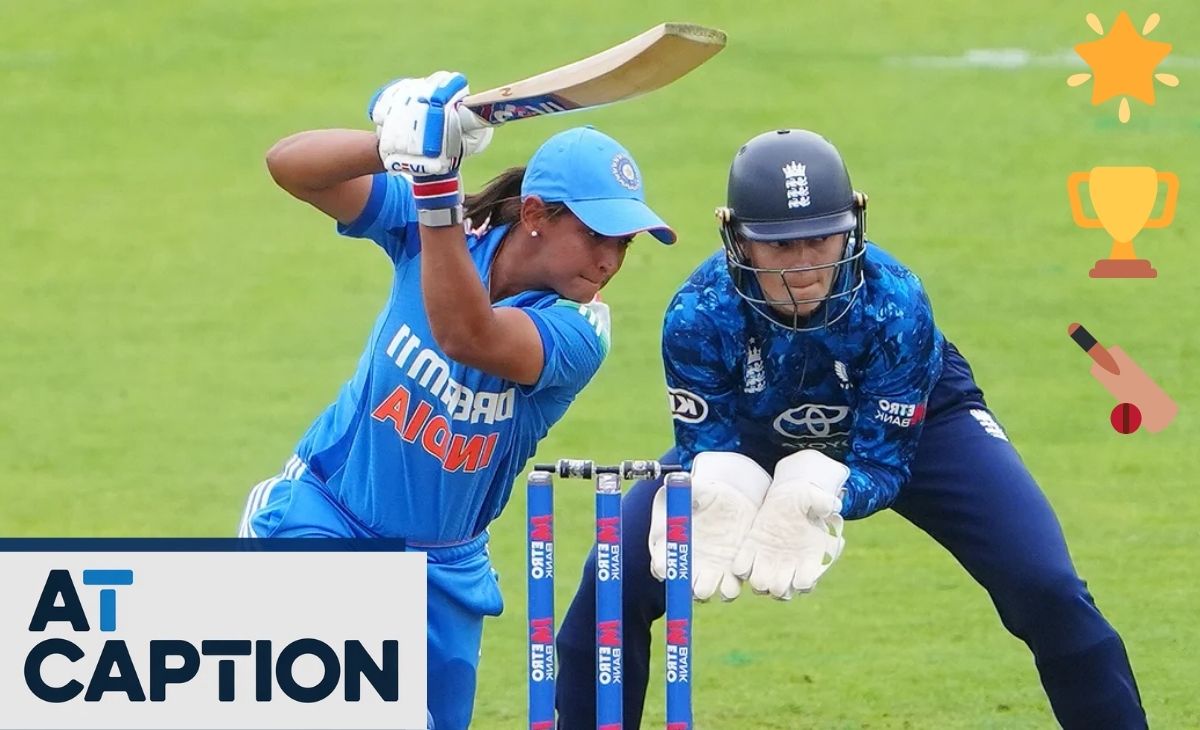
Two teams. Decades of competition. A rivalry that has quietly grown into one of the most compelling storylines in women’s cricket. The England Women’s National Cricket Team vs India Women’s National Cricket Team rivalry isn’t just about runs and wickets — it carries cultural weight, historical significance, and some of the most dramatic moments the women’s game has ever produced.
Explore the full england women’s national cricket team vs india women’s national cricket team timeline, key players, and the rivalry’s global impact.
From their very first meeting in 1978 to the breathless 2017 World Cup Final at Lord’s, and right through to the fiercely contested bilateral series of recent years, this fixture consistently delivers. If you follow women’s cricket, you already know this match-up hits different. Let’s walk through the full story.
Read more: What Does Suspended Mean in Cricket?
Early History of England Women vs India Women
The story of this rivalry begins on January 1, 1978 — and it began with a statement. India Women and England Women faced each other for the very first time at Eden Gardens in Kolkata during the ICC Women’s World Cup. England won that encounter by nine wickets, bowling India out for just 63 runs. It was a dominant performance that set a tone for the early years of the rivalry — England were the stronger, more experienced side, and they played like it.
That opening contest told you everything about where both teams stood at the time. England had decades of organized women’s cricket behind them. India was still building their programme from the ground up, learning the international game through experience rather than infrastructure.
First Test Series
The first Women’s Test between the two sides came in 1986, and it produced an immediate classic. The match ended in a draw, with India’s Shubhangi Kulkarni scoring 118 and England’s Lesley Cooke responding with scores of 72 and 117. The bowling duel was equally impressive — England’s Avril Starling took 7/97 while India’s Shantha Rangaswamy returned 6/114. For a first Test between the sides, it set a remarkably high standard.
The Tests that followed added more layers to the rivalry. In 1995, defending just 128 runs in Jamshedpur, England bowled India out for 125 — winning by two runs in a finish that left everyone breathless. Sangita Dabir’s all-round effort of 85 runs and five wickets had kept India in the hunt. England’s Debra Stock held her nerve to claim seven crucial wickets. A two-run Test match victory doesn’t happen very often in any format. That result is still talked about today.
Stay with us to know everything about england women’s national cricket team vs india women’s national cricket team timeline.
Key Highlights from the Early Years
India’s highest-ever team total in Tests against England came at Taunton in August 2002 — a mammoth 467, anchored by a legendary Mithali Raj double century of 214 runs. She became the first woman to score a double hundred in women’s Tests against England. Anjum Chopra, Hemlata Kala, and Jhulan Goswami also contributed fifties. The match ended in a draw, but India’s batting statement was unmistakable.
In 2014 at Wormsley, England were bundled out for just 92 in the first innings of a Test match against India. Niranjana Nagarajan took 4/19 and India won by six wickets. It remains England’s lowest team total in Tests between the two nations. The early years shaped both sides — England’s dominance was real, but India was learning fast and the gap was shrinking with every series.
England Women’s National Cricket Team vs India Women’s National Cricket Team Timeline
Understanding this rivalry fully requires walking through the key moments across all three formats over the decades. The following timeline captures the most defining chapters.
1978 — First meeting at Eden Gardens, ICC Women’s World Cup. England win by nine wickets.
1986 — First Women’s Test. Drawn match at Wormsley with centuries on both sides.
1993 — England host the Women’s World Cup. England win the title but India push hard through the group stages.
1995 — The two-run Test thriller in Jamshedpur. England survive India’s chase of 129 by the slimmest of margins.
2002 — Mithali Raj’s double century at Taunton. India post 467 in the Test. Match drawn.
2006 — India begin making significant strides in ODI cricket, starting to close the head-to-head gap in bilateral series.
2012 — India win their first Women’s World Twenty20 title, signalling a new era of ambition in Indian women’s cricket.
2014 — India beat England in the Test at Wormsley by six wickets. India lead Tests 2-1 from this point.
2017 — The most iconic match in this rivalry’s history: the ICC Women’s World Cup Final at Lord’s. England win by nine runs. Anya Shrubsole takes 6/46.
2021 — A one-off Test between the sides at Bristol. India win by an innings and 76 runs — their largest victory in Tests against England. India’s dominance in the longest format becomes clearer.
2022 — Commonwealth Games in Birmingham. India beat England in the semi-final. India finish with a bronze medal but deny England a shot at gold.
2023 — India’s historic 347-run win in the Navi Mumbai Test. The largest run-margin victory in Women’s Tests between these two sides.
2025 — India win their first Women’s T20I series in England 3-2. A landmark moment for Indian women’s cricket in English conditions.
Stay with us to know everything about england women’s national cricket team vs india women’s national cricket team timeline.
Historic Match: 2017 Women’s World Cup Final
No moment in the England vs India Women’s rivalry carries more weight than July 23, 2017, at Lord’s Cricket Ground. A near-capacity crowd of around 24,000 people packed into the home of cricket for a Women’s World Cup Final that delivered everything sport is supposed to deliver and then some.
England won the toss and elected to bat. Their openers Lauren Winfield and Tammy Beaumont put on 47 runs before the innings wobbled slightly, losing three wickets in quick succession. Sarah Taylor and Natalie Sciver steadied the innings with an 83-run partnership for the fourth wicket. Sciver made 51 before falling to Jhulan Goswami’s persistently excellent line and length. Katherine Brunt hit a critical 34 lower down the order and Jenny Gunn finished unbeaten on 25. England reached 228/7 from their 50 overs. Jhulan Goswami was India’s standout bowler with 3/23 — one of the great bowling performances in a World Cup final.
India’s chase started badly. Smriti Mandhana was bowled by Anya Shrubsole for a duck in the second over. Then something extraordinary happened — Harmanpreet Kaur arrived at number four and began one of the most compelling innings seen in any World Cup final. Despite the early wicket, India kept building through Punam Raut’s controlled 86 runs. Reaching 191/3 in the 43rd over with the asking rate well under control, India were favourites to win their first Women’s World Cup.
Then Shrubsole changed everything. Raut was dismissed lbw by Shrubsole and the Indian batting collapsed catastrophically. Four wickets fell in just 13 balls. India went from 191/3 to 201/7 in what felt like a heartbeat. Deepti Sharma and Shikha Pandey tried to mount a recovery, but Shrubsole removed them both. With India needing 11 from the last two overs, the task was still theoretically achievable. Shrubsole dismissed both Deepti and Rajeshwari Gayakwad in four balls to seal England’s victory. India were bowled out for 219. England won by nine runs and claimed their fourth Women’s World Cup title. Shrubsole’s figures of 6/46 remain the best bowling performance in any Women’s World Cup final to this day.
Match Scorecard (Summary)
England Women — 228/7 (50 overs) Tammy Beaumont — 23, Lauren Winfield — 24, Sarah Taylor — 45, Natalie Sciver — 51, Katherine Brunt — 34, Jenny Gunn — 25 not out, Laura Marsh — 14 not out Jhulan Goswami — 3/23
India Women — 219 all out (48.4 overs) Punam Raut — 86, Harmanpreet Kaur — 51, Mithali Raj — 17, Smriti Mandhana — 0 Anya Shrubsole — 6/46
Result: England Women won by 9 runs Venue: Lord’s Cricket Ground, London Date: July 23, 2017 Player of the Match: Anya Shrubsole (England) Player of the Series: Tammy Beaumont (England) — 410 runs
Stay with us to know everything about england women’s national cricket team vs india women’s national cricket team timeline.
Key Performers
Anya Shrubsole’s 6/46 is the defining individual performance of this rivalry’s history. She took four wickets inside 13 deliveries when India were in total control of the match. That spell is studied and discussed in women’s cricket coaching circles to this day.
Punam Raut’s 86 was a masterclass in anchoring a chase. She held the innings together through difficult periods and her dismissal triggered the collapse. In a losing cause, that innings deserved more recognition than it typically receives.
Tammy Beaumont’s tournament was exceptional — 410 runs over the series earns a Player of the Series award that is richly deserved. Harmanpreet Kaur’s innings during the semi-final against Australia that tournament — an unbeaten 171 — had signalled India’s ambition long before the final.
England Women vs India Women: Head-to-Head Stats
Numbers tell a story, and the head-to-head record between these two sides tells one of gradual power shift. England have held the overall advantage historically, but India’s improving record across all formats over the last decade makes the current standing closer than it has ever been.
Overall International Record (Approximate)
Women’s ODIs Total matches played: Approximately 80+ England wins: Around 40 India wins: Around 34 No result/Tied: A small number
Women’s T20Is Total matches played: 26+ England wins: 19 India wins: Approximately 7
Women’s Tests Total matches played: 7 India wins: 3 England wins: 2 Drawn: 2
England hold an overall edge in ODIs and T20Is, but India have reversed that dynamic in Test cricket. The Tests record in India’s favour is particularly striking given that Tests are the format where longer-standing traditions of the game usually benefit more established nations. India winning the Test record speaks directly to the depth of batting talent and match-temperament their players now possess.
The highest team total in T20Is between the two sides belongs to England — 199/3 in March 2018 at the Brabourne Stadium in Mumbai, successfully chasing India’s 198/4 in a match that featured Danni Wyatt-Hodge’s 124 from just 64 balls, the highest individual T20I score between these sides. India’s highest team total in Tests is that 467 at Taunton from 2002. The lowest team total in T20Is between the two belongs to India — 88/8 at Taunton in June 2011, a match England won by 46 runs.
Most runs in T20Is between the sides: Smriti Mandhana — 660 runs in 18 matches, averaging 40.53 at a strike rate of 143.73. That is a remarkable individual record in any bilateral rivalry. Most wickets: Katherine Sciver-Brunt — 23 wickets at an average of 16.21 and an economy of 5.44. Dominant numbers against any opposition.
Notable England Women vs India Women Match Scorecards
Beyond the 2017 World Cup Final, this rivalry has produced several other scorecards worth documenting in any serious timeline.
Example ODI Match Scorecard
England Women vs India Women — ODI Venue: Brabourne Stadium, Mumbai Date: March 2018
India Women — 198/4 (20 overs) Smriti Mandhana — 53, Harmanpreet Kaur — 43
England Women — 199/3 (20 overs) — England won by 7 wickets Danni Wyatt-Hodge — 124 (64 balls), Tammy Beaumont — 50
This match demonstrated exactly what England’s batting depth is capable of when the top order fires in unison. Chasing 199 in a T20I away from home requires exceptional nerve and shot-making. Wyatt-Hodge’s 124 off 64 balls included thunderous hitting at the death.
Example T20 Match Scorecard
England Women vs India Women — Women’s T20I Venue: Lord’s Cricket Ground Date: July 2021 series
India Women — 148/6 (20 overs) Smriti Mandhana — 70, Deepti Sharma — 40
England Women — 143/8 (20 overs) — India won by 5 runs
India’s tighter bowling in the final overs proved decisive. Matches like these — close, high-quality T20Is with multiple momentum shifts — are why this fixture draws strong viewership even in bilateral series that don’t carry a World Cup tag.
Key Players in the Rivalry
Great rivalries produce great individual stories. England vs India Women has given world cricket a collection of players whose performances in this fixture alone would justify their place in the game’s history.
England Women Stars
Anya Shrubsole — Her 6/46 in the 2017 final is the headline number, but she has been consistently dangerous against Indian batting throughout her career. She understands how to build pressure across an innings rather than just seek wickets in isolation. An intelligent, match-shifting bowler.
Tammy Beaumont — 410 runs in the 2017 World Cup alone. Beaumont has been England’s most consistent batting presence in this fixture across formats. She reads innings requirements exceptionally well and her ability to anchor a chase while still scoring at a healthy rate makes her invaluable.
Katherine Sciver-Brunt — The most prolific wicket-taker against India in T20Is with 23 wickets. She’s also contributed vital innings with the bat in close matches. A genuine all-rounder whose numbers against India are exceptional by any standard.
Heather Knight — England’s captain during the 2017 World Cup triumph. Her leadership under pressure, particularly in tense chase situations, has defined England’s ability to close out tight games against India. She’s also contributed significant runs across both ODI and T20I formats.
Sophie Ecclestone — England’s leading T20I wicket-taker overall and a critical bowling weapon in this fixture in recent years. India’s batters have found her left-arm spin difficult to get away, and her economy rates against India are consistently controlled.
Stay with us to know everything about england women’s national cricket team vs india women’s national cricket team timeline.
India Women Stars
Mithali Raj — The most legendary figure in Indian women’s cricket history, full stop. Her 214 in the 2002 Test at Taunton is the single most iconic innings in this rivalry’s Test history. She also passed Charlotte Edwards’ record of most runs in Women’s ODIs during a match against England in the 2017 World Cup. 511 Test runs against England. A player who rewrote what was possible for Indian women in the longest format.
Jhulan Goswami — India’s greatest-ever pace bowler. Her 3/23 in the 2017 World Cup Final remains one of the finest bowling performances in a World Cup final. She was consistently troublesome to England batters over two decades of international cricket. Her ability to move the ball both ways at pace gave her a weapon that few women’s bowlers have possessed.
Harmanpreet Kaur — The modern face of India’s aggressive batting approach. Her innings in this rivalry, including crucial contributions in the 2017 World Cup and the 2022 Commonwealth Games, have repeatedly demonstrated India’s willingness to take the game on and dominate rather than just compete.
Smriti Mandhana — 660 T20I runs against England at an average of 40.53 and a strike rate of 143.73. Those are staggering numbers. Mandhana is the player England bowlers most need to dismiss early in T20I cricket. When she gets going against England, matches change rapidly. Her ability to set up innings in the powerplay is arguably unmatched in the current era of women’s T20 cricket.
Deepti Sharma — A slow left-arm bowling all-rounder who has increasingly become one of India’s most important players in all formats. Her contributions with both bat and ball in matches against England have been valuable from the mid-2010s onwards. She represents India’s depth and balance in a way that has made them a genuinely complete team.
How the Rivalry Has Evolved
The England vs India Women’s rivalry has changed more in the last eight years than in the preceding forty. What was once a clear hierarchy — England established, India developing — has become a genuine contest between two sides capable of beating each other in any format on any given day.
The turning point, broadly speaking, was 2017. India’s run to the World Cup Final and their near-victory despite being considered underdogs lit something inside Indian women’s cricket that hasn’t dimmed since. The BCCI’s increased investment in the women’s game following 2017 changed the infrastructure around Indian players. Better contracts. More domestic cricket. Improved conditioning programmes. International experience delivered through the expanded Women’s Premier League.
England’s response has been equally professional. Their centrally contracted women’s players now operate in one of the most well-supported systems in world cricket, with The Hundred and the regional domestic structure creating pathways for talent development that didn’t exist a decade ago.
Stay with us to know everything about england women’s national cricket team vs india women’s national cricket team timeline.
Key Changes in the Rivalry
Format Balance — India now hold the Test record advantage (3-1). This wasn’t the case historically and reflects India’s outstanding batting depth and their ability to construct match-winning innings across five days. England’s T20I record remains stronger, but the 2025 series result — India winning their first T20I series in England — signals that even that advantage is no longer guaranteed.
Venue Dynamics — India have historically been far harder to beat at home. England’s recent results in India, including their T20I series battles, show they’ve improved their ability to adapt to subcontinental conditions. India, meanwhile, have made England uncomfortable on English soil in ways they weren’t previously capable of.
Batting Depth — Both teams now possess batting line-ups capable of posting and chasing substantial totals. The days of either side being dismissed cheaply out of inexperience are largely gone. The 2017 Final was the last time a genuine collapse from inexperienced batters under pressure changed a major result. Both sides now have too many experienced, professionally contracted players for that to happen regularly.
Bowling Sophistication — Sophie Ecclestone and Deepti Sharma represent the current era of wrist spin and orthodox slow bowling dominating T20 cricket. The bowling contests in recent series have been far more tactically sophisticated than the pace-oriented battles of previous eras.
Why This Rivalry Matters in Women’s Cricket
Ask any serious women’s cricket fan to name the five most important bilateral rivalries in the game and England vs India will appear on every list. The reason goes beyond results and statistics.
This fixture carries the weight of two enormous cricketing cultures meeting on an equal stage. England is the home of cricket, the country that wrote the laws of the game and hosted the first international women’s match in 1934. India is the country that transformed women’s cricket from a niche pursuit to a genuinely commercial proposition — the Women’s Premier League alone has changed how the entire world thinks about professional women’s cricket financially.
When these two teams meet, audiences in both countries pay attention in ways that don’t happen for other bilateral series. The 2017 World Cup Final remains one of the most-watched cricket events in BBC history. Broadcast figures for England vs India women’s T20Is have consistently outperformed other bilateral series across both nations.
Its impact includes:
Elevating women’s cricket viewership numbers in both England and India simultaneously, with every major series driving record-breaking broadcast audiences. Creating a commercial case for women’s cricket that sponsors and broadcasters have responded to with increased investment across both nations. Producing individual performances — Mithali Raj’s double century, Shrubsole’s six-wicket final, Mandhana’s consistent T20 brilliance — that have entered the wider cricket conversation rather than remaining confined to the women’s game. Inspiring the next generation of players in both countries. Several current players in both squads have cited watching the 2017 World Cup Final as the moment they committed fully to cricket as a career. Building a template for what a high-quality women’s cricket rivalry looks like — competitive, professional, technically skilled, and compelling to neutral observers.
FAQs
When did England Women first play India Women in cricket?
The two sides first met on January 1, 1978, during the ICC Women’s World Cup at Eden Gardens, Kolkata. England won by nine wickets after bowling India out for just 63 runs.
Who won the 2017 Women’s World Cup final?
England Women won the 2017 ICC Women’s World Cup Final at Lord’s by nine runs. England posted 228/7 and India fell for 219 all out in 48.4 overs. Anya Shrubsole’s extraordinary spell of 6/46 secured the victory after India had appeared well-placed to win the title.
Which team has better head-to-head stats?
England hold the overall head-to-head advantage in ODIs (approximately 40-34) and T20Is (19 wins from 26 matches). India, however, lead in Women’s Tests with a 3-1 record. The overall balance has shifted significantly toward competitive parity since 2017.
Who are the most famous players in this rivalry?
Mithali Raj, Jhulan Goswami, Smriti Mandhana, and Harmanpreet Kaur are the most iconic Indian names in this fixture. For England, Anya Shrubsole, Tammy Beaumont, Katherine Sciver-Brunt, Heather Knight, and Sophie Ecclestone are the standout performers across different eras of the rivalry.
Are England and India rivals in T20 cricket?
Absolutely. While England historically dominated T20I encounters, the rivalry in the shortest format has become genuinely competitive in recent years. India won their first T20I series in England in 2025, marking a significant milestone in how close the T20I balance between the two sides has become.
Conclusion
The England Women’s National Cricket Team vs India Women’s National Cricket Team rivalry is one of the richest narratives in women’s sport. What began with a lopsided result at Eden Gardens in 1978 has evolved across nearly five decades into one of cricket’s most anticipated fixtures in any format. England’s early dominance gave way to genuine competition. India’s near-miss in the 2017 World Cup Final became the fuel for a generational improvement in every department of their game. And the recent shift in Test and T20I records reflects exactly how far India have come in the years since.
Both teams are currently among the top four in the women’s world rankings. Both have recently won or come close to winning major ICC trophies. Both possess match-winners capable of changing games within single sessions. That combination — plus the cultural and commercial significance of the fixture — ensures this rivalry will only grow in stature over the coming decade. If you haven’t been following it closely, now is an excellent time to start.
