What Is the Ghost Runner Rule in MLB? Extra Innings Explained
Imagine watching a close baseball game that remains tied after nine innings. Both teams have exhausted their best scoring opportunities, and the game heads into extra innings.
Then something unusual happens.
Before the first pitch of the 10th inning, an offensive player walks directly to second base without hitting the ball, drawing a walk, or stealing a base.
That player is known as the ghost runner, officially called the automatic runner.
The MLB ghost runner rule has changed how regular-season extra innings work. It gives each team an immediate scoring opportunity and makes long, exhausting games less common.
However, the rule has several details that can confuse even experienced baseball fans.
Who becomes the runner? Does the run count as earned? What happens if the game reaches the 11th inning? And why is the rule not used during the World Series?
Here’s a complete explanation of the MLB ghost runner rule in 2026.
What Is the Ghost Runner Rule in MLB?
The MLB ghost runner rule places an automatic runner on second base at the beginning of every half-inning after the ninth inning during regular-season games.
If a game is tied after nine innings, the visiting team begins the top of the 10th with a runner on second and nobody out.
When the home team comes to bat in the bottom of the 10th, it also begins with a runner on second.
The same procedure continues in the 11th inning and beyond until the game ends.
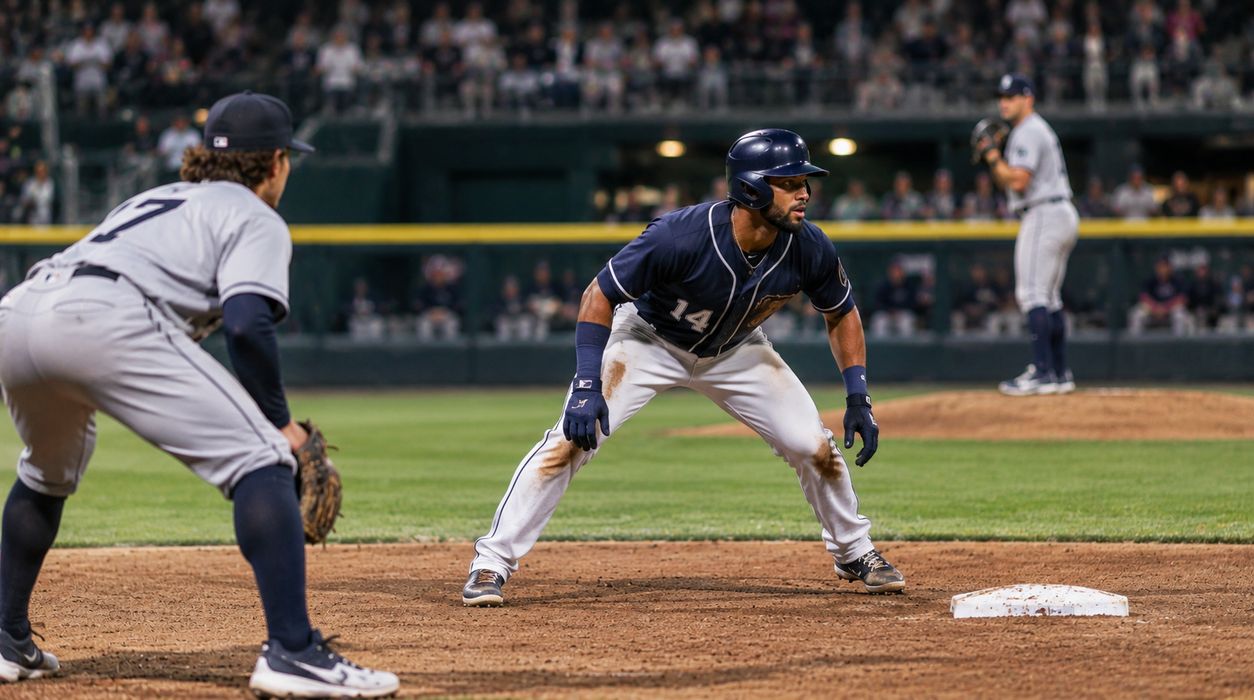
The runner is a real player, not an imaginary baserunner.
The nickname “ghost runner” comes from informal baseball terminology, while MLB officially refers to the player as the automatic runner.
The rule gives teams a better chance to score without needing multiple hits or walks.
According to MLB’s official automatic runner glossary, the rule applies to regular-season games but not postseason competition.
How Does the MLB Ghost Runner Rule Work?
The process is straightforward.
Suppose the New York Yankees and Boston Red Sox finish nine innings tied 3-3.
The game enters the 10th inning.
Before Boston’s first batter steps into the box, an eligible Red Sox player takes second base.
There are no outs.
Boston can now score with a well-placed single, two productive outs, or another offensive play.
After Boston completes its half-inning, New York begins the bottom of the 10th with its own automatic runner on second.
The Yankees receive the same opportunity.
If Boston scores one run, New York must score at least one to keep the game alive.
If New York scores two, it wins immediately on a walk-off.
If neither team establishes a winning lead, the game continues into the 11th.
Every additional half-inning begins with another automatic runner on second.
The rule does not impose a fixed limit on the number of extra innings.
Who Is the Ghost Runner in Extra Innings?
MLB uses the batting order to determine which player begins the inning on second base.
The automatic runner is normally the player immediately preceding the scheduled leadoff hitter in the batting order.
For example, imagine the seventh hitter is scheduled to lead off the 10th inning.
The sixth hitter becomes the automatic runner.
If the first hitter is scheduled to lead off, the ninth hitter becomes the runner.
This system prevents teams from automatically choosing their fastest player every inning.
The automatic runner must follow the established batting order unless the team makes a legal substitution.
That means a slow catcher, designated hitter, or power hitter could become the runner.
The manager must decide whether replacing that player with a faster substitute would improve the team’s chances of scoring.
Can a Team Use a Pinch Runner Instead?
Yes. A manager can substitute an eligible pinch runner for the player assigned to second base.
This is particularly useful when the scheduled automatic runner is not fast.
Imagine a team entering the 10th inning with a slow veteran slugger assigned to second.
The manager may choose a speedy bench player to replace him.
That substitute could score more easily on a shallow single or advance on a ground ball.
However, the decision comes with a cost.
Under normal substitution rules, the player removed from the game generally cannot return.
The manager must consider whether improving the immediate scoring opportunity is worth losing the original player for later innings.
This becomes especially important when a team has a short bench or the game could continue for several more innings.
The ghost runner rule therefore creates a strategic decision before the first pitch of an extra inning.
When Did MLB Introduce the Ghost Runner Rule?
Major League Baseball introduced the automatic runner rule during the shortened 2020 season.
At the time, baseball was operating under unusual health and scheduling circumstances.
The league wanted to reduce the likelihood of extremely long games and limit the workload placed on pitchers.
Beginning extra innings with a runner on second made it easier for teams to score and finish games sooner.
The rule remained in place during the 2021 and 2022 seasons.
In February 2023, MLB’s Joint Competition Committee approved making the automatic runner a permanent part of regular-season baseball.
That decision established the rule beyond its original pandemic-related purpose.
As of the 2026 season, the automatic runner remains part of MLB’s regular-season extra-innings format.
Why Does MLB Use a Ghost Runner?
The primary purpose is to reduce the frequency of unusually long games.
Before the automatic runner rule, tied baseball games could continue for many innings without either team scoring.
A game might reach the 14th, 16th, or even 18th inning.
Those games created problems for players, coaches, and teams.
Protecting pitching staffs
Long games can force managers to use nearly every available relief pitcher.
That creates challenges for the following day’s game.
A team might need to recall additional pitchers or ask an already tired bullpen to handle another heavy workload.
The automatic runner increases the likelihood of scoring and helps reduce that pressure.
Improving scheduling
MLB teams frequently travel between cities and play games on consecutive days.
An exceptionally long night game can complicate travel, recovery, and preparation.
Shorter extra-inning games make schedules more manageable.
Maintaining fan engagement
Some fans enjoy marathon baseball games.
Others prefer a quicker conclusion after nine competitive innings.
The automatic runner creates an immediate scoring threat, making extra innings feel more urgent.
Every pitch becomes important because a runner is already in scoring position.
Does the Ghost Runner Rule Apply in the MLB Playoffs?
No. The automatic runner rule does not apply during the MLB postseason.
That includes the Wild Card Series, Division Series, League Championship Series, and World Series.
In postseason games, extra innings begin with the bases empty.
Teams must create scoring opportunities through normal baseball plays.
For example, if a World Series game is tied after nine innings, the 10th begins without an automatic runner.
The same applies to the 11th, 12th, and every subsequent inning.
The game continues until a winner is determined.
MLB’s official postseason format explanation confirms this distinction.
The league preserves traditional extra-inning rules for the postseason because of the importance of playoff outcomes.
Why Are Ghost Runners Not Used in the World Series?
The World Series determines baseball’s championship.
MLB has chosen to preserve traditional extra-inning play during postseason competition rather than automatically placing a runner in scoring position.
That means every baserunner must reach base through ordinary game action.
A team cannot begin an inning with a runner already on second.
This creates different strategic challenges.
A manager might need to generate a scoring opportunity through a walk, hit, error, or stolen base.
Pitchers also begin each inning without the immediate pressure of defending a runner in scoring position.
Postseason games can therefore last significantly longer than typical regular-season extra-inning contests.
The distinction is intentional.
Regular-season rules prioritize limiting prolonged games across a demanding schedule.
Postseason rules preserve the traditional format for championship competition.
Does a Ghost Runner Count as an Earned Run?
No. A run scored by the automatic runner is generally unearned for the pitcher.
This is one of the most important statistical details of the rule.
Consider a pitcher entering the 10th inning with an automatic runner on second.
The first batter hits a single, allowing the runner to score.
The pitcher has allowed the hit and the run, but the automatic runner’s run is not charged as an earned run against that pitcher.
The automatic runner is treated as having reached base because of an error for earned-run accounting purposes, even though no actual fielding error occurred.
This protects the pitcher’s earned run average from being inflated by a baserunner who was placed on second automatically.
However, a different runner who reaches base normally during the inning may score an earned run.
The distinction depends on how the runner reached base and the scoring sequence.
Does the Ghost Runner Count as a Hit or Stolen Base?
No.
The automatic runner does not receive credit for a hit, walk, or stolen base simply because he starts on second.
He did not reach second through a conventional offensive play.
His placement is an administrative part of the extra-inning rule.
However, subsequent actions count normally.
If the runner steals third base after the inning begins, he can receive credit for a stolen base.
If he scores, he receives credit for a run scored.
If the next batter hits a single that drives him home, that batter can receive an RBI, subject to ordinary scoring rules.
The rule changes how the runner begins the inning, not how every subsequent play is recorded.
Can a Ghost Runner Score on a Sacrifice Fly?
Yes, although the runner must first advance into a position where the sacrifice fly can bring him home.
Imagine an automatic runner beginning the 10th inning on second base.
The first batter hits a fly ball deep enough for the runner to tag up and advance to third.
That produces the first out.
The next batter hits another deep fly ball.
The runner tags up and scores.
The offense has produced a run without recording a hit.
This is one reason the automatic runner rule can make extra innings end quickly.
A team does not necessarily need a home run or multiple hits to score.
Productive outs can become extremely valuable.
However, bunting and other small-ball tactics also involve risk.
An unsuccessful bunt might fail to advance the runner or result in an out on the bases.
Managers must balance those possibilities.
What Happens If the Ghost Runner Is Picked Off?
The automatic runner can be picked off like any other baserunner.
Starting on second base does not give the player special protection.
A pitcher may attempt a legal pickoff throw, subject to MLB’s disengagement rules.
If the runner takes an aggressive lead and the defense successfully tags him out, the bases become empty.
The offense loses its immediate scoring advantage.
This makes baserunning discipline especially important.
A player who begins the inning on second must recognize that getting picked off could waste the team’s best opportunity to score.
Defensive teams may also use strategic pickoff attempts to limit aggressive leads.
The automatic runner rule therefore affects both offensive and defensive decision-making.
How Does the Ghost Runner Rule Change Baseball Strategy?
The rule changes the value of several traditional baseball tactics.
Bunting becomes more attractive
With a runner already on second and nobody out, a sacrifice bunt can move the runner to third.
A subsequent sacrifice fly or ground ball might bring him home.
However, giving away an out is not always the best choice.
A strong hitter may have a better chance of producing a big inning by swinging normally.
Strikeouts become especially costly
A strikeout generally does not advance the runner.
When a team begins with a runner on second, putting the ball in play can be valuable.
Hitters may adjust their approach to improve contact.
Defensive positioning matters
The defense must decide whether to protect against a single, prevent the runner from advancing, or prioritize recording outs.
Infield positioning can influence whether a ground ball moves the runner.
Managers must evaluate substitutions
A faster pinch runner may increase the probability of scoring.
However, removing a useful hitter can weaken the lineup if the game continues.
These decisions make extra innings strategically different from the first nine.
Is the Ghost Runner Rule Fair to Both Teams?
Supporters argue that the rule is fair because both teams receive the same starting advantage.
The visiting team begins its half-inning with a runner on second.
The home team receives the same opportunity.
Neither side receives an automatic run.
Both must still execute baseball plays to score.
However, critics argue that placing a runner on second changes the natural structure of the game.
They believe teams should earn their baserunners through hits, walks, errors, or other ordinary plays.
The rule also changes how pitchers approach an inning.
A reliever can enter the game and face immediate pressure despite not allowing anyone to reach base.
Both perspectives have merit.
The rule provides a practical solution to long games, but it also introduces a scoring situation that would not exist under traditional baseball rules.
Does the Ghost Runner Rule Make Games Shorter?
The rule is designed to increase the likelihood of scoring in extra innings.
With a runner already on second, teams have more opportunities to produce a run quickly.
That can reduce the number of games extending deep into extra innings.
However, the rule does not guarantee that every game ends in the 10th.
Both teams might score the same number of runs.
A runner could be stranded or thrown out.
Pitchers might escape without allowing a run.
As a result, games can still reach the 11th inning or later.
The difference is that every additional inning begins with a runner in scoring position.
This creates repeated opportunities for teams to break the tie.
How Does the Ghost Runner Rule Compare With Banana Ball?
MLB’s automatic runner rule is very different from the extra-inning approach used in Banana Ball.
Banana Ball is an entertainment-focused variation of baseball with unusual rules designed to keep games moving.
Instead of using traditional extra innings, tied Banana Ball games can be decided through a special showdown format.
MLB continues to play ordinary extra innings, with the automatic runner serving as a modification.
The two formats have different priorities.
MLB aims to preserve most traditional baseball rules while reducing exceptionally long regular-season games.
Banana Ball emphasizes entertainment, audience participation, and a predictable game duration.
SportsVell’s article about how much Banana Ball players make provides more background on that alternative baseball league.
Does the MLB ABS Challenge System Work in Extra Innings?
Yes. The Automated Ball-Strike Challenge System introduced in 2026 can also be used during extra innings.
The ABS system allows eligible batters, pitchers, and catchers to challenge certain ball-and-strike decisions.
Each team begins a game with two ABS challenges and retains successful challenges.
A team that starts an extra inning with no challenges remaining receives one additional opportunity for that inning.
This creates another strategic element during extra-inning play.
Imagine a runner starting on second in the 10th inning.
The batter faces a full count and takes a borderline pitch.
The umpire calls strike three.
An eligible player may challenge the decision if the team has a challenge available.
An overturned call could transform a strikeout into a walk, changing the offensive situation.
The ghost runner rule and ABS challenge system are separate rules, but they can influence the same high-pressure moment.
What Happens If a Game Remains Tied After the 10th Inning?
The game continues into the 11th inning.
Each team again begins its half-inning with an automatic runner on second.
The batting order determines the runner.
The procedure repeats in every subsequent extra inning.
For example, imagine the score remains tied 4-4 after the 10th.
The visiting team begins the 11th with a runner on second.
It scores two runs and takes a 6-4 lead.
The home team then begins its half-inning with its own automatic runner.
If the home team scores one run, the visiting team wins 6-5.
If the home team scores two, the game continues.
If the home team scores three, it wins 7-6 on a walk-off.
There is no predetermined inning at which MLB automatically declares a regular-season game tied.
The teams continue playing until the result is decided, subject to applicable game-suspension rules.
Frequently Asked Questions About the MLB Ghost Runner Rule
Is the ghost runner rule still used in MLB in 2026?
Yes. MLB continues using the automatic runner rule during regular-season extra innings in 2026.
When does the ghost runner start?
The automatic runner first appears at the beginning of the 10th inning when a regular-season game is tied after nine innings.
Which base does the ghost runner start on?
The runner begins on second base.
Who becomes the ghost runner?
The player immediately preceding the scheduled leadoff hitter in the batting order normally becomes the automatic runner.
Can a team choose a faster ghost runner?
A team can use an eligible pinch runner, but the substitution follows ordinary MLB roster and substitution rules.
Is the ghost runner used in the World Series?
No. World Series extra innings begin with the bases empty.
Does the ghost runner count as an earned run?
The automatic runner’s run is treated as unearned for the pitcher under MLB scoring rules.
Can a ghost runner steal third base?
Yes. Once placed on second, the runner can advance, steal, or be put out under ordinary baserunning rules.
Does the ghost runner rule apply in the 11th inning?
Yes. The automatic runner is used in every extra inning during regular-season games.
Can an MLB game still last 15 innings?
Yes. The rule makes long games less likely but does not impose an absolute extra-inning limit.
Why do some people call it the Manfred runner?
The nickname refers to MLB Commissioner Rob Manfred, whose tenure included the rule’s introduction and eventual permanent adoption.
Final Thoughts
The MLB ghost runner rule is one of the most significant changes to regular-season extra innings in modern baseball.
Beginning in the 10th inning, each team starts its offensive half-inning with an automatic runner on second base.
The rule increases scoring opportunities and reduces the likelihood of extremely long games.
It also creates new strategic decisions involving bunting, pinch runners, defensive positioning, and bullpen management.
However, the rule does not apply during the playoffs or World Series, where extra innings continue under traditional baserunning rules.
For baseball fans, understanding the ghost runner rule makes close games easier to follow.
The next time a tied regular-season game enters the 10th inning, you’ll know why a runner suddenly appears on second base, how that player was selected, and why the next few pitches could decide the game.