
What Entertainment Page-Jackson? Billboard’s Black Entertainment Page, 1920-1925, Explained
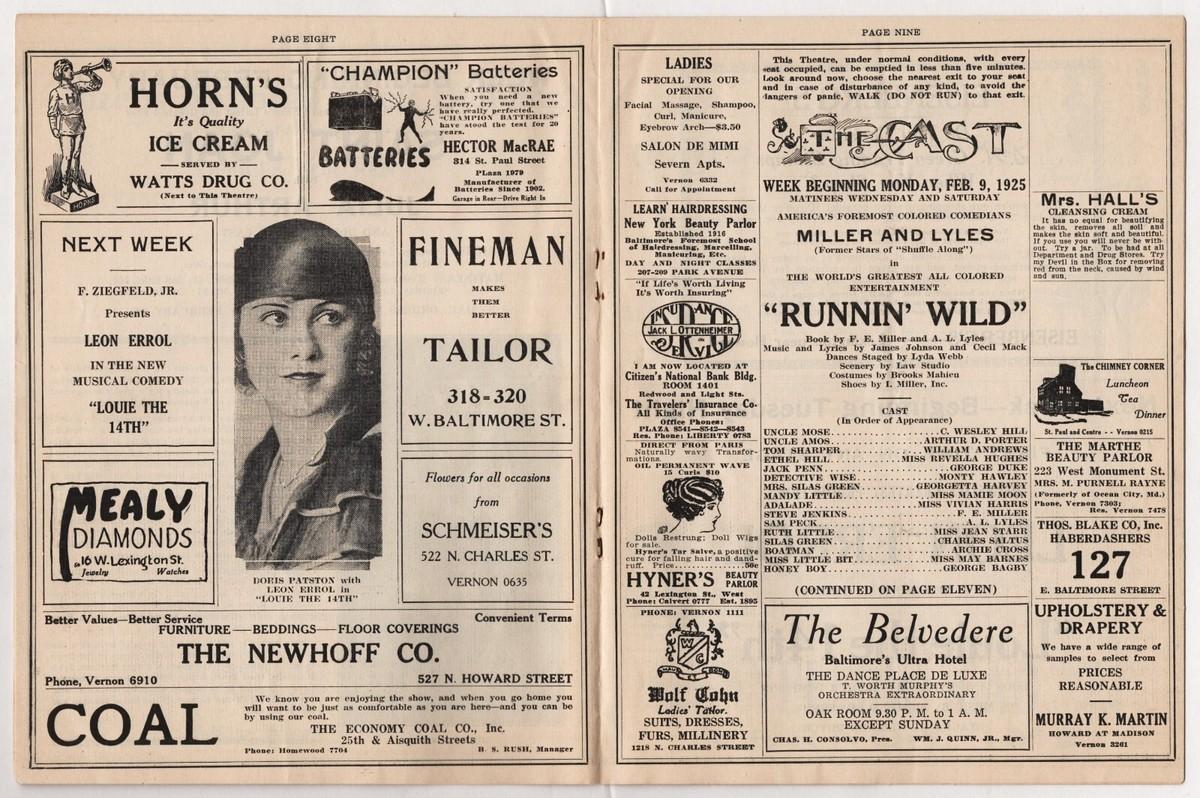
Jackson’s Page was Billboard magazine’s weekly entertainment page for Black performers. It ran from November 1920 to 1925, at least one full page in every issue, and a single editor wrote it: James Albert Jackson.
No page like it had existed before. A major white trade paper had never given Black entertainment regular national coverage. Jackson used the space for reviews, routes, industry data, and campaigns that changed how Black show business organized itself.
SportsVell sets out the record plainly below. What the page was, who Jackson was, what it covered, and what it changed, with the two date conflicts in the sources printed openly rather than smoothed over.
The Short Answer
Jackson’s Page was a weekly entertainment page inside Billboard magazine. It carried news, reviews, routes, and industry data about Black performers, and one man wrote and edited it: James Albert Jackson.
|
Fact |
Detail |
|---|---|
|
Full name |
James Albert Jackson, known as J. A. Jackson and “Billboard” Jackson |
|
The page |
Jackson’s Page (billed as J.A. Jackson’s Page) in Billboard magazine |
|
Debut |
November 6, 1920 (consensus date; see the conflict below) |
|
Run |
Weekly, about four and a half years, into 1925 |
|
Format |
At least one full page in every issue |
|
Beat |
Black entertainers in New York, Chicago, and across the country |
|
Historic first |
First regular national coverage of Black entertainment in a major white trade paper |
The page existed because Black show business had outgrown invisibility. By 1920 the blues and jazz were crossing the race line, Black vaudeville was feeding big time circuits, and the largest theatrical paper in the world wanted that audience. It hired Jackson to get it.
Everything else on this page hangs off that arrangement. A trade paper gave one Black editor a guaranteed weekly page, and he used it as a newsroom, a standards campaign, a data service, and an organizing tool at the same time.
Who Was James Albert “Billboard” Jackson?
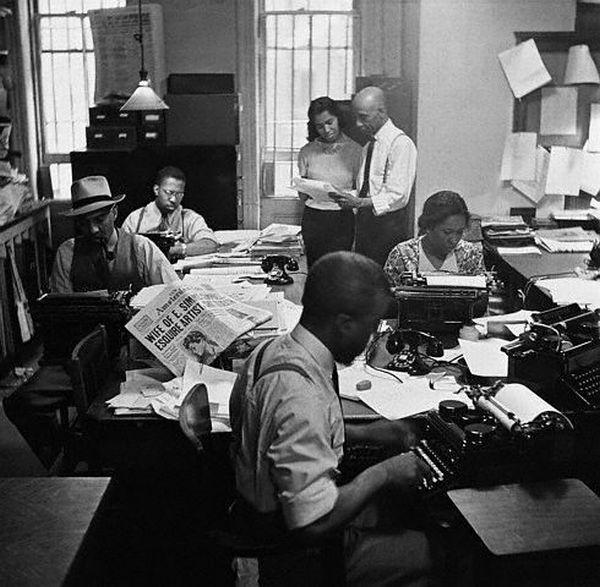
Jackson was born on June 20, 1878, in Bellefonte, Pennsylvania. The Encyclopedia.com biography of James A. Jackson records him as the oldest son of Abraham Valentine and Nannie Lee Jackson, one of fourteen children. He died in New York City on November 15, 1960, aged 82.
His apprenticeship ran through every corner of Black entertainment. He performed in minstrels, worked as a journalist and promoter, and served as a part time usher at Chicago’s Pekin Theater, the first Black owned theater in the country, present for its historic opening in 1904.
His working life outside entertainment was just as varied. He was Chicago’s first African American bank clerk, at the Jennings Trust Company, worked for US Military Intelligence during the First World War, and spent time as a railroad detective who knew the itinerant performer’s life.
The BlackPast biography of James Albert Jackson sums up his Billboard roles in one line. Critic, reporter, editor, spokesman, actor, and booster of Black entertainment. Each of those six words maps to something the Page actually did, which is rare for a biographical flourish.
Why “Billboard” Jackson? As editor of the magazine’s Negro Department he became so identified with the paper that Northern Black newspapers reprinting his columns added the byline “Billboard” Jackson. The nickname outlived the job by decades.
The first attached to his name is the point. He was the first African American reporter hired by a major white theatrical magazine, and the first African American to edit a department for a white entertainment publication. In 1920, no Black journalist had held a comparable desk.
The Page Itself: What It Was
Billboard created a department and gave it a page. The Negro Department, the period’s own name for the desk, was Billboard’s vehicle for covering Black entertainment. Jackson’s Page was its weekly public face, at least one full page in every issue.
The masthead announced the mission in the era’s terminology. The column’s logo read “J.A. Jackson’s Page in the interest of the Colored Actor, Showman, and Musician of America.” The wording is dated; the intent, a page run for Black performers’ interests, was radical in a white trade paper.
Billboard’s motive was commercial, and the sources say so plainly. As Black show business grew in the 1920s, the tabloid saw a chance to increase circulation, and Jackson made the magazine popular among Black entertainers. Founder William Donaldson still treated the hire as a historic breakthrough.
The Debut Date Problem: November 6, 1920, or January 1921?
Four independent sources give the same first issue: November 6, 1920. BlackPast, the encyclopedia biography, the scholarly LitHub account of the Page’s launch, and the library guide all name that date for the Page’s beginning.
Billboard’s own house history disagrees. The magazine’s archived official history says the Page debuted in January 1921, dedicated to the interest of the Colored actor, showman, and musician. The dedication matches; the month does not.
The honest treatment is to print both, labelled. The November 6, 1920 date rests on the dated issue the biographies name. The January 1921 date rests on the institution’s later memory of itself. This page uses the consensus date and keeps the conflict visible.
A second, smaller conflict sits beside it. The encyclopedia chronology dates the editorship to 1919, while BlackPast dates his appointment as editor to 1920, and the scholarly chronology gives six Billboard years, 1919 to 1925. The strands agree on the shape and differ on one year.
How Long the Page Ran, and Why It Ended
The Page ran weekly for about four and a half years. Abbott and Seroff’s account gives that span, and it matches Anthony Hill’s documentation of the column from its 1920 founding to its disappearance in 1925.
The end is documented; the reason is not. Hill records the disappearance in 1925, the end of Jackson’s Billboard tenure. No source in this record states a cause, so this page does not invent one. What is known is where he went next: government work.
What the Page Covered, Week to Week
The coverage list is the whole of Black show business. The encyclopedia’s inventory runs: circus, burlesque, music and opera, street fairs, and vaudeville. Hill’s account adds film and legitimate drama. News was gathered nationally, with a particular focus on what was doing in New York City.
|
Coverage area |
What ran on the Page |
|---|---|
|
Vaudeville |
Reviews, routes, and act news from Black circuits |
|
Legitimate drama |
Serious theatre coverage beside the variety bills |
|
Burlesque and musical revue |
Wheel news and company reports |
|
Circus and street fairs |
Performer news and fair dates across the states |
|
Music and opera |
Concert and stage music coverage |
|
Film |
Early motion picture coverage of Black performers |
|
Industry data |
Annual surveys and attendance statistics |
|
Directories |
The first directory of colored fairs |
It was a working tool, not just reading matter. Performers used trade pages for routes, bookings, and dates. A guaranteed weekly page in the industry’s biggest paper meant Black acts could be found, booked, and followed in the same place white acts already were.
The data habit set the Page apart. Jackson published several annual surveys of the industry, presenting figures he compiled himself. In 1922 a Billboard editorial from his desk published attendance statistics for the major fairs: a trade editor behaving like a statistician, decades early.
The First Directory of Colored Fairs
One Page project deserves its own paragraph. As Negro Department editor, Jackson compiled the first directory of colored fairs, covering fairs in Alabama, Kentucky, Louisiana, Maryland, Missouri, North Carolina, and Pennsylvania, per the University of Kentucky’s NKAA record.
The directory was infrastructure. Fair officials, park owners, theater managers, and whole communities ran on dates and contacts. Jackson believed a national fairs association would strengthen all of them financially, and the directory was the evidence base for building one.
The association followed. He pushed for the National Association of Colored Fairs from 1921, and it was chartered at a meeting in Norfolk, Virginia in 1922, as a subsidiary of the National Negro Business Men’s League.
Syndication: How Black Newspapers Carried the Page
The Page did not stay inside Billboard. Northern Black newspapers picked up Jackson’s columns and reprinted them, adding the “Billboard” Jackson byline. The columns brought him into contact with Black entertainment luminaries across the country.
Syndication made the Page a shared national desk. A white trade paper’s Black entertainment coverage flowed into the Black press every week. The arrangement is why scholars credit Jackson with a major role in promoting Black theatricals during the Harlem Renaissance: his page was everywhere at once.
What the Page Did: Four Roles at Once
Hill’s study frames Jackson in four working roles. Critic, reporter, spokesman, and booster of Black entertainment. The frame holds up because each role has documented work attached to it, not just praise.
|
Role |
The documented work |
|---|---|
|
Critic |
Reviews and standards judgments across vaudeville, drama, and revue |
|
Reporter |
National news gathering, routes, surveys, and the fairs directory |
|
Spokesman |
Editorials exposing TOBA conditions and arguing the industry’s case |
|
Booster |
Promotion of Black theatricals, organizations, and professional standards |
Exposing TOBA: The Booking Circuit Investigations
The Theater Owners Booking Association was the industry’s power center. TOBA was the large circuit employing Black entertainers across the South and Midwest. Its conditions were the open secret of Black show business.
Jackson aired them. Through the magazine he exposed the unfair treatment performers received on the TOBA circuit, in print, in the paper the whole trade read. Hill lists improving conditions on the TOBA touring circuit among the Page’s central campaigns.
Exposure had organizational consequences. His writings stimulated the formation of several professional organizations, among them the Colored Actors’ Union and the Deacons, alongside the fairs association. The Page was not merely reporting the industry’s politics; it was manufacturing them.
The Standards Campaign
Jackson paired criticism with uplift, deliberately. He celebrated Black achievement in the industry and, in the same columns, pressed performers to high moral standards and family entertainment. Hill’s summary names setting standards as one of the three key issues of the Page, beside TOBA conditions and union organizing.
He pushed performers into organizations. The Page encouraged joining theatrical organizations and professional bodies as a route to bargaining power and respectability at once. For a conservative Republican integrationist, which is how Hill describes him, standards and institutions were the same project.
One article shows the critic at work. On August 5, 1922, Jackson filed a piece inspired by the Ziegfeld Follies song “It’s Getting Dark on Old Broadway,” sung by Gilda Gray.
His argument, in Abbott and Seroff’s quotation, was that down home shows rank with other down home features and had to be revised for New York’s adaptation. Southern material, Broadway standards: the Page’s whole argument in one column.
The Shuffle Along Connection
The largest single outcome claimed for the Page is a landmark musical. Hill’s Pages from the Harlem Renaissance argues the Page was instrumental in sparking Shuffle Along, the 1921 Black musical that generated some of the era’s most important Black writers, composers, and performers.
Attribute it properly: this is Hill’s scholarly judgment. It is the assessment of the one historian who studied the column for a book, not a box office record. Printed with its attribution, it is the strongest available statement of the Page’s cultural weight.
Jackson Beside the Other Black Theatre Critics
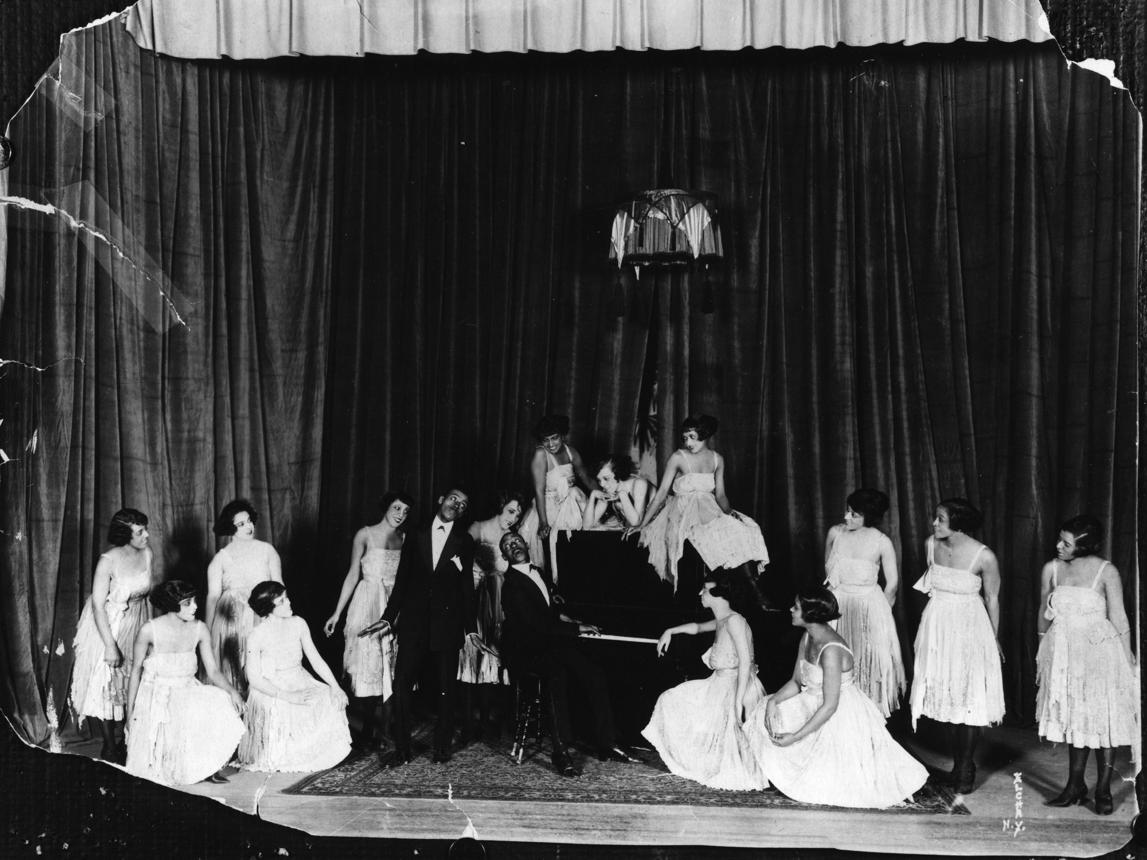
Jackson was not the era’s only Black theatre critic. Hill assesses his role relative to the major theatrical critics W. E. B. Du Bois, Theophilus Lewis, Sylvester Russell, and Romeo Dougherty. The comparison clarifies what made Jackson’s position unique.
The others wrote from the Black press and the movement press. Jackson wrote from inside the white trade paper that booked the industry. His standards campaign reached managers and circuits directly, because his page sat in the publication the business itself read to do business.
Timeline: 1878 to 1960
|
Year |
Event |
|---|---|
|
1878 |
Born June 20 in Bellefonte, Pennsylvania, oldest of fourteen children |
|
1904 |
Part time usher at Chicago’s Pekin Theater, the first Black owned theater in the country |
|
1918-1919 |
Joins Billboard’s editorial staff in New York; edits the Negro Department |
|
1920 |
Jackson’s Page begins with the November 6 issue; also writes for the New York Sunday Herald |
|
1921 |
Pushes for a National Association of Colored Fairs; Shuffle Along opens on Broadway |
|
1922 |
Fairs association chartered at Norfolk; Page publishes fair attendance statistics |
|
1925 |
The Page disappears from Billboard; his magazine tenure ends |
|
1927 |
Becomes first head of Negro Affairs at the US Department of Commerce (November) |
|
1936 |
Esso becomes the Green Book’s major retail distributor during his marketing years there |
|
1960 |
Dies in New York City on November 15, aged 82 |
|
2014 |
Historical marker placed in his hometown of Bellefonte, Pennsylvania |
After Billboard: Commerce, Esso, and the Green Book
Jackson’s second career began with a recommendation letter. Claude A. Barnett, founder of the Associated Negro Press, wrote to Secretary Herbert Hoover on May 4, 1927: he had the man for the job. The Carleton journal study of Jackson’s reputation traces what followed.
In November 1927 Jackson became the first head of Negro Affairs at the Commerce Department. He founded its Division of Negro Affairs, becoming, in the scholarly phrase, the first US government official to take an active interest in African American business activity.
The third career was marketing. From the mid 1930s Jackson worked as a Black marketing specialist for Esso Standard Oil, and he became the first African American member of the American Marketing Association. The Carleton study calls him one of the first Black marketing specialists outright.
The Green Book connection ties the careers together. The same study links his Billboard years, when the Page listed boarding houses for traveling Black musicians, to Esso’s role from 1936 as the Green Book’s only major retail distributor, and credits Jackson with unrecognized contributions to it.
He also held entertainment property of his own. According to Blacks in Blackface, as cited in his encyclopedia biography, at some point in the 1920s Jackson was owner or manager of two Columbus, Ohio theaters: the Empress for motion pictures and the Dunbar for vaudeville and road shows.
Why the Page Matters
The Page was the Harlem Renaissance’s trade paper window. The Renaissance is usually told through poetry, novels, and nightclubs. Jackson’s Page is the business record of the same years: who was working, where, for whom, and under what conditions.
It professionalized a whole sector’s self knowledge. Annual surveys, attendance statistics, the first fairs directory, union campaigns, and a standards debate, all in one weekly page. Black entertainment had been covered before; it had not been administered in print before.
It also outlived its own industry. The circuits it covered, TOBA above all, are gone, and the trade paper that hosted it became a charts magazine. The Page remains the fullest weekly witness to how Black entertainment actually worked while those institutions lived.
Its modern value is as a primary source. Hill calls the period a seminal one in American performance history and the Page its chronicle. Researchers reconstructing Black entertainment in the early 1920s start where Jackson’s routes, reviews, and data left off.
Where to Read Jackson’s Page and the Scholarship Today
Start with the two biographies, which anchor every date on this page. The BlackPast biography of James Albert Jackson is the concise standard life. The encyclopedia entry adds the full chronology, the TOBA detail, and the Commerce years.
For the Page itself, Hill’s book is the guided route. Hill’s Pages from the Harlem Renaissance (Peter Lang, 1996) documents the column year by year. The LitHub account of the Page’s launch gives the launch and the flavour of the writing in a free excerpt.
For the reputation argument, read the journal study. The Carleton journal study of Jackson’s reputation is the source for the three firsts and the Green Book contribution, and it is openly accessible.
For the original issues, use library archive runs. The Saint Louis County Library research guide lists Billboard magazine holdings spanning 1894 to 2021, the run a researcher needs for the 1920 to 1925 volumes. Large research libraries hold the same years on microfilm and in digital archives.
What a Performer Actually Saw on the Page
Picture the reader the Page was built for. A vaudeville act finishing a week in Chicago, a fair performer planning a season, a manager checking whether a circuit date had moved. The Page was written for working people mid tour.
For that reader, four elements did the daily work. The reviews told the trade what an act was worth. The routes told everyone where companies would be and when. The news columns carried openings, closings, and personnel changes across the whole national circuit.
The fourth element was the argument. Between the listings sat the editorials: TOBA conditions named in print, standards demanded, organizations promoted, surveys published. A reader came for the routes and stayed inside an argument about how the industry should run itself.
That mixture explains the syndication. Black newspapers reprinted the columns because their readers were the same working performers and fans. The Page’s blend of service information and advocacy was exactly what a community press needed and could not staff on its own.
It also explains the Page’s afterlife as evidence. Routes and surveys are data, and data survives as history. Modern researchers mine the Page for the early 1920s precisely because Jackson wrote for people who needed facts that week, not for posterity.
More Stories and Guides on SportsVell
SportsVell covers the figures and fixtures behind the headlines. The approach is the one used here: primary sources first, conflicts labelled, and the short answer before the machinery.
The sports news desk is where historical and industry stories land as they surface. Anniversaries, archive finds, and record stories appear there before the guides absorb them.
The pattern to carry away is Jackson’s own. Check who held the desk, read the masthead for the mission, date every claim, and treat entertainment history as business history. That is what his page did, weekly, for nearly five years, a century ago.
Frequently Asked Questions
What was Jackson’s Page in Billboard magazine?
Jackson’s Page was a weekly entertainment page in Billboard magazine devoted to Black performers, written and edited by James Albert Jackson.
It debuted in the November 6, 1920 issue, carried at least one full page per issue, and ran weekly for about four and a half years, into 1925.
Who was James Albert ‘Billboard’ Jackson?
James Albert Jackson (born June 20, 1878, in Bellefonte, Pennsylvania; died November 15, 1960, in New York City) was a critic, reporter, editor, actor, spokesman, and promoter of Black entertainment.
He became Billboard’s first African American reporter and editor of its Negro Department, which earned him the nickname Billboard Jackson.
Why was he called ‘Billboard’ Jackson?
The nickname came from his Billboard role.
As editor of the magazine’s Negro Department he became so identified with the paper that Northern Black newspapers reprinting his columns added the byline Billboard Jackson, and the name stuck for the rest of his career.
When did Jackson’s Page start?
The consensus date is November 6, 1920, given by BlackPast, the encyclopedia biography, the scholarly LitHub excerpt, and the library guide.
Billboard’s own house history dates the debut to January 1921; treat that as an outlier strand against the dated first issue the other sources name.
How long did Jackson’s Page run?
About four and a half years weekly, per Abbott and Seroff’s account, which matches Anthony Hill’s documentation of the column from its 1920 founding to its disappearance in 1925.
Jackson’s Billboard tenure overall ran about six years in the scholarly chronology, roughly 1919 to 1925.
What did Jackson’s Page cover?
Every corner of Black show business: vaudeville, burlesque, circus, music and opera, street fairs, film, and legitimate drama, gathered from across the country with a particular focus on New York City.
It also published annual industry surveys and the first directory of colored fairs.
What was the Negro Department of Billboard?
It was the department Billboard created for coverage of Black entertainment, the first regular national coverage of Black performers in a major white theatrical paper.
Jackson was its editor and, per the encyclopedia biography, the first African American reporter hired by a major white theatrical magazine.
What did the masthead of Jackson’s Page say?
The column’s logo named it Jackson’s Page and declared it published in the interest of the Colored Actor, Showman, and Musician of America, using the period’s terminology.
Hill’s book quotes the line, and Billboard’s own history renders the dedication in nearly the same words.
Was Jackson the first Black editor at a white entertainment magazine?
The scholarship credits him as the first African American to edit a department for a white entertainment publication, in the Carleton journal’s wording, and the first African American reporter hired by a major white theatrical magazine, per the encyclopedia.
Both firsts refer to the Billboard appointment around 1919 to 1920.
Why did Billboard create the Page?
Circulation strategy met a real market shift.
As Black show business grew in the 1920s and blues and jazz crossed the race line, Billboard, then the largest theatrical paper in the world, hired Jackson to reach the Black entertainment market.
The Page then made the magazine popular among Black entertainers.
What was TOBA and what did Jackson do about it?
TOBA, the Theater Owners Booking Association, was the large booking circuit employing many Black entertainers.
Jackson used the Page to expose the unfair treatment performers received on the circuit, airing conditions that helped stimulate reform pressure and new professional organizations.
What organizations did Jackson’s Page help create?
His writings stimulated the formation of the Colored Actors’ Union, the National Association of Colored Fairs, and the Deacons, per the encyclopedia biography.
The fairs association he pushed from 1921 was chartered at Norfolk, Virginia in 1922 as a subsidiary of the National Negro Business Men’s League.
What was the first directory of colored fairs?
As Negro Department editor, Jackson compiled the first directory of colored fairs, covering fairs in Alabama, Kentucky, Louisiana, Maryland, Missouri, North Carolina, and Pennsylvania, per the University of Kentucky NKAA entry.
His 1922 Billboard editorial also published attendance statistics for the major fairs.
Did Jackson’s Page help create Shuffle Along?
Anthony Hill’s scholarship, as summarized in his book’s coverage, calls the Page instrumental in sparking the creation of Shuffle Along, the landmark 1921 Black musical that launched major Black writers, composers, and performers.
Attribute the claim to Hill; it is an interpretation, not a box office record.
How was Jackson’s Page syndicated?
Northern Black newspapers picked up his columns and reprinted them, adding the Billboard Jackson byline.
The syndication carried a white trade paper’s Black entertainment coverage into the Black press, which is also how his nickname spread.
What were Jackson’s annual surveys?
Jackson published several annual surveys of the Black entertainment industry on the Page, presenting data he compiled himself, including fair attendance statistics in 1922.
They made the Page an early source of industry data, not just reviews and gossip.
Who were the other Black theatre critics Jackson is compared with?
Hill assesses Jackson’s role beside the major theatrical critics of the era: Du Bois, Theophilus Lewis, Sylvester Russell, and Romeo Dougherty.
The comparison is about standards: all five used criticism to shape Black performance, from different institutional positions.
What did Jackson do before Billboard?
A varied apprenticeship.
He performed in minstrels, worked as a journalist and promoter, and served as part time usher at Chicago’s Pekin Theater, the first Black owned theater in the country.
He was also Chicago’s first African American bank clerk, a wartime Military Intelligence worker, and a railroad detective.
Did Jackson own theaters?
According to Blacks in Blackface, as cited in his encyclopedia biography, at some time in the 1920s Jackson was owner or manager of two theaters in Columbus, Ohio.
The Empress showed motion pictures.
The Dunbar hosted vaudeville and road shows.
When did Jackson join Billboard?
The chronologies differ by a year or two, and the strands should be printed separately.
The encyclopedia says he had joined the editorial staff by age forty in 1918 and its chronology dates the editorship to 1919; BlackPast dates his appointment as editor to 1920; the scholarly chronology gives six Billboard years, 1919 to 1925.
Why did Jackson’s Page end in 1925?
Hill documents the column’s disappearance in 1925, the end of Jackson’s Billboard tenure.
The sources in this research give no single stated cause, so the honest answer is the documented one: the Page ran from 1920 to 1925 and then ceased as Jackson moved toward government work.
What did Jackson do after Billboard?
Government, then marketing.
In November 1927 he became the first head of Negro Affairs at the US Department of Commerce, founding its Division of Negro Affairs.
From the mid 1930s he worked as a Black marketing specialist with the Esso Standard Oil company.
How did Jackson join the Commerce Department?
Claude Barnett, founder of the Associated Negro Press, recommended him to Secretary Herbert Hoover, writing on May 4, 1927 that he had the man for the job.
Jackson had been the Press’s New York correspondent.
His appointment began in November 1927, per the Weems and Randolph study.
What is Jackson’s connection to the Negro Motorist Green Book?
The Carleton journal study links Jackson’s Billboard work listing boarding houses for traveling Black musicians to his later Esso role, and notes that from 1936 Esso was the only major retail distributor of the Negro Motorist Green Book.
The article credits Jackson with largely unrecognized contributions to the Green Book’s development.
Was Jackson the first Black member of the American Marketing Association?
Yes, per the Carleton journal study of his reputation.
The study lists his firsts across three fields: first African American department editor at a white entertainment publication, founder of the Commerce Division of Negro Affairs in 1927, and first African American member of the American Marketing Association.
Where was James A. Jackson born and when did he die?
He was born in Bellefonte, Pennsylvania, on June 20, 1878, the oldest son of Abraham Valentine and Nannie Lee Jackson, one of fourteen children.
He died in New York City on November 15, 1960, aged 82.
A historical marker was placed in Bellefonte in 2014.
How many brothers and sisters did Jackson have?
He was the oldest of fourteen children of Abraham Valentine and Nannie Lee Jackson, per his encyclopedia biography.
What is Pages from the Harlem Renaissance?
It is Anthony Hill’s 1996 book, published by Peter Lang, the historical and critical study of Jackson’s Page in Billboard.
Hill, who earned his doctorate in Performance Studies at New York University in 1988, documents the column from 1920 to 1925 and Jackson’s vision of Black performance.
What does Hill say Jackson’s Page achieved?
Hill presents Jackson in four roles, critic, reporter, spokesman, and booster of Black entertainment, and assesses his part in setting standards, improving conditions on the TOBA circuit, and organizing unions, against the national and cultural concerns of the 1920s.
What is the Abbott and Seroff account of the Page?
In their blues migration history, excerpted on LitHub, Lynn Abbott and Doug Seroff describe Billboard initiating Jackson’s Page as blues spread beyond Black audiences.
The magazine allotted at least one full page per issue to news about Black entertainers.
Jackson gathered news nationally and focused on New York City.
What did Jackson write about ‘It’s Getting Dark on Old Broadway’?
On August 5, 1922, Jackson submitted a Page article inspired by the topical Ziegfeld Follies song of that name, sung in the Follies by Gilda Gray.
Abbott and Seroff quote his sentiment that down home shows rank with other down home features and had to be revised for New York’s adaptation.
Was Jackson’s Page the first Black entertainment coverage in a white trade paper?
The Gannett Billboard anniversary history states it directly: Billboard was the first show business trade paper to cover African American performers when Jackson started his Page in 1920.
It was the first regular national coverage of Black entertainment in the mainstream trade press.
What was Billboard magazine in 1920?
The largest theatrical paper in the world at the time, founded in Cincinnati in 1894 by William Donaldson and James Hennegan, and nicknamed the Showman’s Bible.
Donaldson regarded Jackson’s hire as a historic breakthrough and a point of pride, per Billboard’s own history.
Did Jackson write for other outlets?
Yes.
His encyclopedia chronology lists articles for the New York Sunday Herald in 1920, and he served as New York correspondent for Claude Barnett’s Associated Negro Press while at Billboard, per the Weems and Randolph study.
What standards did Jackson campaign for?
He celebrated Black achievement in the industry while pressing performers to high moral standards and family entertainment, encouraged joining theatrical organizations, and used annual data and directories to professionalize the business.
Hill frames this as setting standards alongside exposing TOBA conditions and organizing unions.
How did the Page affect Black newspapers?
It fed them.
Northern Black newspapers reprinted his columns with the Billboard Jackson byline, so the Page functioned as a shared national desk for Black entertainment news across both the white trade press and the Black press.
Is Jackson’s Page a primary source for Harlem Renaissance research?
Yes, and that is its modern scholarly value.
Hill’s book treats the Page as a chronicle of performance for a seminal period of American performance history, and researchers use its reviews, routes, surveys, and fair data to reconstruct Black entertainment in the early 1920s.
Where can I read Jackson’s Page today?
Through Billboard archive runs: the Saint Louis County Library guide lists Billboard magazine holdings spanning 1894 to 2021, and large research libraries hold the run on microfilm and in digital archives.
Hill’s book, with a Google Books record available, is the guided route into the Page’s content.
What does the Carleton journal article argue about Jackson?
Its abstract calls Jackson a major twentieth century integrationist and race pioneer in entertainment journalism, government, and marketing whose record lacks in depth accounts, and it explores how his reputation was made and neglected across the three careers.
What political outlook did Jackson have?
Hill’s book description identifies him as a conservative Republican and an integrationist, a former journalist who knew the itinerant performer’s life from his railroad detective and touring years.
That outlook shaped the Page’s standards campaign and its institution building.
How big was the Page in each issue?
At least one full page per issue, per Abbott and Seroff’s account of Billboard’s arrangement.
In a weekly trade paper of that era, a guaranteed full page for Black entertainment was a substantial, visible commitment.
What is the short answer to ‘what entertainment page-jackson’?
The query points to Jackson’s Page: the entertainment page that James Albert Billboard Jackson wrote and edited in Billboard magazine from November 1920 to 1925.
It was the first regular national coverage of Black entertainers in a major white trade paper.
Its beat covered vaudeville, circus, burlesque, opera, film, and fairs.
Conclusion
Jackson’s Page was the entertainment page that made Black show business nationally visible in print. For about four and a half years it reviewed, routed, counted, and organized an industry the mainstream trade press had ignored, from inside that press’s biggest paper.
Its editor’s later firsts, at Commerce, at Esso, and in marketing, all grew from the same desk. Jackson’s Page is where the pattern started: enter an institution that excluded Black professionals, build the record, and leave the door wider than he found it.
Follow the sports news desk on SportsVell for history and industry stories as they surface. Archive anniversaries and record finds appear there first, checked against the primary sources the way this page was.