In an Approved Public Entertainment Facility Which of the Following Is Allowed
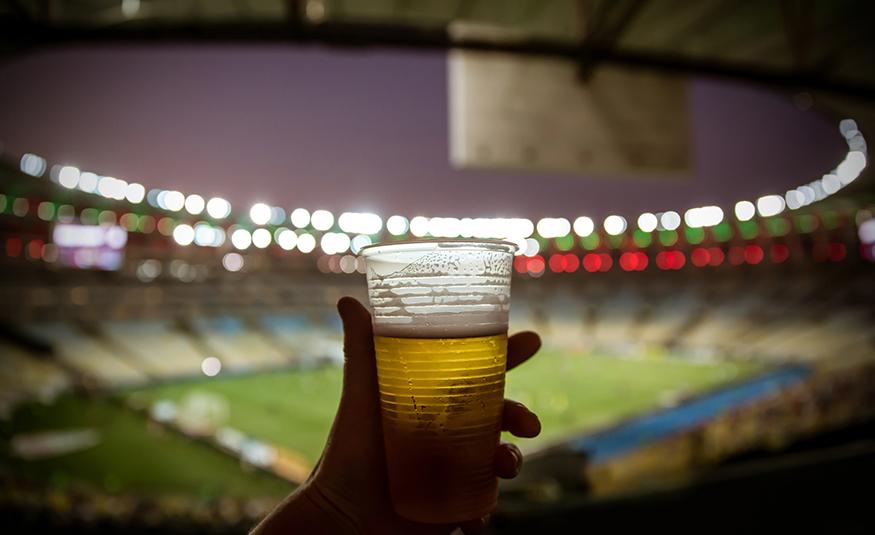
In an approved public entertainment facility, which of the following is allowed? The correct answer is D: a patron may enter or leave a licensed premise with an open alcoholic beverage as long as they remain in the facility. This is Question 20 on the Texas TABC seller-server exam, and the answer comes from the statute itself, Texas Alcoholic Beverage Code Section 108.82.
The law lets a patron carry an open drink between licensed areas inside the facility. The drink must be in an open container, it must appear to be for present consumption, it must stay inside the facility and out of the parking lot, and it must have been bought legally inside the facility. All four conditions must hold at the same time.
The other three options are all wrong. Taking an open drink to your car is banned. Bringing unopened alcohol into the facility as a spectator is not allowed. Giving alcohol to anyone regardless of age or intoxication is illegal.
This guide gives the letter answer first, then the statute behind it, then a full breakdown of all four options. It also resolves a real conflict: several top-ranking answer sites disagree with each other on this question, and this guide shows why the statute settles it.
This article is general information only, not legal advice. The rule is Texas-specific. Other states have different open container laws, and the exam answer only applies in Texas. Check the current statute text before relying on it for any legal decision.
The Answer: A Patron May Carry an Open Drink Inside the Facility
The correct option is D. A patron may enter or leave a licensed premise with an open alcoholic beverage as long as they remain in the facility. That is the answer the TABC course teaches, and it is the answer the statute supports.
The key words are “as long as they remain in the facility”. The permission is not a general right to carry alcohol anywhere. It is a narrow exception that applies only inside an approved public entertainment facility, and only while the drink stays inside.
Think of a fan at a baseball game. The fan buys a beer at a concession stand, then walks to their seat with the open cup. That is allowed. The same fan cannot take the beer to the parking lot or to their car. That is not allowed.
The Four Options, at a Glance
| Option | What it says | Allowed? | Why |
|---|---|---|---|
| A | Take an open alcoholic beverage to your car | No | Open container in a vehicle, and it leaves the facility |
| B | Bring unopened alcoholic beverages into the facility as a spectator | No | The statute never allows bringing alcohol in; the exception covers drinks bought inside |
| C | Provide alcohol to anyone no matter their age or level of intoxication | No | Serving minors and intoxicated persons is illegal |
| D | A patron may enter or leave a licensed premise with an open alcoholic beverage as long as they remain in the facility | Yes | Texas Alcoholic Beverage Code Section 108.82 allows it, with four conditions |
The table shows the pattern clearly. Three options describe things the law bans. One option describes the narrow exception the law creates. The exam tests whether you can tell the exception apart from the bans.
Students most often pick B by mistake. Bringing unopened alcohol sounds harmless, and some answer sites even say it is correct. It is not. The statute says nothing about bringing alcohol in, and the exception only covers drinks bought legally inside the facility.
The One-Sentence Reason
Option D is correct because Section 108.82 creates a specific exception that lets a patron carry an open drink between licensed areas inside an approved public entertainment facility, while the general rule still bans taking alcohol outside and serving minors or intoxicated persons.
The general rule is Section 28.10 of the Texas Alcoholic Beverage Code. It restricts consumption to the licensed premises where the drink was bought. Section 108.82 says “notwithstanding Section 28.10”, which means it overrides that general rule inside the facility, but only within the four conditions.
That “notwithstanding” word is the whole answer. Without Section 108.82, a fan could not leave the bar area with a drink at all. With it, the fan can move freely inside the stadium, as long as the drink stays inside.
What the Law Actually Says: Texas Alcoholic Beverage Code Section 108.82
Texas Alcoholic Beverage Code Section 108.82 is titled “Alcoholic Beverage Consumption in Public Entertainment Facilities and Zones”. It was added by H.B. 893 in 2013 and amended in 2019 and 2021. The full text of Section 108.82 on Texas Public Law shows the current version with its amendment history.
Subsection (b) is the part that answers the exam question. It says the concessionaire for a public entertainment facility or a public entertainment zone may allow a patron who possesses an alcoholic beverage to enter or leave a licensed or permitted premises within the facility or zone, if the alcoholic beverage meets four conditions.
The four conditions are listed in the statute itself. They are not guidance or opinion. They are the legal requirements, and a patron who breaks any one of them loses the protection of the exception.
The Four Conditions, in Plain Language
| Condition | What the statute says | What it means in practice |
|---|---|---|
| 1. Open container | The drink is in an open container, as defined by Penal Code Section 49.031 | The drink is open, not sealed; a sealed bottle does not qualify |
| 2. Present consumption | It appears to be possessed for present consumption | The patron looks like they are drinking it now, not carrying it away to store it |
| 3. Stays inside | It remains within the confines of the facility or zone, excluding a parking lot | The drink cannot go to the parking lot, the car, or outside the facility |
| 4. Bought legally inside | It was purchased legally at a licensed or permitted premises within the facility or zone | The drink must come from a seller inside the facility, not from outside |
Condition 1 is about the container. The drink must be in an open container as defined by Texas Penal Code Section 49.031. A sealed bottle or can does not meet this condition, because the exception is about drinks being consumed, not drinks being carried out.
Condition 2 is about intent. The drink must appear to be for present consumption. A patron holding a cup and sipping it meets this condition. A patron carrying a case of drinks out of the stadium does not, because that looks like taking alcohol away, not drinking it now.
Condition 3 is the boundary. The drink must remain within the confines of the facility or zone, and the statute expressly excludes the parking lot. The parking lot is the most common place where patrons break this rule, because it feels like part of the venue but the law treats it as outside.
Condition 4 is about the source. The drink must have been purchased legally at a licensed or permitted premises within the facility or zone. A drink bought at a store outside the stadium and carried in does not qualify, even if the patron stays inside. The drink must come from inside.
Who the Law Applies To
The law applies to the concessionaire, not directly to the patron. The concessionaire is the company that holds the alcohol permits for the facility and runs the concession stands. The statute says the concessionaire “may allow” the patron to carry the drink, which means the concessionaire can set its own rules within the statute.
A concessionaire can be stricter than the law. The statute permits the practice, but it does not require it. A stadium can choose to ban open drinks outside the seating bowl, or to limit them to certain areas, and that choice is legal.
The patron’s protection depends on the concessionaire’s permission. If the concessionaire allows it and the four conditions hold, the patron is within the law. If the concessionaire bans it, the patron must follow the facility’s rules, even though the statute would allow it.
Why Some Sites Say B, and Why They Are Wrong
Most answer sites say D, but three top-ranking sources disagree. One Gauthmath answer says B is correct. One Docsity study guide says B is correct. One QuestionAI page says none of the options are allowed. That is a real conflict, and students searching for the answer will find all three versions.
The statute settles the conflict. Section 108.82 says nothing about bringing unopened alcoholic beverages into a facility. The exception it creates covers only drinks bought legally inside the facility, in open containers, for present consumption. Option B describes the opposite: bringing alcohol in from outside, unopened.
Option B also contradicts the general rule. Section 28.10 restricts consumption to the licensed premises. Bringing outside alcohol into a licensed facility would let a patron drink alcohol that the facility did not sell, which the licensing system is designed to prevent. No part of the statute allows it.
Who Says B
One Gauthmath solution page says B is correct. It claims that bringing unopened alcoholic beverages into the facility as a spectator is “typically allowed”. It gives no statute citation and no legal source for that claim.
One Docsity study guide says B is correct. The document is titled “TABC BOARD EVALUATION 2026” and states the B answer as fact. The same site hosts other documents that say D is correct, so Docsity contradicts itself on this question.
Both B answers are AI-generated or crowd-sourced study notes. Neither one cites the statute, the bill, or any legal source. They repeat a plausible-sounding answer that has no basis in the law.
What the Statute Says About Bringing Alcohol In
Nothing in Section 108.82 allows bringing alcohol into a facility. Read the four conditions again: open container, present consumption, stays inside, bought legally inside. Every condition assumes the drink was bought inside. None of them covers a drink carried in from outside.
The “bought legally inside” condition is the decisive one. If the exam wanted B to be correct, the statute would say something about spectators bringing unopened beverages in. It does not. The condition that the drink was purchased at a licensed premises inside the facility rules B out directly.
Stadiums also ban outside alcohol as a matter of policy. Even apart from the statute, venues prohibit outside food and drink for safety and commercial reasons. A spectator who brings unopened alcohol into a stadium will have it confiscated at the gate, regardless of the exam question.
The Site That Says None of the Options Are Allowed
One QuestionAI page says none of the options are allowed. It claims patrons cannot leave with an open beverage “unless specified by local laws”, and that providing alcohol to anyone regardless of age or intoxication is illegal. The second half is true, but the first half is wrong.
Section 108.82 is the local law that specifies the exception. The page’s own reasoning admits the exception exists when a law specifies it, and Section 108.82 is exactly that law. The “none” answer contradicts the statute it implicitly relies on.
The lesson for students is simple. Homework answer sites contradict each other on this question, and two of them are wrong. The statute is the only source that settles it, and the statute says D.
What Is an Approved Public Entertainment Facility?
A public entertainment facility is a defined legal term in Texas, not a general description. Section 108.82 applies only to three types of place, and a venue that does not fit one of them does not get the open-container exception.
The term “approved” matters. A facility is approved when it holds the right alcohol permits and licenses, and when all of them are held by a single holder. A venue with scattered permits from different holders does not qualify.
Most bars and restaurants are not public entertainment facilities. The exception was written for large venues where patrons move between many licensed areas, not for a single bar or restaurant. A neighborhood bar is a licensed premise, but it is not a public entertainment facility.
The Three Types of Facility the Law Covers
| Type | What it is | Example |
|---|---|---|
| 1. Rail station facility | A public entertainment facility owned or leased by the Texas State Railroad Authority and used as a station for passenger rail services | A Texas State Railroad passenger station |
| 2. Stadium or arena | A stadium, arena, or other permanent structure used for sporting events, where all alcohol permits and licenses are held by a single holder | Globe Life Field, AT&T Stadium |
| 3. Public entertainment zone | A designated public entertainment zone under the statute | A designated entertainment district with a single concessionaire |
Type 2 is the one the exam question is about. Stadiums and arenas are the classic public entertainment facilities. The structure must be permanent, it must be used for sporting events, and one holder must hold all the alcohol permits and licenses for the facility.
The single-holder rule is important. In a stadium, many bars and concession stands sell alcohol, but one concessionaire holds all the permits. That single holder is the “concessionaire” the statute names, and it is the concessionaire that may allow patrons to carry drinks between areas.
Type 1 is narrow and unusual. A Texas State Railroad Authority passenger rail station is a public entertainment facility under the statute, but only when it is owned or leased by the authority and used as a station for passenger rail services. This is a special case, not a general rule for train stations.
What Is a Public Entertainment Zone?
A public entertainment zone is a designated area that gets the same exception as a facility. The zone is a defined area, not a single building. The same four conditions apply inside the zone: open container, present consumption, stays inside the zone, bought legally inside the zone.
The zone must have a single concessionaire too. The same logic applies: one holder controls the alcohol permits, so one party is responsible for the whole area. A zone with many independent permit holders does not qualify.
The parking lot is excluded from the zone as well. The statute says the drink must remain within the confines of the facility or zone, excluding a parking lot. The boundary is the same whether the place is a facility or a zone.
What Does Not Count
A regular bar or restaurant does not count. It is a licensed premise, but it is not a stadium, arena, permanent sporting structure, rail station or designated zone. The open-container exception does not apply there, and a patron cannot take a drink out of the bar area into the street.
A temporary structure does not count for type 2. The statute says “permanent structure”. A temporary tent or a pop-up venue at a festival is not a public entertainment facility under this section, even if it hosts a sporting event.
A venue with multiple independent permit holders does not count. If several different companies hold the alcohol permits for different parts of a venue, the single-holder condition fails, and the exception does not apply.
A private club does not count. Private clubs have their own permit rules under the Texas Alcoholic Beverage Code, and the FindLaw page on Section 32.14 sets out the prohibited activities for unregistered clubs. A club that holds itself out as a club without a private club registration permit cannot legally serve alcohol at all.
The Four Options, Explained One by One
Each option tests a different rule. The exam question works because the four options look similar at first glance, but each one turns on a different part of the law. Walk through them one at a time and the correct answer becomes clear.
Option A: Take an Open Alcoholic Beverage to Your Car
Option A is not allowed. Taking an open drink to your car breaks two rules at once. First, it takes the drink out of the facility, which breaks condition 3 of Section 108.82. Second, it puts an open container in a motor vehicle, which Texas Penal Code Section 49.031 prohibits.
The parking lot is the trap. A patron who walks to the parking lot with a drink has already left the facility under the statute, because the statute expressly excludes the parking lot from the confines of the facility. The drink is outside the law the moment it crosses into the lot.
Open container in a vehicle is a separate offense. Texas Penal Code Section 49.031 makes it an offense to possess an open alcoholic beverage in the passenger area of a motor vehicle on a public highway. The exam option describes exactly that situation: an open drink, in a car, on the way home.
Servers must stop patrons at the boundary. A server who sees a patron heading for the parking lot with a drink should stop them and take the drink. Letting the patron leave with it exposes the patron to a criminal charge and the server to liability.
Option B: Bring Unopened Alcoholic Beverages Into the Facility as a Spectator
Option B is not allowed. The statute never permits bringing alcohol into a facility. The exception covers only drinks bought legally at a licensed premises inside the facility, in open containers, for present consumption.
Unopened does not make it legal. The option sounds safe because the alcohol is sealed, but the seal is not the issue. The issue is the source. The facility’s permits cover alcohol it sells, not alcohol spectators carry in from outside.
Venues ban outside alcohol for their own reasons too. Stadiums search bags at the gate and confiscate outside alcohol. The ban protects the concessionaire’s business, keeps the venue safe, and keeps the alcohol supply under the concessionaire’s control.
Some answer sites say B is correct, and they are wrong. The conflict is covered in detail above. The statute is the authority, and the statute does not allow bringing alcohol in.
Option C: Provide Alcohol to Anyone No Matter Their Age or Level of Intoxication
Option C is not allowed, and it is the most obviously wrong option. Texas law bans selling or serving alcohol to a person under 21, and it bans selling or serving alcohol to an intoxicated person. No facility, no permit and no exception changes that.
The seller or server is legally responsible. If a seller serves a minor, the seller is the person the law holds responsible. The employer can also face consequences, but the seller cannot pass the blame to the employer or to the course they took.
Taking the TABC course does not remove liability. The course teaches the rules, but it does not protect a seller who breaks them. A certified seller who serves a minor or an intoxicated person is still liable, and the certificate can be revoked.
Servers must refuse service and must check ID. The standard practice is to check the ID of anyone who looks under 30, to refuse service to anyone who is visibly intoxicated, and to stop serving when a patron has had too much. The TABC course covers the signs of intoxication and the steps for refusing service safely.
Option D: Enter or Leave a Licensed Premise With an Open Drink Inside the Facility
Option D is allowed, and it is the correct answer. Section 108.82 lets the concessionaire allow a patron to enter or leave a licensed or permitted premises within the facility, as long as the drink meets all four conditions.
The key phrase is “within the facility”. The patron can move from a bar to a restaurant to their seat, all inside the stadium, with the same open drink. The movement is inside the facility, so it stays within the exception.
Entering and leaving are both covered. The statute says “enter or leave a licensed or permitted premises”, which means the patron can walk into a bar with a drink bought elsewhere in the facility, and can walk out of a bar with a drink bought there, as long as they stay inside the facility.
All four conditions must hold. The drink must be open, for present consumption, inside the facility, and bought legally inside. If any condition fails, the exception fails with it.
Real Examples: Stadiums and Arenas Where This Rule Applies
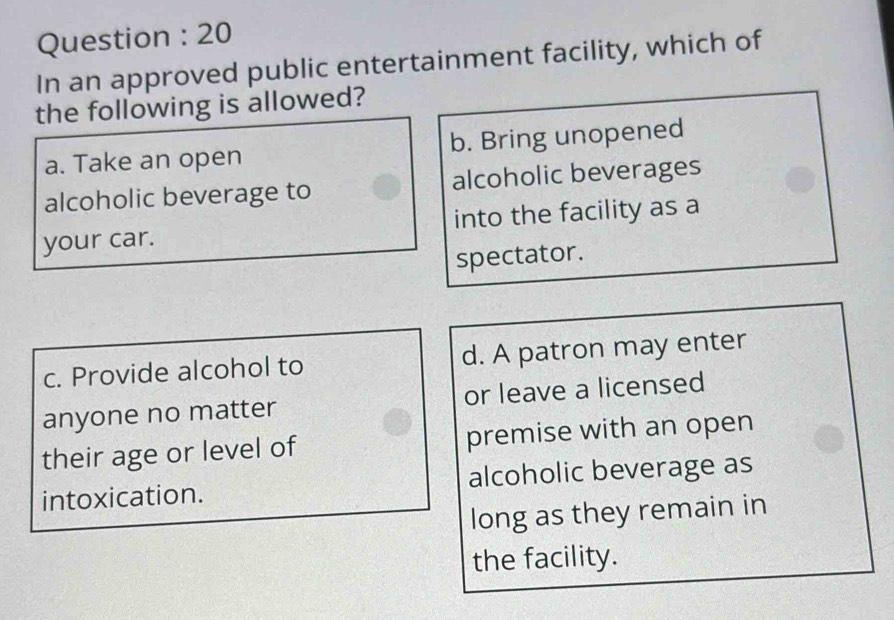
The rule was written for stadiums. Before 2013, a fan who bought a beer at one concession stand could not legally carry it to their seat or to another area inside the stadium, because Section 28.10 restricted consumption to the premises where the drink was bought. The law forced fans to finish their drinks at the stand, which encouraged binge drinking. H.B. 893 fixed that.
For more on how stadiums work on game day, see our guide on how long a football game lasts and our who won Monday Night Football hub. The alcohol rules are part of the same game-day experience, and the stadium pages give the context for when and where fans use them.
Globe Life Field and Rangers Ballpark
Globe Life Field is the home of the Texas Rangers, and it is a classic public entertainment facility. It is a permanent structure used for sporting events, and a single concessionaire holds the alcohol permits. Fans can buy a beer at a concession stand and walk to their seats with it.
The same rule applied at the old Rangers Ballpark. The ballpark was the example used in TABC study materials for years, and it is the venue most TABC students picture when they read this question. The rule follows the facility type, not the building name, so it applies at Globe Life Field the same way.
Fans cannot take drinks to the parking lot. The parking lots around Globe Life Field are outside the facility under the statute. A fan who carries a beer to their car breaks the rule, even if they bought the beer legally inside.
AT&T Stadium and Cowboys Stadium
AT&T Stadium, home of the Dallas Cowboys, is another classic example. It is a permanent structure used for sporting events, with a single concessionaire holding the alcohol permits. Fans can move between bars, restaurants and seats inside the stadium with an open drink.
The stadium was called Cowboys Stadium when the law was written. The name changed, but the facility type did not. TABC study materials still use both names, and the exam question works the same way for either one.
Concerts at the stadium follow the same rule. AT&T Stadium hosts concerts as well as football games. The statute covers the facility, not the event, so the open-container exception applies at a concert in the same building the same way it applies at a football game.
Concert Arenas and Other Venues
Concert arenas that are permanent structures used for sporting events also qualify. Many arenas host both sports and concerts, and the facility type does not change with the event. The exception applies at a concert in such an arena the same way it applies at a game.
A concert hall that never hosts sporting events does not qualify under type 2. The statute requires a stadium, arena or other permanent structure used for sporting events. A pure concert hall would need to qualify as a public entertainment zone or another type to get the exception.
For stadium and game coverage, see our Green Bay Packers vs Dallas Cowboys player stats page and our guide on where to watch Ohio State vs Indiana football. The alcohol rules apply in the same venues where these games are played, and the game guides give the context for the fan experience.
What Happens If You Break the Rules
Breaking the alcohol rules has real consequences. The consequences fall on patrons, on sellers and servers, and on the facility itself. The exam tests the rules because the people who take it will enforce them on the job.
Open Container in a Vehicle
An open container in a motor vehicle is a criminal offense in Texas. Texas Penal Code Section 49.031 makes it an offense to possess an open alcoholic beverage in the passenger area of a motor vehicle on a public highway. The penalty is a fine, and the offense goes on the person’s record.
The driver and the passengers are both at risk. The law covers possession in the passenger area, not just drinking while driving. A passenger holding an open drink in the car can be charged, even if the driver is sober.
The parking lot is where this starts. A patron who carries a drink to the parking lot has already broken the facility rule. If they then get into a car with the open drink, they have broken the vehicle rule too. Two violations, one drink.
Serving a Minor
Selling or serving alcohol to a person under 21 is illegal in Texas. The legal drinking age is 21, and there are no exceptions for a parent’s permission, a private party, or a restaurant setting. A seller who serves a minor breaks the law.
The seller is legally responsible. The TABC course teaches that the seller or server is the person the law holds responsible for the sale. The employer can face consequences too, but the seller cannot claim the employer told them to do it.
The penalties are serious. Serving a minor can lead to fines, criminal charges, and the loss of the seller’s TABC certification. The employer can face fines, a suspended permit, or a revoked permit.
Checking ID is the seller’s main defense. The course teaches sellers to check the ID of anyone who looks under 30, to look for a Texas driver’s license issued by the Department of Public Safety, and to refuse service when the ID is fake, expired or does not match the person.
Serving an Intoxicated Person
Selling or serving alcohol to an intoxicated person is illegal in Texas. The law does not set a blood alcohol number for this rule. It turns on whether the person appears intoxicated, and the seller is expected to judge that from behaviour.
The signs of intoxication are part of the TABC course. Slurred speech, loss of coordination, aggressive behaviour, and glassy eyes are the standard signs. A seller who sees them must stop serving that patron.
The TABC also limits how much one person can be served at once. The rules prohibit selling or serving more than two drinks to one person at one time. That limit is a separate rule from the intoxication ban, and it applies even when the patron does not look intoxicated.
All-you-can-drink promotions are banned. A bar or restaurant cannot sell or serve an undetermined quantity of alcoholic beverages for a fixed price, or on an “all you can drink” basis. The ban exists because fixed-price drinking encourages binge drinking.
Losing Your TABC Certification
A TABC seller-server certificate can be revoked. Providing false information during course registration is one reason for revocation. Selling to a minor or an intoxicated person is another. The certificate is a privilege, not a right, and the TABC can take it away.
The certificate is valid for two years. To stay certified, a seller must complete a seller training course every two years. The refresher keeps the rules current, because the law and the course content change over time.
Not all seller-server training schools are run by the TABC. The TABC approves private training schools, and courses are offered by providers such as Learn2Serve and 360training. The TABC sets the standards, but it does not operate every school.
An enforcement officer can search a licensed premise without a warrant. A licensed premise is open to inspection, and an officer does not need a search warrant to search and seize illicit beverages there. The warrant rule applies only to places that are not licensed premises.
The History: How H.B. 893 Created This Rule in 2013
Section 108.82 was added by H.B. 893 in the 83rd Texas Legislature, effective May 18, 2013. The H.B. 893 bill analysis from the Texas Legislature explains why the law was written and how it works, section by section.
Before H.B. 893, fans could not carry a drink to their seats. Under the old reading of Section 28.10, a fan who legally bought a beer at one permitted area could not leave that area with the drink to return to their seat or to another area inside the stadium, even if the other area was also permitted for alcohol sales and consumption.
The old rule encouraged binge drinking. The bill analysis says so directly. Fans who could not carry a drink to their seat had to finish it at the stand, which meant drinking faster. The rule served no public purpose, but it unintentionally created unsafe conditions for fans and event attendees.
H.B. 893 fixed the problem by creating the exception. The bill let the concessionaire allow a patron to carry an open drink between licensed areas inside the facility, as long as the drink stayed inside and was bought legally inside. The fix made the stadium safer, not less safe.
The Original Narrow Scope
The original 2013 law was very narrow. It applied only to a stadium in a county with a population of more than 1.6 million, built not later than 1994, with a seating capacity of at least 45,000, and with all alcohol permits and licenses held by a single independent concessionaire.
Those limits described a small number of stadiums. The population, construction date and seating capacity thresholds were written to cover specific large stadiums in the biggest Texas counties. The law was not written for every stadium in the state.
The narrow scope is why the exam question says “approved” public entertainment facility. Not every stadium qualified. Only a facility that met all the conditions, including the single concessionaire rule, was approved for the exception.
The 2019 and 2021 Amendments
The law was amended in 2019 by H.B. 2196. The amendment broadened the scope of the section and updated the language. The Justia page for Section 108.82 shows the 2022 version of the statute with the amendment history.
The law was amended again in 2021 by H.B. 2127 and H.B. 3607. H.B. 2127 amended the section twice, and H.B. 3607 made further changes. The current version covers a stadium, arena or other permanent structure used for sporting events, a Texas State Railroad Authority passenger rail station, and a public entertainment zone.
The current scope is broader than the 2013 original. The population, construction date and seating capacity thresholds from the original bill no longer define the scope. The current test is the facility type and the single-holder rule.
The passenger-train exception came with the amendments. Section 48.04(e) covers permits for passenger trains, and Section 108.82 refers to it as an exception to the rule that the drink must remain within the facility. A drink on a passenger train follows the train rules, not the facility rules.
Why the Law Was Written This Way
The law balances two goals. It lets fans enjoy a drink throughout a stadium, and it keeps alcohol consumption inside a controlled area where the concessionaire is responsible. The four conditions are the balance: freedom inside, a hard boundary at the door.
The single-holder rule makes the balance work. One concessionaire holds all the permits, so one party is responsible for every drink sold in the facility. If the permits were scattered, no one party could control the whole area, and the exception would be unenforceable.
The parking lot exclusion makes the balance work too. The parking lot is where fans leave the controlled area and get into cars. Excluding it keeps the open drink away from the vehicle, which is where the public safety risk is highest.
TABC Exam Companion: Facts That Appear With This Question
The public entertainment facility question does not appear alone on the TABC exam. It sits with a set of related questions about alcohol service, and the same facts come up again and again. Students who learn the cluster pass the exam, not just one question.
Tamper-Proof Container
A tamper-proof container is a container with a lid that is placed in a bag, and the bag is sealed with a staple. That is the TABC exam answer, and it appears in the same question sets as the public entertainment facility question.
Tamper-proof containers are for alcohol to go. Texas allows alcohol to go from restaurants under specific rules, and the tamper-proof container is how the drink is sealed for the trip. The lid, the bag and the staple together make the container tamper-proof.
The container rule is the mirror image of the facility rule. Inside a facility, an open drink is fine if it stays inside. Outside, a drink to go must be sealed in a tamper-proof container. The exam tests both rules because they are the two sides of the same line: open inside, sealed outside.
The Two-Drink Rule
The TABC prohibits selling or serving more than two drinks to one person at one time. A server cannot hand a patron three drinks at once, even if the patron is sober and of age. The limit is two.
The rule applies per transaction, not per night. A patron can buy two drinks, finish them, and buy two more. The rule limits how many drinks change hands at once, not how many a patron can drink in total over an evening.
The rule works with the intoxication ban. The two-drink limit slows down how fast alcohol reaches a patron. The intoxication ban stops service when the patron has had too much. Together, they are the two main controls on over-service.
Certification Valid for Two Years
A TABC seller-server certificate is valid for two years. To remain certified, a seller must complete a seller training course every two years. The course covers the current law, and the refresher keeps the seller’s knowledge up to date.
The two-year cycle is a common exam question. It appears in the same question sets as the public entertainment facility question, and students often confuse it with other time periods. The answer is two years, not one and not three.
Providers include Learn2Serve and 360training. Both offer online TABC courses that lead to the same certification. The TABC approves the courses, and the certificate is the same regardless of the provider.
Who Is Liable for Selling to a Minor
The seller or server is legally responsible for the sale of alcohol to a minor. That is the TABC exam answer, and it appears in the same question sets as the public entertainment facility question.
The employer can also face consequences. If a seller serves a minor, the employer could face fines, a suspended permit, or a revoked permit. The exam answer for what happens to the employer is “all of the above” when the options list fines, suspension and revocation.
A cashier can be 16 in a low-alcohol-receipt establishment. In an establishment that serves alcohol for on-premise consumption and gets less than 50 percent of its gross receipts from alcohol sales, a cashier can be 16. That is a separate rule from the seller-server age rules, and it is another common exam question.
Common alcoholic beverages include hard seltzers. The exam asks which drinks count as alcoholic beverages, and hard seltzers are on the list. Beer, wine, spirits and hard seltzers are all alcoholic beverages under the code.
FAQs
In an approved public entertainment facility, which of the following is allowed?
A patron may enter or leave a licensed premise with an open alcoholic beverage as long as they remain in the facility. That is option D, the correct TABC exam answer, and it comes from Texas Alcoholic Beverage Code Section 108.82.
What is the correct answer to the TABC public entertainment facility question?
The correct answer is D. A patron may enter or leave a licensed premise with an open alcoholic beverage as long as they remain in the facility. The statute, Section 108.82, creates that exception with four conditions.
Why is option D the correct answer?
Option D is correct because Section 108.82 allows it. The statute lets the concessionaire allow a patron to carry an open drink between licensed areas inside the facility, if the drink is open, for present consumption, stays inside, and was bought legally inside.
Why is option B wrong?
Option B is wrong because the statute never allows bringing alcohol into a facility. The exception covers only drinks bought legally inside the facility. Bringing unopened alcohol in from outside is not in the statute, and venues ban outside alcohol at the gate.
Why do some websites say B is the correct answer?
Some homework answer sites give the B answer without citing any law. One Gauthmath page and one Docsity study guide say B is correct, but neither cites the statute. The statute settles the conflict in favour of D.
What is Texas Alcoholic Beverage Code Section 108.82?
Section 108.82 is the law on alcoholic beverage consumption in public entertainment facilities and zones. It was added by H.B. 893 in 2013 and amended in 2019 and 2021. It lets a concessionaire allow patrons to carry open drinks inside a facility, with four conditions.
What is a public entertainment facility in Texas?
A public entertainment facility is a stadium, arena or other permanent structure used for sporting events, or a Texas State Railroad Authority passenger rail station, where all alcohol permits are held by a single holder. A public entertainment zone is a designated area with the same exception.
What is a public entertainment zone?
A public entertainment zone is a designated area that gets the same open-container exception as a facility. The same four conditions apply inside the zone, and the parking lot is excluded from the zone as well.
What is the difference between a public entertainment facility and a public entertainment zone?
A facility is a building or structure, such as a stadium or arena. A zone is a designated area, not a single building. Both get the same exception under Section 108.82, and both require a single concessionaire.
Can you take an open alcoholic beverage to your car in Texas?
No, you cannot take an open alcoholic beverage to your car in Texas. The drink must remain inside the facility, excluding the parking lot, and an open container in a vehicle is a separate offense under Penal Code Section 49.031.
Can you bring unopened alcoholic beverages into a stadium in Texas?
No, you cannot bring unopened alcoholic beverages into a stadium in Texas. The statute does not allow it, and stadiums ban outside alcohol at the gate. The exception covers only drinks bought legally inside the facility.
Can you carry an open drink between bars inside a stadium?
Yes, you can carry an open drink between bars inside a stadium in Texas. Section 108.82 lets a patron enter or leave a licensed premise with an open drink, as long as the drink stays inside the facility and meets the other three conditions.
Can you take a drink to the parking lot at a stadium in Texas?
No, you cannot take a drink to the parking lot. Section 108.82 says the drink must remain within the confines of the facility or zone, excluding a parking lot. The parking lot is outside the exception.
Can you drink alcohol in a stadium parking lot in Texas?
No, the open-container exception does not cover the parking lot. The statute expressly excludes the parking lot from the facility. Drinking in the parking lot is outside the exception, and an open container in a vehicle is a separate offense.
Does the rule apply to concerts or only to sporting events?
The rule applies to the facility, not the event. A stadium that hosts concerts gets the same exception at a concert as it does at a game. A concert hall that never hosts sporting events would need to qualify as a public entertainment zone to get the exception.
Does the rule apply outside Texas?
No, this rule is Texas-specific. Section 108.82 is part of the Texas Alcoholic Beverage Code. Other states have their own open container laws, and the TABC exam answer only applies in Texas.
What does “present consumption” mean?
Present consumption means the drink appears to be for drinking now. A patron holding a cup and sipping it meets the condition. A patron carrying a case of drinks out of the stadium does not, because that looks like taking alcohol away.
What does “remains within the confines of the facility” mean?
It means the drink stays inside the facility’s boundaries. The patron can move between bars, restaurants and seats inside the stadium. The drink cannot go to the parking lot, the street, or outside the facility.
What is a licensed premise?
A licensed premise is a place that holds a license or permit to sell alcoholic beverages. In a stadium, each bar and concession stand is a licensed or permitted premises. The patron can move between them with an open drink under Section 108.82.
What is a concessionaire?
A concessionaire is the company that holds the alcohol permits for a facility and runs the concession stands. In a stadium, one concessionaire holds all the permits. The statute says the concessionaire “may allow” the patron to carry the drink, so the concessionaire can set its own rules within the statute.
What is Section 28.10 of the Texas Alcoholic Beverage Code?
Section 28.10 restricts consumption to the licensed premises where the drink was bought. Section 108.82 says “notwithstanding Section 28.10”, which means it overrides that general rule inside a public entertainment facility, but only within the four conditions.
What is the Texas open container law?
Texas Penal Code Section 49.031 makes it an offense to possess an open alcoholic beverage in the passenger area of a motor vehicle on a public highway. The public entertainment facility exception does not change that law. A drink in a car is a separate offense.
Can you provide alcohol to an intoxicated person in Texas?
No, you cannot provide alcohol to an intoxicated person in Texas. Selling or serving alcohol to an intoxicated person is illegal. Servers must refuse service when a patron shows signs of intoxication.
Can you serve alcohol to a minor in Texas?
No, you cannot serve alcohol to a person under 21 in Texas. The legal drinking age is 21. The seller or server is legally responsible for the sale, and the certificate can be revoked.
How long is TABC certification valid?
A TABC seller-server certificate is valid for two years. To remain certified, a seller must complete a seller training course every two years.
Conclusion
In an approved public entertainment facility, which of the following is allowed? A patron may enter or leave a licensed premise with an open alcoholic beverage as long as they remain in the facility. That is option D, the correct TABC exam answer, and it comes from Texas Alcoholic Beverage Code Section 108.82.
The four conditions are the whole rule. The drink must be in an open container, it must appear to be for present consumption, it must stay inside the facility and out of the parking lot, and it must have been bought legally inside the facility. All four must hold at the same time.
The other three options are all wrong. Taking a drink to your car breaks the facility boundary and the vehicle open container law. Bringing unopened alcohol in is not in the statute and is banned at the gate. Giving alcohol to anyone regardless of age or intoxication is illegal.
The homework sites that say B are wrong, and the statute proves it. Section 108.82 says nothing about bringing alcohol in, and its “bought legally inside” condition rules B out directly. Students who cite the statute will get the question right, and publishers who quote it will outrank the homework sites.
Remember that this rule is Texas-specific. It applies to approved public entertainment facilities and public entertainment zones in Texas, under the Texas Alcoholic Beverage Code. Other states have different laws, and the exam answer only applies in Texas. This article is general information only, not legal advice, and the statute should be re-checked before any legal decision.
For more on the venues where this rule applies, see our guide on how long a football game lasts, our who won Monday Night Football hub, and our guide to how many acres a football field covers. For game coverage, see our Green Bay Packers vs Dallas Cowboys player stats page and our guide on where to watch Ohio State vs Indiana football. For scorecard hubs in other sports, see our India vs New Zealand match scorecard and our England vs India match scorecard.