How Many Ex-NBA Players Are Jehovah’s Witnesses?

How many ex NBA players are Jehovah’s Witnesses? Three former NBA players are reliably documented as Jehovah’s Witnesses: Danny Granger, Darren Collison, and Dewayne Dedmon.
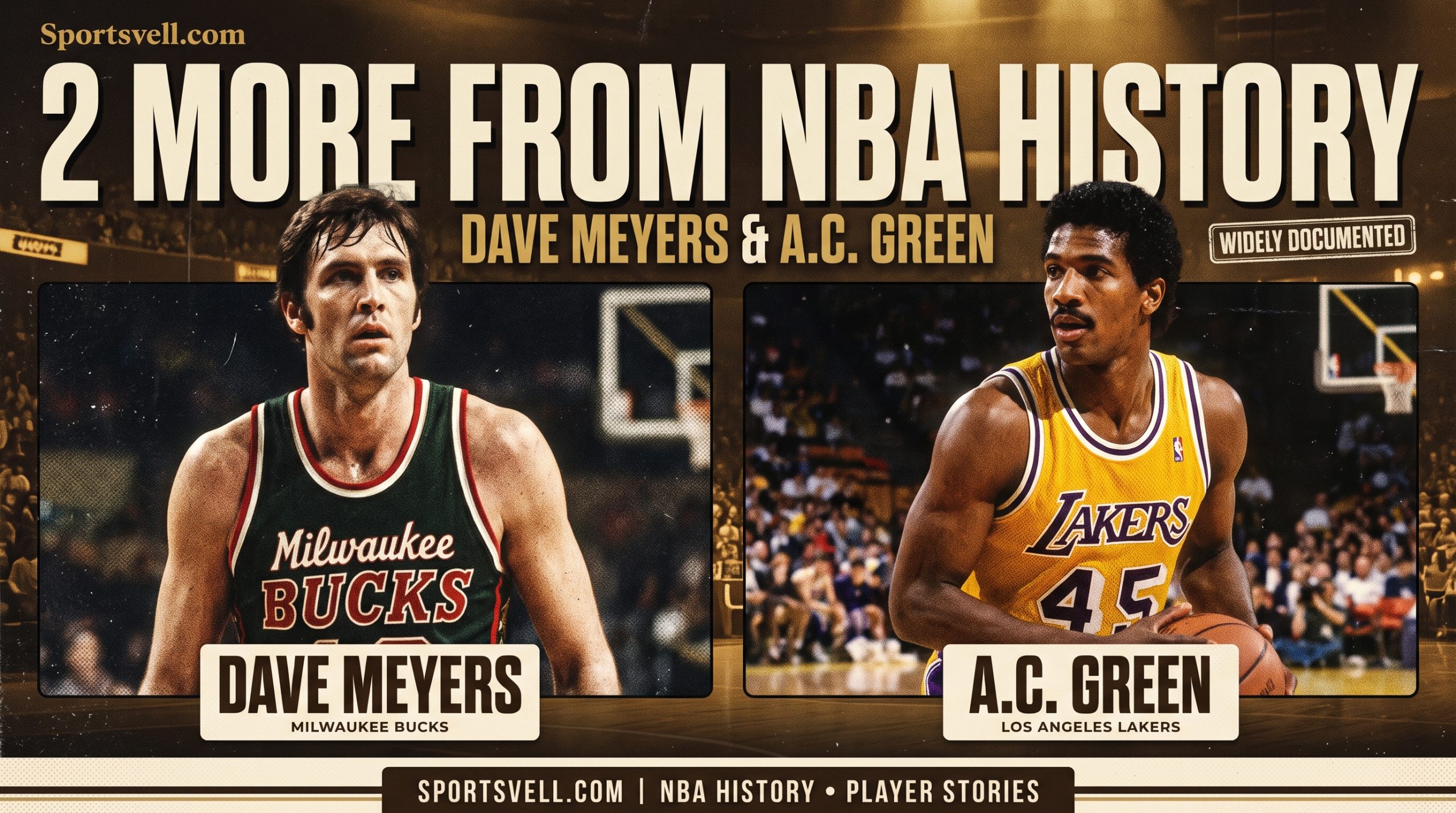
Two more from an earlier era are also widely documented. Dave Meyers and A.C. Green both have solid public records tying them to the faith.
That makes five names you can defend with sources. Every other name you will find online is disputed, unverified, or simply wrong.
No official count exists, because the NBA does not track player religion. Religious affiliation is personal, and players choose for themselves what to share.
This page gives you the tiered answer no other page gives.
You will see the three names, the two historical names, the disputed names with verdicts, the false names corrected, and the viral joke that made the question famous.
The Short Answer: Three Names You Can Verify, and Two More From History
Three ex-NBA players are reliably documented as Jehovah’s Witnesses. Those three are Danny Granger, Darren Collison, and Dewayne Dedmon.
Each one has a public record behind the claim. Collison said so himself in his retirement letter. Granger was raised in the faith and baptized after retiring. Dedmon was raised in a Witness household.
Two more names belong in a second tier. Dave Meyers retired in 1980 to devote himself to the faith. A.C. Green is widely reported as a Witness across his 16-season career.
Those five are the defensible list. The total is small, and that is the point.
More than 4,500 players have appeared in the NBA since 1946, and only a handful have any public link to this faith.
Some pages claim eight, ten, twelve, or even fifteen names. Those lists add players with no reliable source behind them. Others name two players who are not Jehovah’s Witnesses at all.
Keep the five names, label the rest, and you will have the most accurate answer on the internet.
| Tier | Players | Evidence |
|---|---|---|
| Reliably documented | Darren Collison, Danny Granger, Dewayne Dedmon | Own statements, baptism record, family background |
| Widely documented | Dave Meyers, A.C. Green | Retirement announcement, multiple secondary sources |
| Disputed | Mark Jackson, Detlef Schrempf, Michael Adams, Greg Ostertag, Reggie Theus | Claimed on low-authority pages, no reliable source |
| False | Manute Bol, Alonzo Mourning, Kareem Abdul-Jabbar, Mahmoud Abdul-Rauf | Other faiths, wrongly listed by AI-generated pages |
Why the Number Is Disputed
The number is disputed because no one keeps an official list. The NBA does not record player religion, and Jehovah’s Witnesses do not publish member lists.
What remains is public reporting: interviews, retirement letters, biographies, and family background. Some of that reporting is strong. Much of it is thin.
The top-ranking pages contradict each other badly. One says three names. Another says eight to ten. A third says at least a dozen. A fourth says ten to fifteen.
AI-generated forum pages say two names, and they name two players who are not Jehovah’s Witnesses. That is the worst answer in the top ten, and it still ranks.
| Source | Number claimed | Problem |
|---|---|---|
| FanSided (January 2023) | 3 | Correct for the Google three, but no Meyers or Green |
| ThinkDesignBlog | At least 3 | Correct, but thin and no history |
| SurpriseSports | 8 to 10 | Contradicts itself, includes disputed names, unsourced quotes |
| SportsGeeks | At least a dozen | Unsourced, inflated, only two full profiles |
| DyeBet | 10 to 15 | Unsourced, contains factual errors about Dedmon |
| Sorumatik (AI forum pages) | 2 | Names Manute Bol and Alonzo Mourning, both wrong |
The disagreement has three causes. First, the question went viral through a comedy bit, and the bit itself said “two” while Google returned three.
Second, some pages count anyone raised in the faith, while others count only practicing members. Dedmon is the clearest example, because he was raised in the faith and later charted his own course.
Third, low-quality pages copy each other. A name appears on one list, then appears on five more, and the repetition starts to look like confirmation.
The honest answer is a range with grades, not a single number. Three names are solid. Two more are strong. The rest need a verdict, not a vote.
The Three Reliably Documented Players
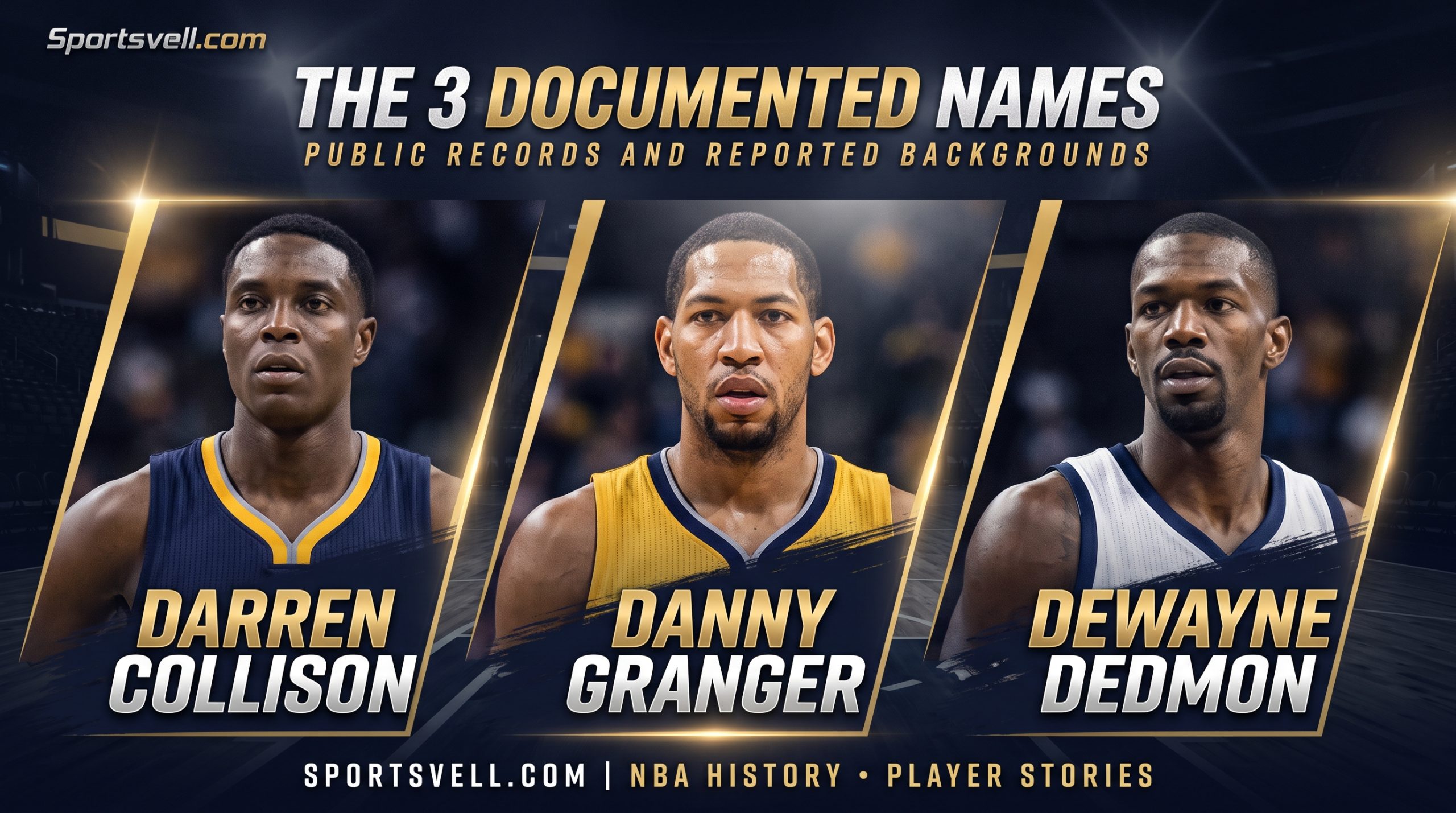
These three names appear everywhere the question is asked. They are the three names Google returned when the question went viral, and they are the three names with real evidence behind them.
Each story is different. One player retired for his faith. One was raised in it and baptized after retiring. One was raised in it and took a different path as an adult.
Basketball fans have always been curious about the personal lives of stars, from Kobe Bryant to today’s players. These three stories show how faith and a pro career can mix, clash, or part ways.
| Player | Career | Teams | Faith connection |
|---|---|---|---|
| Darren Collison | 2009 to 2019 | Hornets, Mavericks, Clippers, Kings, Pacers | Own public statement, retired for his faith |
| Danny Granger | 2005 to 2015 | Pacers, Clippers, Heat | Raised in the faith, baptized in 2017 |
| Dewayne Dedmon | 2013 to 2024 | Warriors, 76ers, Magic, Spurs, Hawks, Kings, Heat | Raised in a Witness household, later distanced |
Darren Collison: Retired at 31 for His Faith
Darren Collison is the clearest case on this list. He said it himself, in writing, when he retired.
Collison played ten NBA seasons, from 2009 to 2019. He played for the New Orleans Hornets, Dallas Mavericks, Los Angeles Clippers, Sacramento Kings, and Indiana Pacers.
He averaged 12.5 points and 5.0 assists across 708 games. He also averaged 2.7 rebounds and 1.2 steals, and he started most of his career.
On June 28, 2019, Collison announced his retirement at age 31. He did it in a letter to The Undefeated, the ESPN site that covers race, sports, and culture.
He was about to become an unrestricted free agent.
ESPN reported he was set to secure a contract worth 10 to 12 million dollars a year, and he had already earned 43 million dollars in his career.
He walked away from that money anyway. His letter explained why, in his own words.
“While I still love basketball, I know there is something more important, which is my family and my faith,” Collison wrote. “I am one of Jehovah’s Witnesses and my faith means everything to me.”
He added that he receives joy from volunteering to help others and taking part in a worldwide ministry. “The joy I feel is unmatched,” he wrote.
“With that being said, I have decided to retire from the NBA.”
ESPN covered the announcement the next day, on June 29, 2019. The story quoted the letter in full and noted the surprise across the league.
Collison starred at UCLA before the NBA. He was a steady, efficient point guard, and he posted a double-figure scoring average in each of his ten seasons.
His final season was his best as a passer. He averaged 11.2 points and 6.0 assists in 76 starts for the Pacers in 2018-19, playing 28.2 minutes a night.
His teammates were stunned. The retirement came out of nowhere, with no injury and no decline behind it. He was in his prime, and he chose ministry over millions.
Collison did return briefly. He worked out for the Golden State Warriors in August 2021, then signed a 10-day contract with the Los Angeles Lakers in December 2021.
He played three games for the Lakers. Then he left again, and he has not played in the NBA since.
The comeback matters for accuracy. Pages that say he retired and never returned are wrong. The return was short, and it does not change the reason he left.
Collison remains the only player on this list who retired in his prime and said plainly that his faith was the reason. That is why his name leads every honest answer.
Danny Granger: Raised in the Faith, Baptized After Retirement
Danny Granger was raised in a Jehovah’s Witness household. He was baptized in 2017, two years after his final NBA season.
Granger was born on April 20, 1983, in New Orleans, Louisiana. He played college basketball at Bradley and then at New Mexico, where he became a star.
The Indiana Pacers drafted him 17th overall in 2005. He spent nine seasons in Indiana and became the face of the franchise before Paul George arrived.
His peak came in the 2008-09 season. He averaged 25.8 points per game, made his only All-Star team in 2009, and won the Most Improved Player award.
Granger played for the Pacers from 2005 to 2014. He was traded to the Philadelphia 76ers at the 2014 deadline, and the Clippers signed him for the rest of that season.
He played his final season with the Miami Heat in 2014-15. Injuries had taken their toll by then, and he retired in 2015.
His career averages are reported as 15.2 points, 4.8 rebounds, and 2.0 assists per game. He was a smooth scorer with a quick release and a long frame.
Granger grew up in a religious home tied to Jehovah’s Witnesses. His upbringing shaped him, and he has credited it with teaching him respect and helping him grow into a man.
He was not baptized during his playing career. The baptism came in 2017, two years after he retired, when he formally joined the faith.
Granger now works as a college basketball analyst for CBS Sports. He has kept a low profile since retiring, and he rarely gives interviews.
He has never confirmed or denied the Brittany Schmitt story. Reporters have asked about basketball, and he answers. When fans tag him online about the comedy bit, he does not reply.
That silence is part of why the rumor stuck. The clues in the bit point to him, and he has never said otherwise.
Granger is also reported to be the great-great-nephew of Mahalia Jackson, the gospel singer known as the Queen of Gospel. That detail comes from secondary sources, so treat it as reported rather than confirmed.
His case is different from Collison’s. Collison retired for his faith. Granger was raised in it, played through his career, and joined formally after he stopped playing.
Dewayne Dedmon: Raised in the Faith, Later Charted His Own Course
Dewayne Dedmon was raised in a Jehovah’s Witness household. His mother, Gail Lewis, was a devout Witness, and she forbade him from playing organized basketball.
Dedmon was born on August 12, 1989, in Lancaster, California. He grew up in Antelope Valley, north of Los Angeles, with his mother and two older sisters, Sabrina and Marina.
His father died when Dedmon was three years old. His mother raised the children alone, and her faith shaped the household.
Gail Lewis believed that serving God and serving a team pulled in different directions. She told her son that you can only serve one master, and that playing organized sports would make serving God harder.
So Dedmon did not play high school basketball until his senior year. He was tall and athletic, but he stayed off the court through his teens.
He turned 18, exercised his age of majority rights, and started playing. He had already grown to 6 feet 8 inches, and he was raw but gifted.
He played at Antelope Valley College, then at USC from 2011 to 2013. He declared for the NBA draft in 2013, giving up his final year of college eligibility.
He went undrafted. He joined the Miami Heat for summer league, then signed with the Golden State Warriors in September 2013.
His career ran from 2013 to 2024, ten seasons in the NBA. He played for the Warriors, Philadelphia 76ers, Orlando Magic, San Antonio Spurs, Atlanta Hawks, Sacramento Kings, and Miami Heat.
He was a rim-protecting center known as “the Mechanic.” One stats site credits him with 515 games, while another credits him with 513, so the safe figure is just over 500 games.
His best years came with the Hawks and the Heat, where he started and gave teams defense, rebounding, and toughness. He was never a star, but he was a reliable rotation big man.
Dedmon’s current relationship with the faith is the part most pages get wrong. He was raised in it, and his mother still practices it.
Multiple sources note that he later distanced himself from aspects of the faith. He charted his own course as an adult, and he does not present himself as a practicing Witness.
That distinction matters. Being raised in a faith is not the same as practicing it. Dedmon belongs on this list for his upbringing, not for a current public statement.
Some pages still call him an active player. He is not. His NBA career ended in 2024, and he is now a former player.
His story is the most unusual of the three. A boy who was not allowed to play basketball until 18 still made the NBA and stayed for a decade.
The faith delayed his start, and it did not stop his career.
Two More From an Earlier Era
The three names above are the ones Google returns. Two more names belong in the answer, and both come from an earlier era of the NBA.
Dave Meyers retired in 1980 to devote himself to the faith. A.C. Green played 16 seasons and is widely reported as a Witness across his whole career.
These two are not part of the viral joke. They are part of the history, and they make the answer more complete.
| Player | Career | Teams | Evidence grade |
|---|---|---|---|
| Darren Collison | 2009 to 2019 | Pacers, Kings, Clippers, Mavericks, Hornets | Confirmed by own statement |
| Danny Granger | 2005 to 2015 | Pacers, Clippers, Heat | Raised in the faith, baptized 2017 |
| Dewayne Dedmon | 2013 to 2024 | Warriors, 76ers, Magic, Spurs, Hawks, Kings, Heat | Raised in the faith, later distanced |
| Dave Meyers | 1975 to 1980 | Milwaukee Bucks | Retired for the faith, Watchtower interview |
| A.C. Green | 1985 to 2001 | Lakers, Suns, Mavericks, Heat | Widely reported, secondary sources |
Dave Meyers: Retired at 26 in 1980
Dave Meyers was the first NBA player to retire early for his Jehovah’s Witness faith. He did it in 1980, almost forty years before Darren Collison did the same thing.
Meyers was born on April 21, 1953, in San Diego, California. He played college basketball at UCLA under the legendary coach John Wooden.
He won two national championships with the Bruins, in 1973 and 1975. He was the team captain and leading scorer in Wooden’s final season, averaging 18.3 points and 7.9 rebounds per game.
He was a consensus first-team All-American in 1975. He was the lone returning starter on a team that had won 88 straight games, and he carried it to another title.
The Los Angeles Lakers drafted him second overall in 1975. He was the centerpiece of the trade that sent Kareem Abdul-Jabbar from the Milwaukee Bucks to the Lakers.
Meyers played five seasons with the Bucks, from 1975 to 1980. He averaged 11.2 points and 6.3 rebounds, with 3,149 points and 1,771 rebounds in total.
On April 30, 1980, he announced his retirement. He was 26 years old, healthy, and a key piece of the Bucks roster.
He told the team he wanted to spend more time with his family and devote himself to his Jehovah’s Witness faith. The decision stunned the league, just as Collison’s would decades later.
Meyers gave an interview to the Watchtower in 1985, five years after retiring.
He spoke about the shift from winning 88 straight games at UCLA to losing 44 games in his first year with the Bucks.
He said the losing was hard, and his faith gave him a different measure of success. The interview is one of the few times he spoke publicly about his beliefs.
One secondary source reports that Meyers forwent back surgery that conflicted with his beliefs. That claim is reported, not confirmed, so treat it with care.
After basketball, Meyers went back to school. He earned a teaching credential and spent more than 30 years as an elementary school teacher at Railroad Canyon Elementary in Lake Elsinore, California.
He coached youth basketball, but he never wanted to return to the high-pressure world of college or pro coaching. He stayed out of the spotlight for decades.
His sister, Ann Meyers Drysdale, became a legend in women’s basketball. She is the only woman ever to sign a contract with an NBA team, and she is in the Hall of Fame.
Meyers died of cancer on October 9, 2015, at age 62. He had lived a quiet life for 35 years after leaving the NBA, and his faith had been central to it.
His story is the template for Collison’s. A young player at the top of his game walks away, not because of injury or decline, but because his faith asks for more of his life.
A.C. Green: 16 Seasons, Three Championships
A.C. Green is the most decorated player on this list. He played 16 seasons, won three championships, and never missed a game.
Green was born on October 4, 1963. The Los Angeles Lakers drafted him 23rd overall in 1985, out of Oregon State.
He played for the Lakers, Phoenix Suns, Dallas Mavericks, and Miami Heat from 1985 to 2001. He won championships with the Lakers in 1987, 1988, and 2000.
He holds the NBA Iron Man record for consecutive games played: 1,192 in a row. He did not miss a single game from his rookie season until his retirement in 2001.
Green is widely reported as a Jehovah’s Witness across his whole career. Multiple secondary sources say he joined the faith in the mid-1980s and stayed devoted to it throughout his playing days.
He stayed celibate until his marriage in 2002, and he linked that choice to his spiritual beliefs. Teammates teased him about it for years, and he never wavered.
One careful note is needed here. The claim that Green is a Jehovah’s Witness rests on secondary reporting, not on a direct interview quote in the sources used for this page.
One recent piece flags his association with the faith as disputed or poorly documented. The weight of secondary sources still lists him as a Witness, so he belongs in the second tier, not the first.
Green also runs the A.C. Green Youth Foundation, which promotes abstinence and healthy lifestyles among young people. His faith and his charity work have always run together.
He was a role player, not a star, but he was one of the most durable players in league history. He played through the Showtime Lakers, the Suns, and the Shaq and Kobe Lakers.
His case is different from the others. He did not retire early for his faith, and he was not raised in it and baptized later.
He practiced it through a long career, in public, for 16 seasons.
That makes him the best counterexample to the idea that the faith and pro basketball cannot mix. Green mixed them for longer than anyone else on this list.
The Disputed Names, With Verdicts
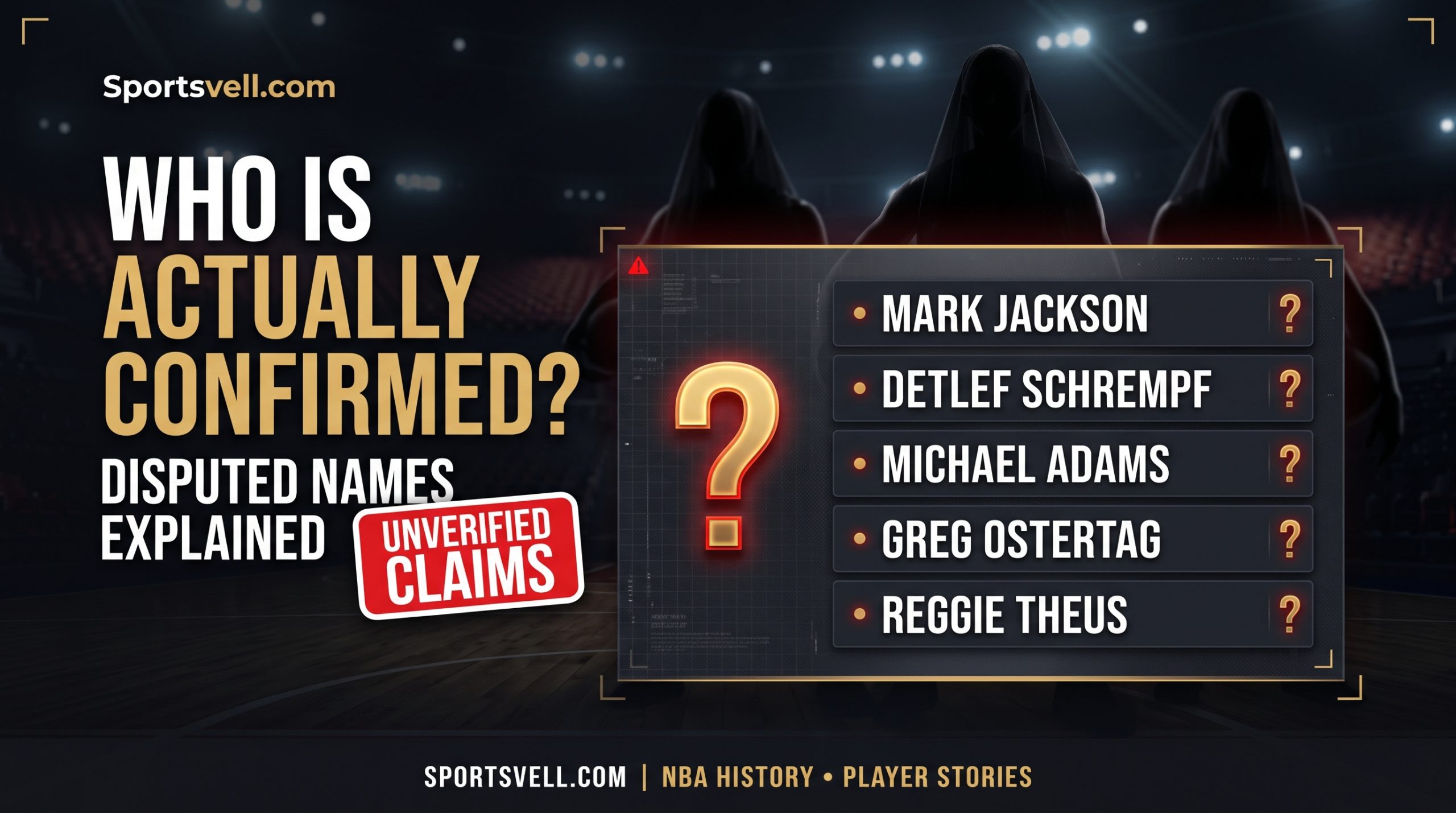
Five more names appear on other lists. None of them has a reliable source behind the claim, and one of them is almost certainly wrong.
These names spread because pages copy each other. A name appears once, then five times, and the repetition starts to look like proof.
It is not proof. Here is each name, the claim, and the verdict.
| Player | Claim | Verdict |
|---|---|---|
| Mark Jackson | Converted to Jehovah’s Witnesses during his playing career | Unverified, likely wrong |
| Detlef Schrempf | Adopted the faith in the 1990s, active preacher since | Unverified, no reliable source |
| Michael Adams | Joined the religion in the late 1990s | Unverified, no reliable source |
| Greg Ostertag | Listed as a Jehovah’s Witness | Unverified, one aggregator only |
| Reggie Theus | Listed as a Jehovah’s Witness | Unverified, one aggregator only |
| Trey Burke | Rumored to follow the faith | Unverified rumor |
| Jonathan Isaac | Rumored to be a Jehovah’s Witness | Unverified rumor |
Mark Jackson
Mark Jackson is the weakest claim on any list. One page says he converted to Jehovah’s Witnesses during his playing career, and no reliable source backs that up.
Jackson played 17 seasons, from 1987 to 2004, for the Knicks, Clippers, Pacers, Nuggets, Raptors, Jazz, and Rockets. He later coached the Golden State Warriors and became a broadcaster.
He is a well-known Christian minister in his post-playing life. He is an ordained minister, and his faith is public and central to his identity.
That faith is not Jehovah’s Witnesses. It is a mainstream Christian ministry, and no credible report ties him to the Witnesses.
The claim appears to come from confusing “devout Christian” with “Jehovah’s Witness.” They are not the same thing, and the confusion is common on low-quality lists.
Jackson does not belong on this list. His name should be removed from any honest count.
Detlef Schrempf
Detlef Schrempf is listed as a Jehovah’s Witness on two low-authority pages. No reliable source confirms the claim.
Schrempf played from 1985 to 2001 for the Mavericks, Pacers, SuperSonics, and Trail Blazers. He was a three-time All-Star and a two-time Sixth Man of the Year.
One page says he adopted the faith during the 1990s and has been an active preacher ever since. No interview, biography, or mainstream report supports that story.
Schrempf is German American, and he is known for his basketball camps and charity work in Seattle. His faith has never been a public part of his story.
Until a reliable source confirms it, Schrempf is unverified. He does not belong in the confirmed count.
Michael Adams
Michael Adams appears on one long list with a one-line claim. The page says he joined the religion in the late 1990s and became a devoted follower.
Adams played from 1985 to 1996 for the Kings, Bullets, Nuggets, and Hornets. He was a small, quick point guard and a one-time All-Star in 1992.
No interview or biography confirms the claim. No other page repeats it with a source. It is a single unsourced sentence on a single page.
That is not enough. Adams is unverified, and he does not belong in the confirmed count.
Greg Ostertag and Reggie Theus
Greg Ostertag and Reggie Theus appear on one aggregator list and nowhere else with a source. Both are unverified.
Ostertag was a Utah Jazz center from 1995 to 2006. He is best known for his size, his rebounding, and his kidney donation to his sister.
Theus was a player and coach from 1978 to 1991. He was a two-time All-Star and later coached at the college and pro level.
Neither man has a public record of Jehovah’s Witness affiliation. The aggregator lists them with no sourcing, and no other page confirms the claims.
Both stay in the disputed tier until a reliable source says otherwise.
Trey Burke and Jonathan Isaac
Trey Burke and Jonathan Isaac are rumors, not reports. Even the pages that list them admit the claims are unconfirmed.
Burke is a former NBA guard who has played for several teams. No reliable report connects him to Jehovah’s Witnesses, and the rumor has no named source.
Isaac is a forward for the Orlando Magic, and he is publicly known for his Christian faith.
He has written and spoken about it at length, including in his book about why he stands for the anthem.
That faith is a mainstream Christian faith, not Jehovah’s Witnesses. The rumor appears to come from the same confusion that put Mark Jackson on the list.
Both players are unverified. Isaac, in particular, has a public faith record that points elsewhere.
The False Names: Players Who Are Not Jehovah’s Witnesses
Some names on the internet are not just unverified. They are wrong, and the error is easy to prove.
The worst offenders are AI-generated forum pages that name two players as Jehovah’s Witnesses. Both players belong to other faiths, and both have public records that prove it.
Correcting these errors matters, because the false pages rank. A reader who trusts them walks away with the wrong answer.
Manute Bol and Alonzo Mourning
Manute Bol and Alonzo Mourning are not Jehovah’s Witnesses. AI-generated forum pages name them as the two confirmed cases, and both claims are false.
Bol was a Sudanese center who played from 1985 to 1995. He was a Christian of another tradition, and his faith was public throughout his career and his humanitarian work.
He was known for his charity work in Sudan, and his Christian faith was part of that story. He was never a Jehovah’s Witness.
Mourning was a center who played from 1992 to 2008, mostly with the Miami Heat and Charlotte Hornets.
He is a Christian of another tradition, and he has spoken openly about how his faith helped him through his kidney disease.
His faith is a mainstream Christian faith, not Jehovah’s Witnesses. The forum pages that name him offer no source, because there is none.
Both names should be removed from any list. They are the clearest example of why AI-generated content cannot be trusted on this question.
Kareem Abdul-Jabbar and Mahmoud Abdul-Rauf
Kareem Abdul-Jabbar and Mahmoud Abdul-Rauf are Muslims, not Jehovah’s Witnesses. Both converted to Islam during their careers, and both are famous for it.
Abdul-Jabbar converted to Islam in 1968 and changed his name from Lew Alcindor in 1971. His faith is one of the best-known facts about him, and it has been public for more than fifty years.
One recent piece flags Abdul-Jabbar as a name linked to the Witnesses by less-verified sources. The link is false, and it likely comes from confusing “converted to a faith” with “converted to Jehovah’s Witnesses.”
Abdul-Rauf, born Chris Jackson, converted to Islam in 1991. He is best known for refusing to stand for the national anthem in 1996, a protest rooted in his Islamic faith.
One low-quality page mentions Abdul-Rauf in an article about Jehovah’s Witness NBA players without explaining why. The mention is confusing, and the answer is simple: he is a Muslim, not a Witness.
Both men belong in the story of NBA players and faith. They do not belong in the story of Jehovah’s Witness NBA players.
Serena and Venus Williams are worth a note here too. The sisters were raised as Jehovah’s Witnesses, and Serena has spoken about the faith.
They are tennis players, not NBA players, so they do not count toward this question. They do show that the faith has touched elite athletes beyond basketball.
Why This Question Went Viral: The Brittany Schmitt Bit
This question exists as a search trend because of a comedy bit. Without it, almost nobody would ask how many ex-NBA players are Jehovah’s Witnesses.
The bit made the question famous, and it also made the answer confusing. The joke said “two” while Google returned three, and the internet spent years arguing about which player the joke was about.
Here is what happened, with dates, and what is actually known.
What Happened in the Bit
Comedian Brittany Schmitt told the story in her stand-up special “From Ho to Housewife,” released on October 8, 2022. She had told a version of it earlier on the “Y’all Know What It Is” podcast.
Schmitt said she used to date a very tall, very famous NBA player. Years after they broke up, he called her out of the blue.
He told her he had become a Jehovah’s Witness. He said the lifestyle they had lived was wrong, and they needed to repent together.
Her husband was sitting next to her during the show. He grabbed his phone and Googled how many ex-NBA players are Jehovah’s Witnesses, right there on stage.
Schmitt said the search returned two names. Then she said the player was the light-skinned one. The audience laughed, and the clip spread.
The bit also included explicit anecdotes about their past relationship. Those details are not needed to understand the search, and they are not repeated here.
FanSided covered the bit on January 1, 2023. The article noted that Schmitt never named the player, and that the bit had made the question a viral search.
The clip kept circulating. It resurfaced on social media through 2025 and into 2026, and each wave brought a new round of searches.
Why Google Returned Three Names
When Schmitt’s husband Googled the question, three names came up: Dewayne Dedmon, Danny Granger, and Darren Collison.
FanSided confirmed this in its January 2023 coverage. The article said that according to Google, there are actually three current and ex-NBA players who are Jehovah’s Witnesses, and it listed the same three names.
The bit said “two,” but Google said three. That gap is part of why the question stayed alive.
Fans argued about whether the answer was two or three, and which of the three the joke was about.
Schmitt’s husband said the answer was two in the bit.
The most likely reason is that the bit was written when only two names were prominent in search results, or that the number was part of the joke.
The three names are the ones this page leads with. They are the same three names, because they are the three with real evidence behind them.
Dedmon was still active when the bit went viral, so the count was two retired players plus one active player. Dedmon has since retired, so all three are now former players.
That timing matters. When the bit was told in 2022, Dedmon was still playing. When people search today, all three are ex-NBA players.
Who Is Cousin Keith?
There is no evidence that Danny Granger has a cousin named Keith. Cousin Keith is almost certainly a fictional gag from the comedy bit.
The bit’s punchline involved a claimed threesome with the player and his cousin Keith. Schmitt used the cousin’s name as the punchline, and the name stuck.
Fans searched for Keith Granger. They checked Granger’s social media and family records. No one found a cousin named Keith.
Sportskeeda investigated the question and found no connection between Granger and any person named Keith.
The site concluded that the comedian may not have used the real name, to protect privacy, or that the cousin does not exist.
Other coverage reached the same conclusion. No one has found facts showing that Keith Granger is part of Danny Granger’s family.
The clues in the bit still point to Granger. He is an All-Star, he played for the Pacers, he is light-skinned, and he is very tall.
Collison was also a Pacer, but he is not light-skinned, and he was open about his faith.
Dedmon was still active when the bit was told, and he was raised in the faith rather than converted later.
Most fans are convinced the joke is about Granger. That is a guess, not a fact, and Granger has never confirmed or denied it.
Schmitt has never said the name. She has admitted that some parts of the story are exaggerated for laughs, which is normal in stand-up comedy.
The bit is a joke, not a report. The names it points to are real, and the cousin is not. That is the honest way to tell the story.
What Jehovah’s Witnesses Believe
To understand why the faith matters to these players, you need to know what the faith teaches. Jehovah’s Witnesses are a Christian denomination with distinct beliefs and practices.
The movement began in the United States in the late 19th century, in the Bible study groups around Charles Taze Russell. The Watch Tower Bible and Tract Society was founded in 1881.
About 8.7 million people worldwide are Jehovah’s Witnesses, according to the 2024 annual report. The Pew Research Center found in 2014 that Jehovah’s Witnesses make up 0.8 percent of adults in the United States.
Four beliefs matter most for athletes, because they shape daily life in ways that clash with pro sports.
| Belief | What it means | How it affects an athlete |
|---|---|---|
| Door-to-door ministry | Members preach and teach from house to house | Time away from training and travel |
| No blood transfusions | Members refuse blood transfusions on religious grounds | Medical risk in a contact sport |
| No holidays or birthdays | Members do not celebrate Christmas, Easter, or birthdays | Conflicts with holiday games and team events |
| Political neutrality | Members do not vote or take part in politics | Limits public stances on social issues |
Door-to-Door Ministry
Jehovah’s Witnesses are known for door-to-door evangelism. Members spend time each week preaching, teaching, and inviting people to Bible study.
Collison said this work brought him joy. He wrote that he receives joy from volunteering to help others and taking part in a worldwide ministry.
Ministry takes time, and pro basketball takes more time. A player who trains, travels, and plays 82 games a season has little time left for preaching.
That tension is part of why Collison retired. He wanted more time for ministry, and the NBA schedule did not leave room for it.
Ministry also shapes the social life of members. Witnesses spend much of their free time with other Witnesses, in meetings and in the field.
That can isolate a player from teammates. Team chemistry is built in locker rooms, on planes, and at dinners, and a player who skips those settings can drift apart.
Blood Transfusions
Jehovah’s Witnesses refuse blood transfusions on religious grounds. They base the teaching on Bible passages about abstaining from blood.
They accept most other medical care, including surgery and most bloodless treatments. The refusal applies to transfusions of whole blood and its main components.
For a contact-sport athlete, the risk is real. Basketball is not football, but players still suffer injuries, and surgery is common.
A player who refuses a transfusion needs a hospital and a surgeon who can work with bloodless techniques. That is possible in most major cities, but it adds risk and planning.
One secondary source reports that Dave Meyers forwent back surgery that conflicted with his beliefs. That claim is reported, not confirmed, so it is flagged here rather than stated as fact.
The transfusion teaching is one of the most widely known facts about the faith, and it is one of the reasons the question of athletes and Witnesses draws so much attention.
Holidays and Birthdays
Jehovah’s Witnesses do not celebrate birthdays, Christmas, or Easter. They view these celebrations as having pagan roots or as unbiblical.
They also do not celebrate national holidays in the usual way, because of their political neutrality. They do mark the Memorial of Christ’s death each year.
For an NBA player, the holiday calendar is the work calendar. The NBA plays games on Christmas Day, on New Year’s Day, and on Martin Luther King Jr. Day.
Christmas Day games are the league’s biggest regular-season showcase. A Witness player would still play, because the job requires it, but the day would not be a celebration.
Team events also center on birthdays and holidays. A player who skips birthday cakes and holiday parties can seem distant to teammates, even when the reason is religious.
Birthdays are also a locker-room ritual. Rookies get hazed, veterans get cakes, and the team marks milestones together. A Witness player sits those rituals out.
Political Neutrality
Jehovah’s Witnesses are politically neutral. They do not vote, run for office, or take part in political campaigns.
They also do not salute the flag or sing national anthems, because they view those acts as political. They respect the law and pay taxes, but they stay out of politics.
That stance is different from the anthem protests that other NBA players have made. Abdul-Rauf refused to stand for the anthem in 1996 because of his Islamic faith, and the league suspended him.
Witnesses do not protest the anthem. They simply do not take part in it, quietly and without a statement.
Political neutrality also limits a player’s public voice. Modern athletes are expected to speak on social issues, and Witnesses are taught to stay neutral.
That can look like silence in a league where speaking out is normal. It is not silence. It is a different rule about what a believer should do in public.
Why So Few NBA Players Are Jehovah’s Witnesses
The small number has a simple explanation. The faith is small, and the lifestyle clashes with the job in several ways.
Jehovah’s Witnesses make up about 0.8 percent of adults in the United States. The NBA has had more than 4,500 players since 1946.
If players matched the general population, you would expect about 36 Witnesses in NBA history. The real number is five, or three if you count only the strongest cases.
The gap comes from the lifestyle. Ministry takes time, and the NBA takes more time. A player who wants to preach every week has to choose between the two.
Two players on this list chose the faith over the game. Meyers left at 26. Collison left at 31. Both were healthy and in demand.
Travel is another problem. NBA teams fly constantly, and Witnesses are expected to attend meetings at their local Kingdom Hall. A player on a road trip misses those meetings for weeks at a time.
Social life is a third problem. The NBA is a social world of dinners, parties, and endorsements. Witnesses are taught to limit social contact outside the faith community.
Medical policy is a fourth problem. The transfusion teaching adds risk and planning to every surgery, and pro athletes have surgery often.
None of these problems is a ban. Witnesses can play pro sports, and A.C. Green did it for 16 seasons. The faith makes the career harder, not impossible.
The small number is also a privacy effect. Some players may practice privately and never say so. The five names on this list are the public ones, not necessarily the only ones.
An NBA game runs 48 minutes of playing time, and about two and a half hours with stoppages.
See how long is a football game for the full comparison with football broadcasts, which run much longer.
An NBA roster also works differently from other sports. A team dresses 13 to 15 players, while a football team fields 11 at a time with a 53-man roster.
See how many players on a football team for that breakdown, and how many players on a soccer team for the soccer comparison.
Are There Any Current NBA Players Who Are Jehovah’s Witnesses?
No active NBA player is publicly confirmed as a Jehovah’s Witness. That is the consensus across the pages that rank for this question.
Dewayne Dedmon was the last active player with a public link to the faith, and his career ended in 2024. He is now a former player.
Rumors surface about other players from time to time. Trey Burke and Jonathan Isaac are the names that come up most often, and neither claim has a reliable source.
Isaac is publicly known for his Christian faith, which is a different tradition. Burke has no public faith record tying him to the Witnesses.
It is possible that a current player practices privately. Players keep their faith private for good reasons, and the NBA does not ask.
If a current player is a Witness, they have not said so in public. The honest answer is that none is confirmed, and the question should stay open rather than filled with rumors.
The same logic applies to the past. The five names on this list are the public ones.
There may have been others who kept their faith private, and their names would not appear on any list.
That is why the article leads with evidence grades. A name with a public statement is confirmed. A name with a biography is strong. A name with a rumor is not a name at all.
Fans check match player stats for every big game, and the same habit drives the religion question.
See our Green Bay Packers vs Dallas Cowboys match player stats breakdown for how detailed sports stat coverage has become.
Sports fans also follow the weekly TV schedule closely. See who won Monday Night Football for our weekly update on the NFL’s prime-time game.
FAQs About Ex-NBA Players Who Are Jehovah’s Witnesses
How many ex-NBA players are Jehovah’s Witnesses?
Three former NBA players are reliably documented as Jehovah’s Witnesses: Danny Granger, Darren Collison, and Dewayne Dedmon.
Two more from an earlier era, Dave Meyers and A.C. Green, are also widely documented. No official count exists, because the NBA does not track player religion.
Which NBA players are Jehovah’s Witnesses?
The reliably documented names are Darren Collison, Danny Granger, and Dewayne Dedmon. Dave Meyers and A.C. Green are also widely documented from an earlier era.
Other names on internet lists are disputed or false, including Mark Jackson, Detlef Schrempf, and Michael Adams.
Is Danny Granger a Jehovah’s Witness?
Yes, according to the public record. Granger was raised in a Jehovah’s Witness household and was baptized in 2017, two years after retiring from the NBA.
He has never confirmed or denied the Brittany Schmitt story, and he keeps a low profile as a CBS Sports analyst.
Is Darren Collison a Jehovah’s Witness?
Yes. Collison said so himself in his retirement letter to The Undefeated in June 2019.
He wrote, “I am one of Jehovah’s Witnesses and my faith means everything to me.” He retired at 31 to focus on his family and his ministry.
Is Dewayne Dedmon a Jehovah’s Witness?
Dedmon was raised in a Jehovah’s Witness household. His mother, Gail Lewis, was a devout Witness who forbade him from playing organized basketball until he turned 18.
Multiple sources note that he later distanced himself from aspects of the faith. He is best described as raised in the faith, not as a current practicing Witness.
Is A.C. Green a Jehovah’s Witness?
Green is widely reported as a Jehovah’s Witness across his 16-season career. Multiple secondary sources say he joined the faith in the mid-1980s.
The claim rests on secondary reporting, not on a direct interview quote in the sources used here. He belongs in the second tier, not the first.
Is Dave Meyers a Jehovah’s Witness?
Yes. Meyers retired from the Milwaukee Bucks on April 30, 1980, at age 26, to spend more time with his family and devote himself to his Jehovah’s Witness faith.
He gave an interview to the Watchtower in 1985 and spent more than 30 years as an elementary school teacher after basketball.
Did Darren Collison retire because of his faith?
Yes. Collison said so in his retirement letter. He wrote that his family and his faith were more important than basketball, and that he wanted more time for ministry.
He was 31, healthy, and about to sign a contract worth 10 to 12 million dollars a year. He walked away from that money.
Why did Darren Collison retire at 31?
Collison retired to focus on his family and his Jehovah’s Witness faith. He wanted more time for volunteering and ministry work.
He said the joy he feels from that work is unmatched. He was not injured, and he was not declining as a player.
How much money did Darren Collison leave on the table?
ESPN reported that Collison was set to secure a contract worth 10 to 12 million dollars a year in free agency in the summer of 2019.
He had already earned 43 million dollars in his NBA career. He gave up the next contract to focus on his faith and family.
Did Darren Collison come back to the NBA?
Yes, briefly. Collison worked out for the Golden State Warriors in August 2021, then signed a 10-day contract with the Los Angeles Lakers in December 2021.
He played three games for the Lakers. Then he left again, and he has not played in the NBA since.
Why did Dave Meyers retire at 26?
Meyers retired to spend more time with his family and devote himself to his Jehovah’s Witness faith. He announced the decision on April 30, 1980.
He was a key player for the Milwaukee Bucks, healthy, and only five seasons into his career. He became an elementary school teacher after basketball.
When was Danny Granger baptized?
Granger was baptized in 2017, two years after his final NBA season. He was raised in a Jehovah’s Witness household but was not baptized during his playing career.
He played his last NBA season with the Miami Heat in 2014-15 and retired in 2015.
Was Danny Granger raised a Jehovah’s Witness?
Yes. Granger grew up in a religious household tied to Jehovah’s Witnesses, and he has credited that upbringing with teaching him respect.
He was not baptized until 2017, two years after retiring. His case is different from Collison’s, who retired for his faith.
Why didn’t Dewayne Dedmon play basketball until he was 18?
Dedmon’s mother, Gail Lewis, was a devout Jehovah’s Witness who forbade him from playing organized basketball. She believed that serving God and serving a team pulled in different directions.
He turned 18, exercised his age of majority rights, and started playing. He had already grown to 6 feet 8 inches.
Is Dewayne Dedmon still a Jehovah’s Witness?
That is unconfirmed. Dedmon was raised in a Jehovah’s Witness household, and his mother still practices the faith.
Multiple sources note that he later distanced himself from aspects of the faith. He does not present himself as a practicing Witness.
Who is Danny Granger’s cousin Keith?
There is no evidence that Danny Granger has a cousin named Keith. Cousin Keith is almost certainly a fictional gag from Brittany Schmitt’s comedy bit.
Fans searched Granger’s social media and family records and found no cousin Keith. Sportskeeda investigated and found no connection.
Does Danny Granger have a cousin named Keith?
No evidence supports it. No one has found facts showing that a person named Keith Granger is part of Danny Granger’s family.
Schmitt has admitted that some parts of her story are exaggerated for laughs. The cousin is most likely made up for the punchline.
Who is the ex-NBA player in Brittany Schmitt’s joke?
Schmitt never named the player. The clues in the bit point to Danny Granger: an All-Star, a former Pacer, light-skinned, and very tall.
Most fans are convinced it is Granger, but that is a guess. Granger has never confirmed or denied it.
What is the Brittany Schmitt Jehovah’s Witness joke?
Schmitt told the story in her stand-up special “From Ho to Housewife,” released on October 8, 2022.
An ex-NBA player called her years after they broke up to say he had become a Jehovah’s Witness and she should repent.
Her husband Googled how many ex-NBA players are Jehovah’s Witnesses on stage. The bit said two names, while Google returned three.
How many ex-NBA players are Jehovah’s Witnesses according to Google?
Three names come up: Dewayne Dedmon, Danny Granger, and Darren Collison. FanSided confirmed this in its January 2023 coverage of the Schmitt bit.
The bit itself said two, but the search returned three. That gap is part of why the question stayed alive online.
Are there any current NBA players who are Jehovah’s Witnesses?
No active NBA player is publicly confirmed as a Jehovah’s Witness. Dewayne Dedmon was the last active player with a public link to the faith, and his career ended in 2024.
Rumors about Trey Burke and Jonathan Isaac have no reliable source. Isaac is publicly known for his Christian faith, which is a different tradition.
Is Mark Jackson a Jehovah’s Witness?
No reliable source says so. Jackson is an ordained Christian minister in his post-playing life, and his faith is a mainstream Christian ministry.
The claim appears to come from confusing “devout Christian” with “Jehovah’s Witness.” They are not the same thing.
Is Detlef Schrempf a Jehovah’s Witness?
No reliable source confirms it. Two low-authority pages claim he adopted the faith in the 1990s and became an active preacher.
No interview, biography, or mainstream report supports the claim. Schrempf is unverified and does not belong in the confirmed count.
Is Manute Bol a Jehovah’s Witness?
No. Bol was a Christian of another tradition, and his faith was public throughout his career and his humanitarian work in Sudan.
AI-generated forum pages name him as a Jehovah’s Witness, and both claims are false. He was never a Witness.
Conclusion
How many ex NBA players are Jehovah’s Witnesses? Three are reliably documented: Danny Granger, Darren Collison, and Dewayne Dedmon.
Two more from an earlier era are also widely documented. Dave Meyers retired for the faith in 1980, and A.C. Green practiced it through 16 seasons and three championships.
That makes five names you can defend with sources. Every other name is disputed, unverified, or false, and this page labels each one with its verdict.
The question went viral because of a comedy bit, and the bit said two while Google said three. The real answer is a tiered list, not a single number, because no official count exists.
Collison’s story is the clearest. He retired at 31, in his prime, and said plainly that his faith meant more than basketball. Meyers did the same thing at 26, forty years earlier.
Granger’s story is quieter. He was raised in the faith, played through his career, and was baptized two years after retiring.
Dedmon’s story is the most unusual, because his faith delayed his start and did not stop his career.
The disputed names stay disputed until a reliable source confirms them. The false names stay false, and the pages that list them should be corrected.
The bit reached millions because stand-up specials now travel on streaming services, and fans pay for that entertainment every month.
See how much entertainment costs per month for the full breakdown of what American households spend.
If you came here from the joke, you now have the answer. Three names you can verify, two more from history, and a clear line between evidence and rumor.