How Does the NBA Coach’s Challenge Work? 2026–27 Rules Explained
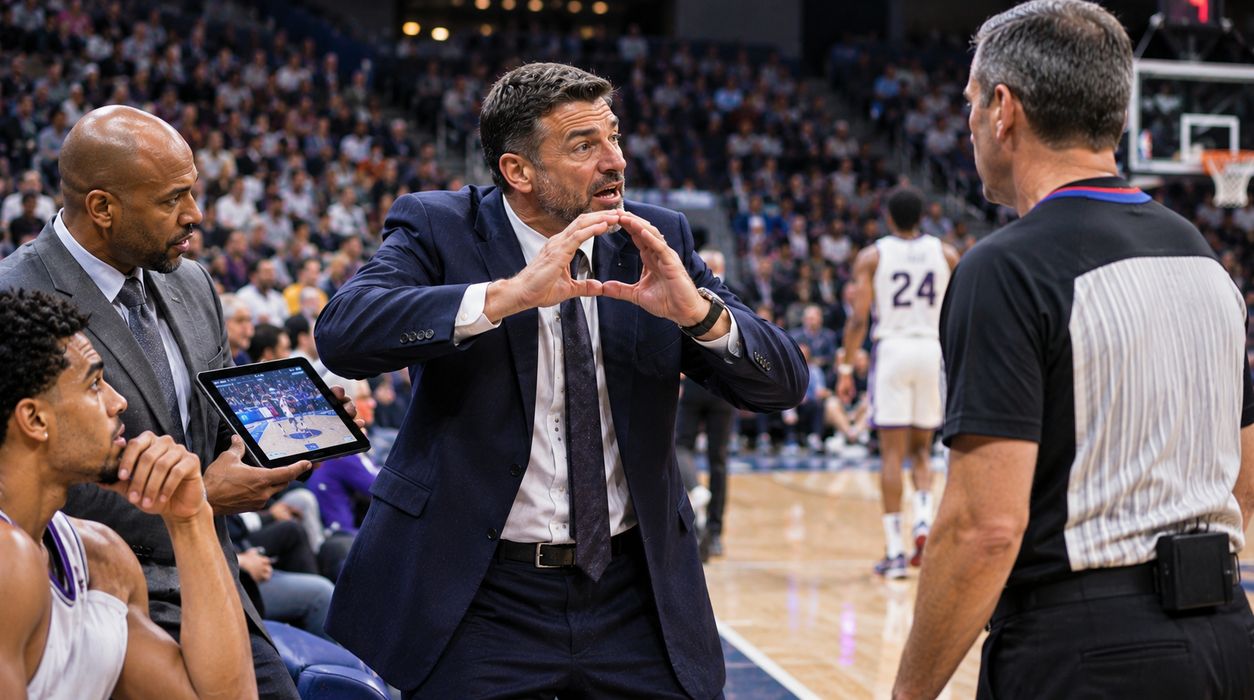
A basketball game is tied with 30 seconds remaining. A defender appears to make a clean block, but the referee calls a personal foul. The crowd reacts, the player protests, and the head coach immediately signals for a video review.
That is when the NBA Coach’s Challenge becomes important.
The challenge system gives head coaches a limited opportunity to dispute certain officiating decisions using instant replay. A successful challenge can erase a foul, change possession, or correct a goaltending decision.
But coaches cannot challenge every call, and using a challenge comes with a strategic cost.
Under the NBA Coach’s Challenge rules for 2026–27, each team starts with one challenge. If its first challenge succeeds, it earns a second. Teams must also have an available timeout to initiate a challenge.
Understanding these details makes controversial calls and late-game coaching decisions much easier to follow.
What Is the NBA Coach’s Challenge?
The NBA Coach’s Challenge is a replay procedure that allows a team’s head coach to request a review of certain calls made by game officials.
It was introduced during the 2019–20 season and later became a permanent part of NBA officiating.
The system does not give coaches unlimited authority to question referees.
Instead, it covers three specific categories of called violations: personal fouls against the coach’s own team, certain out-of-bounds decisions, and called goaltending or basket interference.
A challenge must follow the NBA’s official procedure, including a timely timeout and the required signal.
If the review provides clear and conclusive visual evidence that the original decision was wrong, the call can be overturned.
The complete framework appears in NBA Official Rule No. 14: Coach’s Challenge.
How Many Challenges Does an NBA Team Get?
Every NBA team begins a game with one Coach’s Challenge.
If that first challenge is successful, the team receives a second challenge.
However, the second challenge is the team’s final opportunity, even if it also succeeds.
This means a team can use either one or two challenges during a game.
The number depends on the outcome of its first attempt.
For example, imagine a coach challenges a foul during the second quarter.
If officials uphold the foul, the team loses its challenge and cannot request another one later.
If officials overturn the foul, the team receives a second challenge for use later in the game.
This expanded system began in the 2023–24 season, following the NBA’s official announcement of the second-challenge rule.
What Calls Can an NBA Coach Challenge?
There are three main types of challengeable calls.
1. Personal fouls called against the coach’s team
A head coach can challenge a personal foul assessed against one of the team’s own players.
For example, a defender may be called for blocking when the coach believes the defender established legal guarding position.
The coach can request a review of that foul.
However, a coach cannot independently challenge a personal foul called against the opposing team.
2. Certain out-of-bounds calls
A coach can challenge an out-of-bounds ruling when the coach’s team was not awarded possession.
Suppose the referee awards the ball to the opponent, but replay appears to show the opponent touched it last.
That decision can be challenged.
3. Called goaltending or basket interference
A coach can challenge a called goaltending or basket-interference violation, subject to timing restrictions.
During the final two minutes of the fourth quarter and the final two minutes of overtime, these reviews are initiated by game officials rather than through a Coach’s Challenge.
These categories are deliberately limited to prevent every disagreement from interrupting the game.
What Calls Cannot Be Challenged?
Several common basketball violations cannot independently trigger a Coach’s Challenge.
These include traveling, carrying, double dribbling, three-second violations, and flopping calls.
Technical fouls and flagrant fouls are also not independently challengeable under the ordinary Coach’s Challenge procedure.
Most importantly, coaches cannot challenge a non-call.
Imagine a player drives toward the basket and appears to absorb significant contact, but the referee allows play to continue.
The coach cannot simply demand a challenge because a foul was not called.
The rule requires an eligible call to have been made.
However, officials reviewing a properly challenged event may examine certain related matters, including another foul occurring close to the original play.
That is different from independently challenging an uncalled violation.
How Does a Coach Start an NBA Challenge?
The head coach must follow a specific sequence.
First, the team generally calls a legal timeout immediately after the disputed decision.
The coach must then signal for a challenge by twirling an index finger toward the officials.
The coach also identifies the specific ruling being challenged.
Timing matters.
Ordinarily, the challenge must be initiated before the ball is handed to a player for an inbound pass or free throw, or before a jump ball is administered.
There are special procedures when a mandatory timeout or an opposing team’s timeout is already underway.
In those circumstances, the coach generally has a 30-second window from the beginning of that timeout to request review.
A coach cannot wait until several additional possessions have occurred and then challenge an earlier call.
The system is designed to resolve the disputed decision before play continues.
Does an NBA Coach Need a Timeout to Challenge?
Yes.
A team must have an available timeout to initiate a Coach’s Challenge.
This remains true even when the team has earned a second challenge.
Suppose a coach successfully challenges a foul in the first half.
The team earns a second challenge.
However, if the team later uses all its remaining timeouts, it cannot initiate that second challenge.
The unused challenge does not create an additional timeout.
Attempting a challenge without an available timeout can result in an excessive-timeout technical foul.
This requirement makes timeout management an important part of the strategy.
A coach must consider whether preserving a timeout for a potential replay is more valuable than using it to stop an opponent’s scoring run.
What Happens After a Successful First Challenge?
When the first challenge is successful, the original challenged ruling is overturned.
The team also earns a second challenge.
In the ordinary situation, the timeout used to initiate that successful first challenge is restored.
However, there are exceptions involving mandatory timeouts.
A coach who initiates a challenge during a mandatory timeout may still be charged with that timeout even after winning.
The exact timeout treatment can also depend on whether the opposing team had already requested a timeout.
For most fans, the central rule is simple: winning the first challenge normally preserves the timeout and awards one additional challenge.
That combination can be extremely valuable.
A team can correct an early mistake without surrendering its only opportunity to dispute a later call.
What Happens After an Unsuccessful Challenge?
An unsuccessful challenge means the original challenged call remains in place.
The team loses the timeout associated with the review.
If it was the team’s first challenge, it does not receive a second challenge.
For example, imagine a coach challenges a defensive foul with eight minutes remaining in the third quarter.
Officials review several camera angles but find insufficient evidence to overturn the decision.
The foul stands.
The team loses the timeout and has no challenges remaining.
That outcome can become costly during a close fourth quarter.
A coach must therefore weigh the potential benefit of overturning a call against the possibility of losing both a timeout and future review opportunities.
Do Teams Keep Their Timeout After a Second Successful Challenge?
No.
This is one of the most important details in the current NBA challenge system.
Even if a team’s second challenge succeeds, the timeout used to initiate it is not restored.
For example, a coach wins a challenge in the second quarter and earns a second opportunity.
Late in the fourth quarter, the coach successfully challenges an out-of-bounds decision.
The team receives the corrected ruling, but it is still charged with the timeout used for that second challenge.
The NBA adopted this approach partly to manage game length and reduce additional stoppages.
The second challenge remains valuable because it can correct an important call.
However, it does not offer the same timeout benefit as an ordinary successful first challenge.
Who Makes the Final Decision on a Challenge?
The decision depends on the type of call under review.
For challenged personal fouls, the on-court crew chief determines the final outcome.
The NBA Replay Center supports the review process.
For challenged out-of-bounds calls and goaltending or basket-interference decisions, the Replay Center Official generally makes the final ruling.
There is an important exception for certain games played outside NBA arenas, where the on-court crew chief may make the final determination.
The officials examine available video footage to establish whether the original decision was correct.
They do not overturn a call simply because one camera angle looks questionable.
The evidence must satisfy the NBA’s required standard.
What Does Clear and Conclusive Evidence Mean?
The NBA requires clear and conclusive visual evidence to overturn a challenged ruling.
That means replay must establish that the original decision was incorrect.
If the video remains inconclusive, the call stands.
Imagine a defender and offensive player collide near the basket.
One camera angle suggests the defender was stationary, but another shows possible lateral movement.
If the available footage does not conclusively establish that the original foul call was wrong, officials may uphold it.
This standard prevents replay officials from replacing one uncertain judgment with another.
The objective is to correct demonstrable errors.
It is not to reconsider every close decision from scratch.
Can a Coach Challenge a Shooting Foul?
Yes, if the foul was called against the coach’s own team.
Suppose a defender is called for fouling a three-point shooter.
The coach believes the defender made no illegal contact.
A valid challenge can trigger a review.
If the foul is overturned, the free throws associated with that foul may be eliminated.
However, the review may also examine related matters, including whether the offensive player had begun a legal shooting motion.
An important distinction concerns challenge success.
If the original foul remains assigned to the same player but officials change it from a shooting foul to a non-shooting foul, the challenge is still considered unsuccessful.
The review may benefit the team, but it does not qualify as a successful challenge under the NBA’s specific definition.
Can a Coach Challenge an Out-of-Bounds Call?
Yes, when the coach’s team was not awarded possession.
Out-of-bounds challenges can be especially important near the end of a close game.
Imagine the score is tied with 12 seconds remaining.
A referee rules that the ball went out off the home team’s player.
The coach believes the opposing player touched it last.
If replay conclusively confirms that the original ruling was wrong, possession can be awarded to the home team.
Officials may also review certain related issues, including whether a nearby foul occurred.
The NBA’s current rules allow coaches to challenge eligible out-of-bounds decisions throughout the game.
This is important because some older explanations of the challenge system describe restrictions that have since changed.
Can a Coach Challenge Goaltending?
Yes, but timing restrictions apply.
A called goaltending or basket-interference violation can be challenged during eligible portions of the game.
For example, a referee might rule that a defender illegally touched a shot on its downward flight.
The coach believes the block was legal and requests a challenge.
If replay proves the original call was incorrect, officials can overturn it.
However, during the final two minutes of the fourth quarter and the final two minutes of any overtime, the review of called goaltending or basket interference is initiated by game officials.
The coach cannot use a Coach’s Challenge to trigger that particular review during those periods.
This distinction helps explain why referees sometimes initiate replay without a coach making the challenge signal.
Can Coaches Challenge Calls in the Last Two Minutes?
Yes, but not every category operates the same way.
A coach can challenge an eligible personal foul against the coach’s own team during the final two minutes.
Eligible out-of-bounds decisions can also be challenged.
However, called goaltending and basket-interference reviews during the final two minutes of regulation or overtime are handled through the officials’ review process.
That means the phrase “coaches cannot challenge in the final two minutes” is incorrect.
The restriction applies to specific types of decisions, not every Coach’s Challenge.
This matters because late-game possessions often involve close fouls and disputed boundary-line calls.
A coach with an available challenge and timeout may still have an important strategic opportunity.
Can Replay Officials Discover Another Foul?
Yes, within the limits of the reviewable matters associated with a valid challenge.
Suppose a coach challenges an out-of-bounds ruling.
During review, officials identify a foul that occurred close to the disputed boundary-line play.
The rules permit certain proximate fouls to be assessed during the review.
Similarly, a properly challenged personal foul may allow officials to examine whether another nearby foul should have been called.
However, the replay process is not an unlimited investigation of everything that happened during the possession.
Officials must stay within the categories permitted by Rule No. 14.
The distinction helps explain why some challenges produce unexpected outcomes.
A team may win possession, but another violation discovered during review can still affect the final result.
Why Do Coaches Save Challenges for the Fourth Quarter?
Many coaches prefer to preserve challenges for high-impact situations.
A disputed call late in the game can directly affect the outcome.
For example, overturning a foul with 20 seconds remaining might prevent an opponent from attempting two free throws.
Changing possession with five seconds left could create an opportunity for a game-winning shot.
However, saving a challenge is not always the best decision.
An early foul against a star player can influence playing time for the rest of the game.
Correcting that foul may be worth using a challenge immediately.
The second-challenge rule makes successful early challenges more attractive because teams can retain another opportunity.
The best decision depends on the game situation, the available evidence, and the value of the disputed ruling.
How Do Assistant Coaches Help With Challenges?
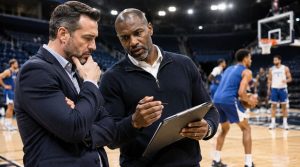
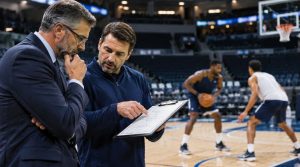
NBA coaching staffs often evaluate disputed calls before the head coach decides whether to challenge.
Assistant coaches may watch video or communicate with staff members responsible for replay analysis.
They can help identify whether the available footage supports an overturn.
For example, an assistant may notice that the defender established position before the offensive player initiated contact.
The head coach must still make the formal challenge request.
Because the challenge window is short, communication must be quick.
Coaching staffs need to balance confidence in the evidence against the cost of a timeout.
That process has made replay evaluation another important part of modern NBA game management.
Does a Successful Challenge Guarantee a Different Result?
Not always.
A review may correct part of a play without producing the exact outcome a coach expected.
For example, officials could determine that a foul was committed by a different player rather than eliminating the foul entirely.
A reviewed play may also reveal a separate violation that changes how possession resumes.
The definition of a successful challenge is specific.
For personal fouls, the foul must be removed from the originally charged player.
For out-of-bounds challenges, the ruling must change in a way that meets the NBA’s success criteria.
Therefore, a review that changes some aspect of a play is not automatically classified as a successful Coach’s Challenge.
This distinction is important when determining whether the team receives a second challenge.
How Is an NBA Coach’s Challenge Different From Other Sports?
Several professional leagues use replay challenges, but their procedures differ.
The NFL has its own system for reviewing eligible football decisions.
MLB also uses replay procedures for certain baseball calls.
The NBA’s approach is distinctive because challenges are closely connected to timeouts and limited categories of officiating decisions.
For readers comparing sports rules, SportsVell’s guide to how long a football game lasts explains the structure of American football games.
Baseball fans can also explore Giants vs. Yankees player statistics for another look at how professional sports are analyzed.
These comparisons show why fans should not assume that a challenge rule in one league works identically in another.
Why Does the Coach’s Challenge Matter in 2026–27?
The Coach’s Challenge gives teams a way to correct certain officiating mistakes without allowing unlimited interruptions.
It also creates an additional coaching decision.
A head coach must determine whether the potential benefit of a review outweighs the cost of using a timeout.
The ability to earn a second challenge makes the first attempt particularly important.
Successful challenges can preserve key players from unnecessary foul trouble, change possession, and influence late-game scoring opportunities.
At the same time, unsuccessful challenges can leave teams with fewer resources for the final minutes.
Fans following player development and roster decisions can find additional coverage in SportsVell’s NBA category.
The site also examines professional athlete compensation in its Banana Ball salary guide and MLB qualifying offer explanation.
Frequently Asked Questions
How many Coach’s Challenges are allowed in the NBA?
Each team starts with one challenge. A successful first challenge earns a second, but there is no third challenge.
Does a successful first challenge return the timeout?
Normally, yes, unless an applicable mandatory-timeout exception changes the result.
Does a successful second challenge return the timeout?
No. The timeout used for the second challenge is charged even when the challenge succeeds.
Can an NBA coach challenge a no-call?
No. A Coach’s Challenge must involve an eligible called violation.
Can a coach challenge a traveling violation?
No. Traveling is not independently challengeable under Rule No. 14.
Can coaches challenge fouls in the final two minutes?
Yes. An eligible personal foul against the coach’s own team can be challenged during the final two minutes.
Can a coach challenge an out-of-bounds call late in a game?
Yes, provided the call is eligible and the team follows the challenge procedure.
Can coaches challenge goaltending in the final two minutes?
No. During those periods, reviews of called goaltending or basket interference are initiated by game officials.
What happens if replay evidence is inconclusive?
The original ruling stands.
Can a team challenge without a timeout?
No. An available timeout is required to initiate a Coach’s Challenge.
Final Thoughts
The NBA Coach’s Challenge is an important part of modern basketball strategy.
For 2026–27, teams begin with one challenge and earn a second if their first attempt succeeds.
Coaches can dispute eligible personal fouls, out-of-bounds rulings, and called goaltending or basket interference, subject to specific restrictions.
The challenge must be initiated promptly, and the team must have an available timeout.
Winning the first challenge normally preserves that timeout, but using a second challenge costs a timeout even when successful.
The next time a coach makes the replay signal during a close game, remember that the decision involves more than whether the referee was right.
It also involves timing, available evidence, remaining timeouts, and the strategic value of correcting the call.