
What Is the NBA Second Apron? 2026–27 Salary Cap Rules Explained
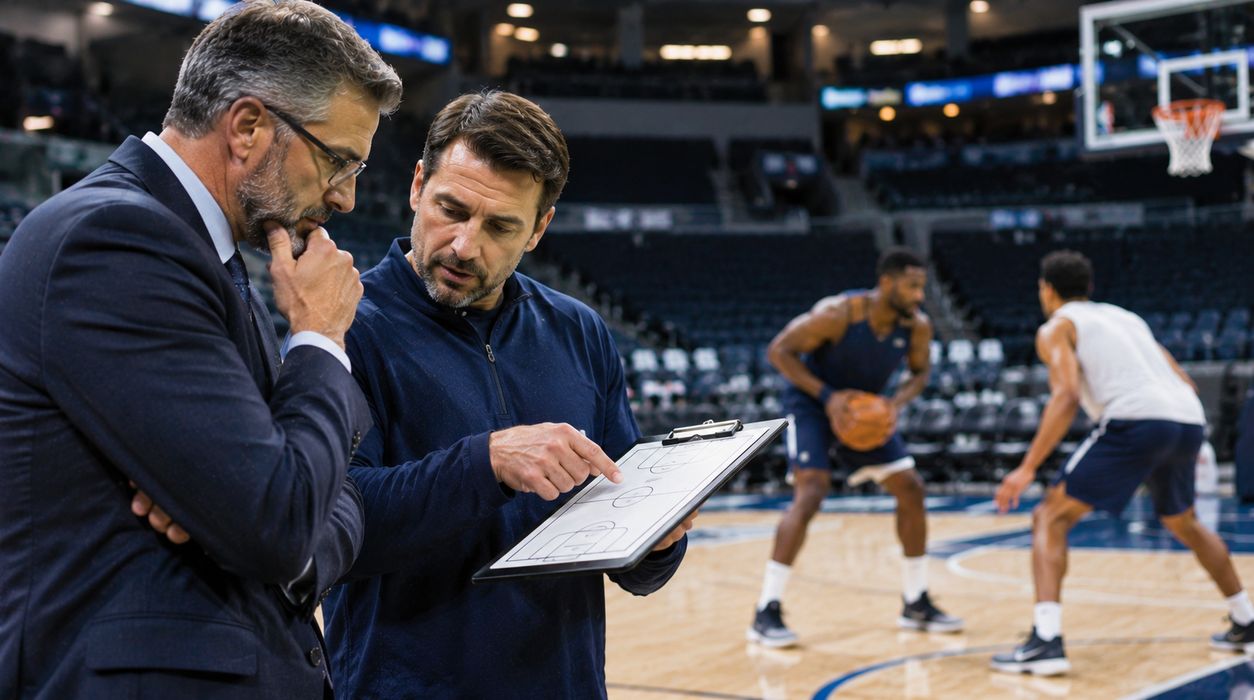
An NBA team can have three All-Stars, a championship-level starting lineup, and an owner willing to spend almost anything. Yet that team might still struggle to make a relatively simple trade.
The reason could be the NBA second apron.
Introduced through the league’s 2023 collective bargaining agreement, the second apron creates additional restrictions for the NBA’s highest-spending teams. It affects trades, free-agent signings, roster flexibility, and even future first-round draft picks.
For the 2026–27 season, the second apron is set at $221.686 million, well above the NBA’s $164.961 million salary cap.
But crossing that threshold does not automatically make a team’s roster illegal. Instead, it limits the transactions the team can make.
Here’s how the NBA second apron works in 2026–27, why it matters, and how it differs from the first apron and luxury tax.
What Is the NBA Second Apron?
The NBA second apron is a payroll threshold that triggers the league’s toughest team-building restrictions.
It sits above the regular salary cap, luxury tax line, and first apron.
A team can legally carry payroll above the second apron. However, doing so limits its ability to acquire additional players through certain trades and salary-cap exceptions.
The purpose is to discourage the wealthiest teams from continuously adding expensive talent without meaningful competitive consequences.
Before the current collective bargaining agreement, a franchise could often pay a large luxury tax bill while retaining considerable flexibility.
The second apron changes that calculation.
Even if an owner is comfortable paying additional taxes, the front office may be unable to execute a preferred trade.
NBA executive Dan Rube explained the league’s reasoning in an official NBA discussion of second-apron rules.
The central objective is competitive balance, not simply reducing player salaries.
What Is the NBA Second Apron in 2026–27?
The official second-apron threshold for the 2026–27 NBA season is $221,686,000.
Here are the major financial levels:
| Financial Threshold | 2026–27 Amount |
|---|---|
| Minimum team salary | $148,465,000 |
| Salary cap | $164,961,000 |
| Luxury tax | $200,428,000 |
| First apron | $209,015,000 |
| Second apron | $221,686,000 |
These figures were announced in the NBA’s official 2026–27 salary-cap release.
The second apron is $12.671 million above the first apron and $21.258 million above the luxury tax threshold.
That separation matters because different restrictions apply at different payroll levels.
A team spending $205 million is above the luxury tax line but below the first apron.
A team spending $215 million is above the first apron but below the second.
A team spending $225 million is above both aprons and faces the most restrictive transaction rules.
What Is the Difference Between the NBA Salary Cap and Second Apron?
The salary cap and second apron serve different purposes.
The salary cap establishes the basic spending framework for NBA teams.
However, the NBA operates a soft salary-cap system.
That means teams can exceed the cap through permitted exceptions, including certain rights to re-sign their own players.
For example, a franchise may exceed the salary cap when re-signing an eligible player using Bird rights.
The second apron does not replace those exceptions entirely.
Instead, it restricts particular methods of adding talent once payroll reaches the highest spending tier.
Think of the salary cap as the starting financial framework and the second apron as an additional transaction-control boundary.
A team can be over the cap without being anywhere near the second apron.
That distinction explains why simply describing an NBA franchise as “over the cap” does not reveal how much roster flexibility it has.
First Apron vs. Second Apron: What’s the Difference?
The first apron is the lower of the two additional spending thresholds.
For 2026–27, it is $209.015 million.
The second apron is $221.686 million.
Teams above the first apron face restrictions that are less severe than those imposed at the second apron.
For example, first-apron restrictions affect certain salary-matching arrangements and free-agent acquisition methods.
Teams above the second apron face additional limitations, including restrictions on combining outgoing player salaries in trades.
The second apron also affects the availability of the taxpayer mid-level exception and certain future draft picks.
The important point is that these rules build on one another.
Crossing the second apron does not erase first-apron restrictions.
Instead, the team faces the applicable first-apron limitations plus the additional second-apron rules.
This creates several distinct financial situations for NBA front offices.
Can NBA Teams Spend Above the Second Apron?
Yes.
The second apron is not an absolute payroll ceiling for every team.
A franchise can exceed it by using permitted transactions, such as certain contract extensions or re-signing its own players.
For example, a team might already have several highly paid veterans.
One of those players becomes eligible for a contract extension.
The organization may still be able to complete the extension even if its payroll remains above the second apron.
However, acquiring new talent becomes more difficult.
This is why the second apron should not be confused with a universal hard cap.
Some transactions trigger a hard-cap restriction at an apron level, meaning the team cannot exceed that specified threshold during the applicable period.
Other teams may legally operate above the threshold while accepting the corresponding restrictions.
The exact transaction matters.
How Does the Second Apron Affect NBA Trades?
Trade restrictions are among the second apron’s most important consequences.
An over-second-apron team generally cannot combine multiple outgoing player salaries to acquire a more expensive player through the ordinary salary-matching mechanism.
This is commonly called the salary-aggregation restriction.
Imagine a team wants to acquire a player earning $30 million.
It has two players earning $15 million each.
Under a less restrictive trade framework, combining those two salaries might help construct a deal.
But if the team is above the second apron, it cannot use that aggregation method to bring in the target player.
The team must find a transaction structure that complies with the applicable rules.
That could require trading a different player, reducing payroll, or abandoning the deal.
The restriction is especially significant for championship contenders with several large contracts.
Can Second-Apron Teams Take Back More Salary in a Trade?
Generally, teams above the first apron cannot use ordinary trade matching to receive more salary than they send out.
This becomes particularly restrictive when combined with second-apron aggregation rules.
Suppose a high-spending team trades a player earning $20 million.
It generally cannot use that transaction to acquire a player earning $25 million through salary matching.
The team would need another permissible structure and sufficient financial flexibility.
However, NBA trade rules contain detailed exceptions and accounting provisions.
The answer to whether a specific transaction is legal depends on team salary, the type of trade, applicable exceptions, and other CBA requirements.
For fans, the practical lesson is straightforward: a team above the second apron has fewer ways to construct trades.
Even a seemingly fair exchange of players may not satisfy league rules.
What Is the Salary Aggregation Rule?
Salary aggregation means combining the salaries of multiple outgoing players to match the salary of one or more incoming players.
For example, a team might trade two players earning $10 million each to acquire a player earning approximately $20 million.
This type of structure is common in NBA trade discussions.
However, the second apron restricts teams from using aggregated outgoing salaries to acquire players through certain trades.
The result can be frustrating for front offices.
A team might have several movable contracts but no legal way to combine them for its preferred target.
The restriction can also make expensive role players harder to trade.
A club may need to consider whether adding another large contract today will reduce its ability to reshape the roster tomorrow.
That long-term planning is a major part of modern NBA team building.
Can Second-Apron Teams Use the Mid-Level Exception?
Teams above the second apron cannot use the taxpayer mid-level exception to sign a player.
For 2026–27, the NBA announced these mid-level exception amounts:
| Exception | 2026–27 Amount |
|---|---|
| Non-taxpayer mid-level | $15.044 million |
| Taxpayer mid-level | $6.064 million |
| Room mid-level | $9.366 million |
The exceptions apply under different eligibility conditions.
A team above the second apron cannot simply use the $6.064 million taxpayer mid-level exception to add another veteran.
That removes a valuable free-agent signing tool.
However, the team may still use permitted methods, such as qualifying minimum-salary contracts or applicable Bird rights.
The restriction therefore reduces flexibility rather than prohibiting every signing.
Can a Second-Apron Team Sign Minimum-Salary Players?
Yes.
Teams above the second apron can generally sign eligible players using the minimum-player salary exception, subject to applicable rules.
This is essential because NBA teams still need enough players to complete their rosters.
Imagine a contender has three stars consuming most of its payroll.
The organization may need affordable veterans and developing players to provide depth.
Minimum contracts can help fill those positions.
However, minimum-salary signings do not solve every roster problem.
A team might need a reliable starting-caliber player rather than another bench option.
If the franchise lacks trade flexibility and cannot use the taxpayer mid-level exception, acquiring that player becomes difficult.
That is one reason second-apron teams place greater importance on scouting and player development.
How Does the Second Apron Affect Buyout Players?
NBA teams sometimes add experienced players after those players are waived or bought out by another franchise.
However, high-spending teams face restrictions involving certain waived players.
Teams above the first apron generally cannot sign a player who was waived during the season if his previous salary exceeded the applicable non-taxpayer mid-level exception amount.
For 2026–27, that benchmark is $15.044 million.
The rule prevents high-spending contenders from easily adding expensive veterans who become available after midseason buyouts.
It does not mean every waived player is unavailable.
Eligibility depends on the player’s previous salary, timing, and applicable transaction rules.
Still, the restriction removes another potential path for strengthening an expensive roster.
What Happens to Draft Picks When a Team Exceeds the Second Apron?
The second apron also creates significant long-term draft consequences.
Under the current CBA, finishing a season above the second apron can cause a team’s first-round draft pick seven years into the future to become frozen.
A frozen pick cannot be traded while the restriction applies.
If the team finishes above the second apron in at least two of the following four seasons, that affected pick can be moved to the end of the first round.
This is sometimes described as the second-apron draft-pick penalty.
It is important to distinguish the two stages.
First, the pick becomes restricted from being traded.
A later repeated-spending condition can trigger the more severe draft-position penalty.
The rule gives teams a reason to consider future consequences, not just the immediate cost of their current roster.
Does the Second Apron Automatically Move a Draft Pick to No. 30?
No.
Crossing the second apron once does not automatically move a future pick to No. 30.
The draft-position penalty requires the relevant repeated second-apron condition.
That distinction is frequently overlooked.
A team can finish above the second apron and face a frozen future pick without immediately receiving the full draft-position penalty.
The team may later avoid the more severe consequence by managing payroll below the threshold during the relevant period.
For an organization building around young stars, that difference can be extremely important.
Future first-round picks are valuable for both selecting prospects and making trades.
Losing flexibility over those assets can affect a franchise years after the original spending decision.
Does the Second Apron Mean Higher Luxury Tax Payments?
Not automatically because of the apron itself.
The NBA luxury tax and second apron are related but separate mechanisms.
The luxury tax creates financial consequences for teams whose payroll exceeds the tax threshold.
The second apron imposes additional roster-building restrictions above a higher spending level.
A team above the second apron is also above the luxury tax line, so it faces the applicable luxury tax obligations.
However, the apron is not simply an additional flat tax payment.
Its most significant effects involve transactions and future draft flexibility.
The actual luxury tax bill depends on payroll, applicable tax rates, and whether the team qualifies as a repeat taxpayer.
A franchise can therefore face both substantial financial costs and limitations on improving its roster.
Why Did the NBA Introduce the Second Apron?
The second apron was introduced through the collective bargaining agreement that began in 2023.
The league and players’ association wanted to address concerns about competitive balance.
Historically, certain franchises could maintain extremely expensive rosters while continuing to acquire additional talent.
Owners willing to pay large luxury tax bills sometimes had an advantage over organizations with more limited spending.
The second apron attempts to reduce that advantage.
Instead of relying exclusively on financial penalties, it restricts some methods of adding players.
NBA officials have emphasized that the goal is not simply to reduce total player compensation.
The system is intended to distribute competitive opportunities more broadly across the league.
Whether it ultimately achieves that goal remains a subject of debate.
How Does the Second Apron Affect Championship Contenders?
Championship contenders often have expensive veteran rosters.
A team may have two players on maximum contracts, another high-priced starter, and several established role players.
That combination can push payroll toward the second apron.
The team must then decide whether keeping its current core is worth losing some roster flexibility.
For example, extending an important veteran might preserve the starting lineup but make future trades more difficult.
Allowing the veteran to leave could reduce payroll, but it might also weaken the team.
These decisions require front offices to evaluate both basketball performance and financial consequences.
A roster that looks excellent today may become difficult to maintain over several seasons.
The second apron therefore makes long-term planning increasingly important.
Why Are Rookie Contracts More Valuable Under the Second Apron?
Rookie-scale contracts can provide useful production at a lower salary than many veteran agreements.
That becomes particularly valuable when a team has several expensive stars.
A productive young player may contribute meaningful minutes without consuming the same payroll as an established veteran.
Teams also benefit when they identify talented players through scouting and development.
This creates incentives to retain draft picks and invest in coaching.
However, rookies still need time to adjust to NBA competition.
A contender cannot assume every first-round selection will become an immediate contributor.
The challenge is finding young players who can develop quickly enough to support a championship roster.
Can Two-Way Contracts Help Second-Apron Teams?
Yes.
Two-way contracts allow NBA organizations to develop eligible players without using standard roster positions.
Each team can carry up to three two-way players.
These players move between the NBA and its G League affiliate under specific eligibility and active-list rules.
Their contracts can help organizations identify inexpensive future contributors.
However, two-way players are subject to limitations, including a regular-season NBA Active List game limit and postseason eligibility restrictions.
They cannot automatically replace every role normally filled by a standard-contract veteran.
Still, the development pathway becomes more valuable when a team has fewer options for adding expensive free agents.
Fans can explore more basketball coverage through SportsVell’s NBA category.
Is the Second Apron a Hard Cap?
Not in every circumstance.
A hard cap is a spending ceiling that a team cannot exceed during the applicable period after triggering a particular rule.
Certain NBA transactions can hard-cap a team at the first or second apron.
But a franchise may also legally carry payroll above the second apron through permitted mechanisms.
For example, a team can sometimes re-sign its own eligible free agents even when already above that level.
Therefore, saying that no NBA team can ever exceed $221.686 million in 2026–27 would be incorrect.
The more accurate explanation is that the second apron imposes strict transaction restrictions, while particular transactions can separately trigger hard-cap requirements.
This distinction is essential when evaluating salary-cap reports.
Does the Second Apron Make the NBA More Competitive?
Supporters believe the rules can prevent a small group of wealthy teams from maintaining overwhelming spending advantages.
By restricting certain transactions, the league encourages teams to develop talent and make more careful financial decisions.
Critics argue that the restrictions may make it harder for successful teams to keep championship rosters together.
They also question whether financial rules should limit the ability of an organization to retain players it drafted and developed.
Both arguments raise important questions about competitive balance.
The effects will become clearer over multiple seasons as teams adjust their contracts, trades, and draft strategies.
For now, the second apron is already a major consideration in NBA roster construction.
How Does NBA Spending Compare With Other Sports?
Professional leagues use different systems to control spending and encourage competition.
The NBA combines a soft salary cap, exceptions, luxury taxes, and apron restrictions.
Other leagues may rely on different salary-cap rules or player-contract structures.
For example, SportsVell explains how professional baseball compensation works in its guide to Banana Ball player salaries.
Readers comparing competition formats can also explore how long an American football game lasts.
For another example of league-specific financial and competitive systems, SportsVell’s NHL standings points guide explains how hockey determines regular-season rankings.
And fans interested in how professional sports structure competition can read how many rounds are in a boxing match.
These comparisons show why financial rules should always be understood within the context of each league.
Frequently Asked Questions
What is the NBA second apron in 2026–27?
The official second-apron threshold is $221.686 million.
What is the NBA first apron in 2026–27?
The first-apron threshold is $209.015 million.
What is the NBA salary cap for 2026–27?
The official salary cap is $164.961 million.
What is the NBA luxury tax threshold in 2026–27?
The luxury tax threshold is $200.428 million.
Can NBA teams go over the second apron?
Yes. Teams can legally exceed it through permitted transactions, but additional restrictions apply.
Can second-apron teams combine salaries in trades?
They generally cannot aggregate multiple outgoing player salaries to acquire players through the restricted salary-matching mechanism.
Can second-apron teams sign free agents?
Yes, through permitted methods such as eligible minimum contracts and certain rights to re-sign their own players.
Can second-apron teams use the taxpayer mid-level exception?
No. That exception is unavailable to teams above the second apron.
Does crossing the second apron automatically cost a first-round pick?
No. The rules can freeze a future pick, with more severe draft-position consequences if the repeated-spending condition is met.
Is the second apron the same as the luxury tax?
No. The luxury tax is a financial mechanism, while the second apron adds transaction and draft-related restrictions.
Final Thoughts
The NBA second apron has changed how championship contenders build and maintain their rosters.
For 2026–27, the threshold is $221.686 million, above both the luxury tax line and the first apron.
Teams can still legally spend beyond that level, but they face meaningful limitations on trades, salary-cap exceptions, and certain future draft picks.
The restrictions make rookie development, contract planning, and roster flexibility more important than ever.
For fans, understanding the second apron helps explain why a wealthy team might decline a trade, let a veteran leave, or prioritize inexpensive young players.
In the modern NBA, building a championship team is no longer just about finding talented players.
It is also about finding a sustainable way to keep them together.