
How Does NFL Overtime Work in 2026? Regular Season vs. Playoffs
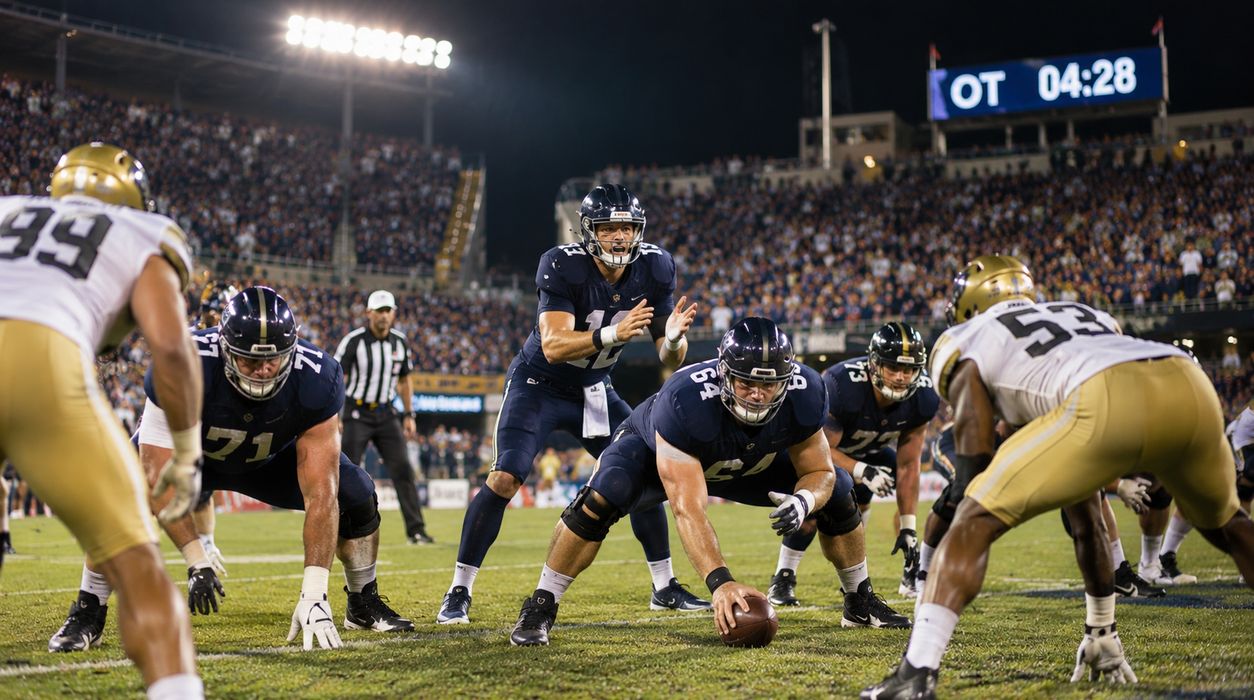
The clock reaches zero in the fourth quarter, and the scoreboard shows a tie. Players gather near their sidelines, coaches review their options, and fans prepare for extra football.
But what happens next?
The answer depends on whether the game is being played during the regular season or the playoffs.
Under the NFL overtime rules for 2026, both teams generally receive an opportunity to possess the football, even when the team receiving the opening kickoff scores a touchdown.
However, regular-season overtime lasts a maximum of 10 minutes, while playoff overtime uses 15-minute periods and continues until a winner is determined.
That distinction can completely change how coaches approach the coin toss, fourth-down decisions, field goals, and two-point conversions.
Here is a complete guide to NFL overtime in 2026, including possession rules, sudden death, ties, timeouts, and the differences between regular-season and postseason games.
What Are the NFL Overtime Rules in 2026?
NFL overtime uses a modified sudden-death system.
When a game is tied after four quarters, the referee conducts another coin toss to determine the teams’ choices for the opening overtime possession.
The teams then play an additional period.
In the regular season, that period lasts no more than 10 minutes.
In the playoffs, overtime consists of 15-minute periods that continue until a winner is declared.
The most important modern rule is that both teams generally receive an opportunity to possess the ball.
An opening-possession touchdown no longer automatically ends the game.
The rule has an exception when the team kicking off to begin overtime scores a safety on the receiving team’s initial possession.
The complete framework appears in Rule 16 of the official 2026 NFL Rulebook.
How Long Is NFL Overtime in the Regular Season?
Regular-season overtime lasts a maximum of 10 minutes.
The extra period begins after a brief intermission following regulation.
Unlike the playoffs, the NFL does not add another overtime period if the teams remain tied.
Imagine a game ends regulation at 24-24.
The teams begin overtime, but neither scores during the next 10 minutes.
The final result is a 24-24 tie.
The same principle applies if both teams score the same number of overtime points.
The 10-minute limit also applies when the second team has not completed its initial possession.
This is important because the possession-opportunity rule does not guarantee unlimited time.
For a broader explanation of regulation and broadcast timing, see SportsVell’s guide to how long a football game lasts.
How Long Is NFL Playoff Overtime?
NFL playoff overtime uses 15-minute periods.
Unlike regular-season overtime, there is no overall time limit that can produce a tie.
If the teams remain tied after the first overtime period, another period begins.
The game continues until the rules produce a winner.
For example, a playoff game tied 27-27 after regulation could remain tied after the first 15-minute overtime period.
The teams would then continue into another period.
If the second team’s initial possession has not ended when the first overtime period expires, that possession continues into the next period.
There is no requirement to finish the game within the first 15 minutes.
This distinction ensures that every playoff matchup, including the Super Bowl, produces a winning team.
Do Both Teams Get the Ball in NFL Overtime?
Yes, both teams generally receive an opportunity to possess the football.
This applies to the regular season and playoffs under the current rules.
Previously, a touchdown on the opening overtime possession could end a regular-season game immediately.
That changed beginning with the 2025 season.
Now, if the first team scores a touchdown, the second team receives an opportunity to respond.
However, there are important qualifications.
A defensive safety on the receiving team’s initial possession can immediately end overtime.
In regular-season games, the 10-minute clock can also expire before the second team completes its possession.
Therefore, the rule is best understood as providing a possession opportunity subject to the league’s timing and scoring exceptions.
What Happens if the First Team Scores a Touchdown?
The opposing team receives an opportunity to possess the ball.
Imagine Team A receives the overtime kickoff and scores a touchdown.
Team A leads 30-24 after a six-point touchdown, assuming no successful extra-point attempt has yet been considered in the example.
The game does not automatically end.
Team B receives the football and can attempt to match or exceed Team A’s score.
If Team B fails to score enough points, Team A wins.
If Team B matches Team A’s total, the game can move into sudden death.
If Team B scores more points, Team B wins.
This creates an important strategic advantage for the team possessing the ball second.
Its coaches know exactly what result they need.
However, in the regular season, the remaining clock can limit that advantage.
What Happens if the First Team Kicks a Field Goal?
The opposing team receives an opportunity to possess the ball.
Suppose Team A opens overtime with a field goal.
Team A leads 27-24.
Team B now has several possible outcomes.
A touchdown gives Team B the victory.
A field goal ties the game again.
If Team B fails to score, Team A wins.
If Team B matches the field goal, the game proceeds under sudden-death rules, subject to the remaining time.
At that point, the next score generally decides the winner.
The same basic structure applies in the postseason, although the playoff game continues through additional periods if necessary.
This is why an opening-drive field goal does not automatically end overtime.
What Happens if Neither Team Scores on Its First Possession?
Once both teams have had their initial possession opportunities, sudden-death rules apply if the score remains tied.
Imagine Team A receives the opening kickoff and punts.
Team B then drives into field-goal range.
Because Team A has already had its opportunity to possess the ball, Team B can win with a successful field goal.
A touchdown or another valid score can also determine the result.
The game does not require every team to have exactly the same number of offensive drives.
The initial possession opportunity is the key requirement.
Once the rule has been satisfied, the next score can end the game.
In regular-season overtime, the clock remains an additional consideration.
What Does Sudden Death Mean in NFL Overtime?
Sudden death means the next qualifying score ends the game.
However, the NFL does not use pure sudden death from the opening overtime kickoff.
Instead, the league uses modified sudden death.
That means the rules first account for the teams’ initial possession opportunities.
After those opportunities have been satisfied, the next score generally determines the winner if the game is tied.
For example, imagine both teams kick field goals on their opening possessions.
The score is tied again.
Team A receives the football and drives into field-goal range.
A successful kick can end the game immediately.
There is no requirement for Team B to receive another possession.
This system balances an initial opportunity for both teams with a decisive finish once that opportunity has been provided.
Can an NFL Game End in a Tie in 2026?
Yes, but only during the regular season.
If the score remains tied when the 10-minute overtime period expires, the game ends in a tie.
The NFL does not continue playing simply because the teams have not settled the result.
For example, both teams might kick field goals during overtime and then fail to score again.
If the clock reaches zero, the final result remains tied.
A tie is recorded in the standings.
NFL standings treat a tie as half a win and half a loss when calculating winning percentage.
That can influence playoff qualification and division rankings.
For a real example, SportsVell’s Green Bay Packers vs. Dallas Cowboys player-statistics analysis examines their 40-40 overtime tie in September 2025.
Can the First Overtime Touchdown End the Game?
Not simply because it is the first offensive touchdown.
Under the current rules, the opposing team generally gets an opportunity to respond.
However, a defensive touchdown can end the game in circumstances where the scoring team has already satisfied the possession requirements.
For example, imagine Team A receives the opening overtime kickoff and throws an interception.
Team B returns the interception for a touchdown.
The game ends because the defensive score determines the winner.
The outcome differs from Team A scoring an offensive touchdown on its first drive.
A defensive safety on the opening possession can also end the game immediately.
These situations show why the distinction between offensive possession and defensive scoring matters.
What Happens if the Defense Scores a Safety?
A safety can immediately decide overtime.
The clearest example occurs when the team that kicked off to begin overtime scores a safety against the receiving team on its initial possession.
Suppose Team A receives the opening kickoff.
Its quarterback is tackled in his own end zone, resulting in a safety for Team B.
Team B wins.
It does not need to receive a separate offensive possession.
The NFL specifically recognizes this exception in its overtime procedures.
A safety is worth two points, but its importance in this situation comes from ending the game.
This is an unusual outcome, yet it is essential to understanding why the possession-opportunity rule is not absolute.
How Does the NFL Overtime Coin Toss Work?
At the end of regulation, the referee conducts another coin toss.
The visiting team’s captain calls the toss.
The team winning the toss receives the appropriate choice under NFL procedures.
A captain may choose whether to receive or kick, or make another permitted selection.
Because both teams generally receive a possession opportunity, the decision has become more complicated.
Receiving first offers the chance to score before the opponent.
Kicking first allows a team to learn what it needs on its own possession.
That information can influence whether a coach attempts a field goal, goes for a touchdown, or tries a two-point conversion.
The league discusses the modern format in its official NFL overtime rules overview.
Is It Better to Receive or Kick First in Overtime?
There is no universally correct answer.
Receiving first gives the offense an opportunity to establish the lead.
It also means the opposing team may need to respond under pressure.
However, kicking first offers an informational advantage.
The team possessing the ball second knows whether it needs a field goal, touchdown, or potentially a two-point conversion.
For example, if the opening team scores a touchdown and converts the extra point, the second team knows that a field goal is insufficient.
Its coach may be more aggressive on fourth down.
Regular-season overtime adds another complication.
A team kicking first could lose valuable time while the opponent runs a long opening drive.
The optimal decision depends on personnel, weather, field position, and the remaining clock.
How Many Timeouts Does Each Team Get in Overtime?
Each team receives two timeouts during regular-season overtime.
Those timeouts are separate from the team’s regulation allotment.
Unused fourth-quarter timeouts do not carry over.
In the playoffs, each team receives three timeouts per overtime half.
The postseason uses a different timing structure because games can continue through multiple overtime periods.
Timeouts matter because coaches may need to stop the clock, adjust defensive personnel, or prepare a critical play.
A timeout can also help an offense avoid a delay-of-game penalty.
In regular-season overtime, managing two timeouts within a 10-minute period is especially important.
A team that uses both too early may struggle to preserve time for a final possession.
Is There a Two-Minute Warning in NFL Overtime?
Yes, the NFL applies the relevant timing rules during overtime.
Regular-season overtime follows fourth-quarter timing provisions, including the two-minute warning.
That creates another important strategic moment.
A team driving late in overtime must account for clock stoppages and remaining timeouts.
For example, an offense approaching field-goal range with 2:15 remaining may run a play before the two-minute warning.
After the warning, the coach can reassess the situation.
The clock can influence whether a team chooses a running play, short pass, or attempt to move quickly toward the sideline.
A coach who ignores the clock may allow a potentially winning possession to expire.
What Happens if the Clock Expires During the Second Possession?
In the regular season, the game ends when the 10-minute overtime period expires, subject to applicable rules for extending a period.
The NFL does not automatically add time to complete the second team’s drive.
Suppose Team A receives the kickoff and scores a touchdown after using eight minutes.
Team B receives the football with approximately two minutes remaining.
If Team B cannot complete a successful response before the clock expires, Team A wins.
If the score remains tied at expiration, the game is a tie.
In the playoffs, the outcome is different.
If the second team’s initial possession has not ended, the game continues into another overtime period.
This is one of the most important differences between the two formats.
Can NFL Playoff Games End in a Tie?
No.
Every NFL playoff game must produce a winner.
If the score remains tied after the first overtime period, play continues.
Additional 15-minute periods are used as necessary.
The postseason structure allows the teams to complete the required initial possession opportunities.
After those opportunities, sudden-death procedures determine the winner.
The system applies throughout the playoffs, including the Super Bowl.
There is no predetermined maximum number of overtime periods.
Although extremely long playoff games are unusual, the rules allow the game to continue until a legal winning result occurs.
That makes playoff overtime fundamentally different from regular-season overtime.
Do NFL Playoff Overtime Periods Have Halftime?
The postseason overtime structure includes short intermissions rather than a conventional halftime break after every two periods.
There is a two-minute intermission between overtime periods.
Teams change goals at the required intervals.
At the beginning of the third overtime period, the appropriate captain receives the relevant choice under the rules.
Additional procedures apply if a game extends beyond four overtime periods.
These rules maintain the structure of the contest while allowing play to continue until a winner is determined.
The details are outlined in Rule 16 of the NFL Rulebook.
For fans, the important takeaway is that playoff overtime does not restart as an entirely new game after every period.
Possessions and game situations continue according to the rules.
Why Did the NFL Change Its Overtime Rules?
The league wanted to address concerns about competitive fairness.
Under older overtime rules, the team receiving the opening kickoff could win immediately with a touchdown.
That meant the opposing offense might never touch the football.
The issue became especially controversial during important postseason games.
In 2022, the NFL approved a change ensuring both teams generally received a possession opportunity in the playoffs.
In 2025, the league extended that principle to the regular season.
The regular-season 10-minute limit remained.
The NFL’s official 2025 playing-rules summary describes the expansion of the overtime possession rule.
The same basic structure remains in effect for 2026.
How Does NFL Overtime Compare With College Football?
NFL and college football use different overtime systems.
The NFL uses timed overtime periods with normal field-position drives.
College football uses alternating possessions beginning at a designated spot.
College teams do not conduct overtime through the same kickoff-and-drive structure used in the NFL.
The college system also changes its procedures as additional overtime rounds are played.
Therefore, a fan watching college football on Saturday and an NFL game on Sunday may see very different overtime strategies.
The differences affect possession length, field goals, and scoring decisions.
SportsVell’s guide to how college football players get paid also explains another major difference between the professional and collegiate versions of the sport.
How Does Field Position Affect Overtime Strategy?
Field position can determine whether an overtime possession succeeds.
An offense beginning near midfield needs fewer yards to reach field-goal range than one starting deep in its own territory.
A strong kickoff return can therefore provide an immediate advantage.
Conversely, a penalty or poor return may force the offense to begin farther from scoring range.
Coaches must consider the distance to the goal line, the kicker’s reliable range, and the opponent’s defensive strengths.
For context, SportsVell’s football field dimensions guide explains the yard lines and measurements used throughout the game.
In overtime, a difference of only a few yards can influence a critical fourth-down decision.
What Happens After an Overtime Interception or Fumble?
Turnovers can dramatically change the outcome.
Suppose Team A receives the opening kickoff but throws an interception.
Team B gains possession.
Because Team A has already had its opportunity, Team B can potentially win with the next score.
If Team B returns the interception for a touchdown, the game ends immediately.
However, special rules govern situations where the second team loses possession after the first team has already scored.
The officials allow the down to conclude and apply the relevant scoring and penalty rules.
That means a turnover is not always treated as an automatic whistle the instant possession changes.
The result depends on what happens during the play.
Can a Team Go for Two in NFL Overtime?
Yes, when the applicable scoring situation permits a try.
A team scoring a touchdown on its initial possession may attempt the normal try.
That can create a significant strategic decision.
Imagine Team A scores a touchdown and kicks the extra point.
Team B then scores a touchdown.
Instead of attempting an extra point to tie the game, Team B may choose a two-point conversion to take the lead.
If successful, that can produce a winning result once the required possession conditions have been satisfied.
If unsuccessful, Team B may lose.
The choice depends on the score, game situation, and the coach’s confidence in the offense.
The ability to respond to the first team’s score makes overtime strategy more complex than before.
How Do NFL Overtime Ties Affect Standings?
A tie counts as half a win and half a loss when calculating winning percentage.
For example, a team finishing 9-7-1 has nine wins, seven losses, and one tie.
Its winning percentage is calculated using nine wins plus half a win for the tie, divided by 17 games.
That produces approximately .559.
A tie can therefore affect division standings and playoff qualification.
It is not ignored, and it is not automatically treated as a loss.
However, a tie can complicate comparisons between teams with different records.
Additional NFL tiebreaking procedures may be needed when teams finish with equivalent winning percentages.
This is one reason a regular-season overtime tie can have consequences months after the game.
Frequently Asked Questions
How long is NFL overtime in 2026?
Regular-season overtime lasts a maximum of 10 minutes. Playoff overtime uses 15-minute periods.
Do both teams get the ball in overtime?
Both teams generally receive an opportunity to possess the football, subject to the opening-possession safety exception and the regular-season clock limit.
Does an opening-drive touchdown win NFL overtime?
Not automatically. The opposing team generally receives an opportunity to respond.
Can an NFL game end in a tie?
Yes. Regular-season games can end tied if the score remains even after the 10-minute overtime period.
Can a playoff game end in a tie?
No. Playoff overtime continues until a winner is determined.
How many timeouts are allowed in NFL overtime?
Each team receives two in regular-season overtime and three per overtime half in the playoffs.
What is sudden death in NFL overtime?
After both teams have had their required initial opportunities, the next qualifying score generally wins if the game remains tied.
Is there a coin toss before overtime?
Yes. The referee conducts another coin toss, with the visiting captain calling it.
Is there a two-minute warning in overtime?
Yes. Regular-season overtime follows applicable fourth-quarter timing rules.
What happens if the second team’s possession is unfinished when time expires?
In the regular season, the game ends according to the score. In the playoffs, play continues into another overtime period.
Does a defensive safety end overtime?
A safety by the team kicking off to start overtime against the receiving team on its initial possession ends the game.
When did the NFL change its overtime possession rules?
The NFL expanded the possession opportunity in the playoffs in 2022 and extended that principle to regular-season games beginning in 2025.
Final Thoughts
The NFL overtime rules in 2026 give both teams a meaningful opportunity to compete after regulation ends in a tie.
Regular-season overtime lasts 10 minutes and can finish without a winner.
Playoff overtime uses 15-minute periods and continues until one team wins.
An opening-drive touchdown no longer automatically ends the game, while defensive scores, turnovers, field goals, and the remaining clock can all influence the outcome.
The biggest difference is time.
In the regular season, the clock can end the contest before every possession is completed. In the playoffs, the rules allow the game to continue.
For fans, understanding those distinctions makes every overtime coin toss, fourth-down decision, and potential game-winning drive easier to follow.