
What Is an Onside Kick in the NFL? 2026 Rule Changes Explained
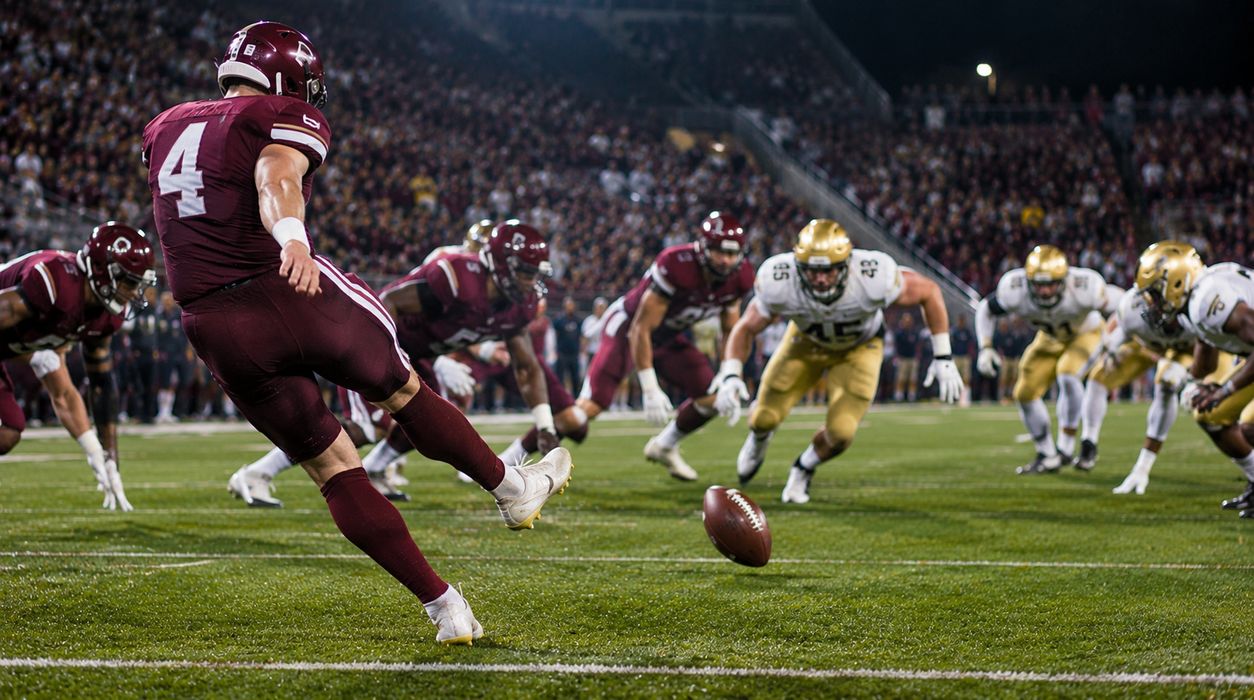
An NFL team is down by six points with less than a minute remaining. It has just scored a touchdown, but its opponent will receive the next kickoff. Without another possession, the comeback may be over.
That is where the onside kick comes in.
Instead of kicking the football deep and trying to stop a return, the scoring team attempts a short kick that gives it an opportunity to recover possession.
It is one of football’s most dramatic plays because the kicking team risks giving its opponent excellent field position in exchange for another offensive possession.
The NFL onside kick rules for 2026 include a significant change: teams may now declare an onside kick at any point in a game, regardless of the score.
Previously, the NFL limited declared onside kicks to teams that were trailing.
However, the league still requires advance notification, specific formations, and compliance with the rules governing recovery.
Here is everything fans need to know about the 2026 NFL onside kick, including the 10-yard rule, legal formations, recovery procedures, penalties, and strategy.
What Is an Onside Kick in Football?
An onside kick is a free kick designed to give the kicking team a chance to recover the football rather than surrender possession to the receiving team.
It usually happens after a touchdown or field goal, when the scoring team must kick off.
During an ordinary kickoff, the kicking team attempts to force the opponent to begin its next offensive possession with unfavorable field position.
During an onside kick, the objective is different.
The kicking team wants the football back immediately.
If it legally recovers the ball, its offense can begin another possession without the opposing offense taking the field.
This makes the onside kick especially valuable late in games when a team needs multiple scores.
However, the receiving team has an important advantage because it is prepared to secure the football.
The onside kick is therefore a high-risk play with a potentially enormous reward.
What Changed About NFL Onside Kicks in 2026?
The biggest 2026 change concerns when teams are allowed to declare an onside kick.
Under the previous rules, a team had to be trailing to attempt a declared onside kick.
For the 2026 season, that restriction has been removed.
Teams may now declare an onside kick at any point during a game, regardless of whether they are winning, losing, or tied.
That means a team leading by seven points could attempt an onside kick after scoring.
A team tied in the second quarter could also consider the strategy.
The declaration requirement remains in place.
The kicking team must notify the referee before the play clock begins, and the receiving team must be informed.
The NFL confirmed this change in its official announcement of the 2026 playing-rule amendments.
Can an NFL Team Attempt an Onside Kick at Any Time?
Yes, when it is legally entitled to kick off.
The phrase “at any time” refers to the game situation rather than allowing teams to kick whenever they want.
A team still needs a kickoff opportunity.
For example, after scoring a touchdown and completing the try, the team normally kicks off to its opponent.
It may choose to declare an onside kick at that point.
The same possibility exists after a field goal.
The team cannot interrupt an opponent’s offensive possession to attempt an onside kick.
The 2026 change simply removes the previous requirement that the kicking team be behind on the scoreboard.
Coaches now have greater freedom to use the play as an aggressive possession strategy rather than only as a comeback attempt.
Does an NFL Team Have to Declare an Onside Kick?
Yes.
The kicking team must tell the referee that it intends to attempt an onside kick.
The declaration must occur before the applicable 25-second play clock begins.
After receiving the declaration, the referee informs the receiving team.
The teams then arrange themselves in the required onside-kick formations.
This procedure is important because ordinary kickoffs use the NFL’s dynamic kickoff structure.
An onside kick uses a different alignment and involves a different type of recovery contest.
The declaration requirement prevents the kicking team from disguising an onside kick inside the ordinary dynamic kickoff formation.
It also gives the receiving team an opportunity to prepare for the short kick.
The procedure is established in Rule 6 of the official 2026 NFL Rulebook.
Are Surprise Onside Kicks Allowed in the NFL?
No, not under the current declared-onside-kick system.
In earlier eras, teams sometimes attempted unexpected onside kicks.
A kicker might approach the ball as though preparing for a normal kickoff and then send it a short distance toward a teammate.
The receiving team could be caught off guard.
The dynamic kickoff rules changed that possibility.
Because the normal kickoff and onside kick use different formations, the NFL requires teams to announce their intentions.
That means the receiving team knows an onside kick is coming.
The kicking team can still use different legal kicking techniques and recovery strategies.
However, it cannot rely on concealing the type of kick until the final moment.
The element of surprise now comes primarily from ball placement and execution rather than an undisclosed formation.
What Is the 10-Yard Rule for an Onside Kick?
The 10-yard rule determines when the kicking team may legally touch and recover an onside kick.
In general, the football must travel at least 10 yards beyond the kicking team’s restraining line before the kicking team can recover it, unless an eligible receiving-team player touches it first.
For example, imagine the ball is kicked from the kicking team’s 35-yard line.
The kicking team generally cannot legally recover it before it reaches the 45-yard line unless the receiving team first touches the football.
If the ball travels the required distance, the kicking team may attempt to recover it.
The receiving team does not have to wait 10 yards.
Its players can recover the football before it reaches that distance.
This distinction is central to understanding why onside kicks are difficult.
The receiving team often gets the first practical opportunity to secure possession.
What Happens if the Kicking Team Touches the Ball Before 10 Yards?
If a kicking-team player touches the football before it has traveled the required distance and before the receiving team has touched it, the touching is illegal.
The receiving team receives the protections and enforcement options provided by the free-kick rules.
The exact outcome depends on the play, including whether another foul occurred.
For example, a kicker might send the ball only seven yards before a teammate attempts to recover it.
If the receiving team has not touched the football, that recovery cannot simply be treated as a legal change of possession.
Officials must apply the illegal-touching rules.
This is why kicking teams often try to make the football bounce unpredictably while still traveling the necessary distance.
The ball needs to become legally recoverable before a kicking-team player secures it.
Can the Receiving Team Recover an Onside Kick Before 10 Yards?
Yes.
The receiving team can recover the football before it travels 10 yards.
It is not subject to the same distance restriction as the kicking team.
Imagine a short kick travels five yards and a receiving-team player falls on the football.
That player has secured possession for the receiving team.
The play ends according to the applicable free-kick rules.
However, if a receiving-team player touches the ball and fails to control it, the situation changes.
The kicking team may then have an opportunity to recover the loose football.
This is one reason kicking teams sometimes aim for a difficult bounce rather than a smooth rolling ball.
They hope to create a mistake by the receiving team.
What Is the NFL Onside Kick Formation?
The NFL uses a special formation for declared onside kicks.
Unlike the ordinary dynamic kickoff, which places most players in close alignment near the receiving team’s territory, an onside kick uses traditional-style free-kick positioning with additional restrictions.
The kicking team must distribute its players according to the rulebook’s formation requirements.
The receiving team also must satisfy specific alignment rules.
These requirements are intended to provide a fair recovery opportunity while limiting dangerous contact.
The formation is not simply a matter of placing every player wherever the coach prefers.
Officials check alignment before the kick.
An improperly positioned player can create a formation foul.
The detailed requirements appear in Rule 6, Section 1, Article 6 of the NFL Rulebook.
Where Do Players Line Up for an Onside Kick?
On a standard kickoff, the football is normally kicked from the kicking team’s 35-yard line unless a penalty changes the spot.
The declared onside-kick formation places the kicking team’s players near the ball rather than using the ordinary dynamic kickoff alignment.
The receiving team lines up to contest the short kick.
Its players must follow the applicable restraining-line and setup-zone requirements.
The specific spacing and distribution requirements are designed to avoid the high-speed collisions associated with older kickoff formations.
Coaches must consider which players are best suited to the play.
A successful recovery may require secure hands, quick reactions, and the ability to protect the football while opponents converge.
For readers interested in how NFL rosters are organized, SportsVell’s guide to how many players are on a football team explains the relationship between offensive, defensive, and special-teams personnel.
Can the Kicking Team Advance a Recovered Onside Kick?
No.
Under the NFL’s free-kick rules, the kicking team cannot advance the football after legally recovering its own free kick.
The ball becomes dead when the kicking team gains possession.
For example, imagine a kicker sends the ball 12 yards downfield.
A teammate legally recovers it at the receiving team’s 47-yard line.
The kicking team gains possession at the appropriate spot, subject to penalties.
However, the recovering player cannot continue running toward the end zone for a touchdown.
The offense takes over from the recovery spot.
This distinguishes an onside-kick recovery from many ordinary fumble recoveries during scrimmage plays.
The value of the onside kick is gaining another possession, not returning the recovered football for an immediate score.
Can the Receiving Team Advance an Onside Kick?
Yes, when the ball is legally recovered and remains live under the applicable rules.
The receiving team may attempt to advance the football after securing possession.
However, many receiving teams prioritize protecting the ball rather than attempting a long return.
A return attempt creates the possibility of a fumble.
When the receiving team already has possession, taking unnecessary risks can give the kicking team another chance.
That is why coaches frequently instruct hands-team players to secure the football and end the play safely.
A clean recovery is often more valuable than gaining a few additional yards.
The situation can change when the receiving team has a clear running opportunity, but possession remains the primary objective.
What Happens if an Onside Kick Goes Out of Bounds?
An onside kick that goes out of bounds without being touched by the receiving team can result in a free-kick out-of-bounds foul.
The receiving team receives the applicable enforcement options.
The exact spot depends on the circumstances and the relevant free-kick rules.
For example, a kicker may try to place the ball near the sideline to create a difficult recovery angle.
If the football crosses the boundary without being legally touched, the attempt may fail and produce a penalty.
The receiving team can then begin its possession with favorable field position.
This makes sideline placement a risky strategy.
A kicker needs enough control to create a recovery opportunity without sending the ball beyond the boundary.
What Is the Penalty for an Illegal Onside Kick?
There is no single penalty that covers every illegal onside-kick situation.
Different violations have different consequences.
Illegal formation, offside, illegal touching, and kicking the ball out of bounds are separate issues.
The NFL also has a specific rule addressing an onside kick that travels untouched beyond the designated onside-kick setup zone.
That violation carries a 15-yard penalty from the kicking team’s restraining line.
Other violations may involve different enforcement options.
The exact result depends on what happened during the play.
For example, a formation foul before the kick is not necessarily enforced the same way as illegal touching after the football is kicked.
Fans should therefore avoid assuming that every unsuccessful onside kick results in the same penalty.
What Happens if an Onside Kick Travels Too Far?
An onside kick is intended to create a recovery opportunity near the kicking team’s restraining line.
If it travels untouched beyond the permitted onside-kick setup zone, the NFL applies a specific restriction.
The 2026 Rulebook lists a 15-yard penalty from the kicking team’s restraining line for that violation.
This is different from an ordinary kickoff that travels deep downfield.
A team cannot declare an onside kick and then treat it as an unrestricted conventional kickoff.
The special formation comes with special limitations.
Coaches and kickers must therefore consider both the minimum recovery distance and the maximum permitted area for an untouched kick.
The goal is to place the football inside a narrow tactical window.
How Is an Onside Kick Different From a Normal Kickoff?
The biggest difference is the objective.
A normal kickoff usually aims to force the opponent to begin its next possession with unfavorable field position.
An onside kick aims to give the kicking team another possession.
The formations also differ.
The ordinary dynamic kickoff uses a close-alignment structure and a landing zone.
A declared onside kick uses its own formation and recovery rules.
The kicking team must also announce the onside kick before the play.
An ordinary kickoff does not require that declaration.
These differences affect player assignments, timing, and strategy.
A team might use a powerful kicker and a coverage-focused unit for a normal kickoff.
For an onside kick, it may prioritize players with reliable hands and quick reactions.
Why Are Onside Kicks So Difficult to Recover?
The receiving team has several advantages.
First, it knows the onside kick is coming because the kicking team must declare it.
Second, the receiving team can recover the football before it travels 10 yards.
Third, the kicking team must obey specific formation and recovery restrictions.
Those rules reduce the possibility of surprise.
The receiving team can prepare its best ball-handling players and assign them to the expected recovery area.
The kicking team must therefore create an opportunity through execution.
A favorable bounce, a receiving-team mistake, or a well-timed recovery attempt can make the difference.
However, none of those outcomes is guaranteed.
That uncertainty is why an onside kick remains one of football’s highest-risk special-teams decisions.
When Should an NFL Team Attempt an Onside Kick?
The most familiar situation is late in a game when a team needs another possession.
Imagine a team trails by nine points with two minutes remaining.
It scores a touchdown but still needs another scoring drive.
A successful onside kick could give its offense the ball immediately.
Without one, the team may need to force a quick defensive stop.
The 2026 rule also allows coaches to consider onside kicks in other situations.
An aggressive team could attempt one early in the second half while leading.
However, the risk remains significant.
If the receiving team recovers, it may begin its possession near midfield or in even better territory.
Coaches must weigh the chance of gaining possession against the consequences of failure.
How Do Coaches Decide Whether the Risk Is Worth It?
The decision depends on score, time remaining, timeouts, field position, and the team’s confidence in its kicking unit.
A team trailing late with no timeouts may have little choice.
Even a low-probability recovery attempt could be more valuable than kicking deep.
Earlier in a game, the calculation is different.
A failed onside kick could give the opponent a short field and lead to another score.
The coach must consider whether the potential extra possession justifies that risk.
Weather conditions also matter.
Rain, wind, and slippery turf can affect how the football bounces.
However, difficult conditions may create problems for both teams.
The best strategy depends on the specific situation rather than a universal rule.
Does an Onside Kick Stop the Game Clock?
The onside kick does not create a special clock system separate from ordinary free-kick rules.
The game clock is managed according to the NFL’s normal timing provisions.
The exact amount of time used depends on when the ball becomes live and when the play ends.
For example, a late-game onside kick may consume only a small amount of game-clock time.
That can be important when a team is trying to preserve enough time for another offensive possession.
However, fans should not assume that every onside kick automatically stops or starts the clock in the same way.
The timing depends on the applicable free-kick rules and game situation.
For a broader explanation, SportsVell’s guide to how long a football game lasts covers NFL quarters, stoppages, and overtime.
How Does Field Position Affect an Onside Kick?
Field position is one of the biggest consequences of an unsuccessful attempt.
When a team kicks deep, it may force its opponent to begin farther from the end zone.
When it attempts an onside kick, the football usually remains much closer to midfield.
If the receiving team recovers, it can begin its possession with a shorter distance to travel.
That makes the next offensive drive potentially more dangerous.
The importance of yard lines becomes clearer when looking at the dimensions of the field.
SportsVell’s football field size and acreage guide explains how the playing field is measured.
An onside kick may involve only a small section of that field, but the resulting possession can determine the outcome of an entire game.
Are Onside Kicks Allowed in College Football?
Yes, but college football uses its own rulebook.
The NFL and NCAA share some basic concepts, including the importance of the 10-yard recovery distance.
However, the leagues do not use identical kickoff formations and declaration procedures.
The NFL’s dynamic kickoff system and its 2026 onside-kick changes should not automatically be applied to college games.
That distinction matters because fans often watch both professional and college football during the same weekend.
Rules that appear similar can have important differences.
For more background on the college game, SportsVell explains the changing business of college athletics in its guide to how college football players get paid.
Can an Onside Kick Change the Outcome of a Game?
Absolutely.
A successful onside kick can provide an additional possession when a team would otherwise have to surrender the ball.
That possession may lead to a touchdown, field goal, or an opportunity to run out the clock.
However, the play can also backfire.
A failed attempt may give the opponent excellent field position and make a comeback more difficult.
That combination of risk and reward is why onside kicks often become memorable moments.
Fans who enjoy analyzing close NFL games can explore SportsVell’s Green Bay Packers vs. Dallas Cowboys player-statistics breakdown for another look at how individual plays influence results.
The onside kick demonstrates how a single special-teams decision can affect the entire game.
Frequently Asked Questions
What is an onside kick in the NFL?
An onside kick is a declared free kick intended to give the kicking team an opportunity to recover possession instead of kicking the ball deep to its opponent.
What changed about onside kicks in 2026?
Teams may now declare an onside kick at any point in the game, regardless of whether they are winning, losing, or tied.
Does an NFL team have to announce an onside kick?
Yes. The kicking team must notify the referee, who informs the receiving team.
Are surprise onside kicks legal in 2026?
No. The current NFL system requires advance declaration.
Does an onside kick have to travel 10 yards?
The kicking team generally cannot legally recover the ball before it travels 10 yards unless the receiving team touches it first.
Can the receiving team recover before 10 yards?
Yes. The receiving team can recover the football before it travels 10 yards.
Can the kicking team return a recovered onside kick for a touchdown?
No. The ball becomes dead when the kicking team legally recovers its own free kick.
Can a team attempt an onside kick while leading?
Yes. The 2026 rule allows declared onside kicks regardless of the score.
What happens if an onside kick goes out of bounds?
The receiving team receives the applicable free-kick enforcement options, which can provide favorable field position.
Is an onside kick the same as a dynamic kickoff?
No. A declared onside kick uses different formations and recovery rules from an ordinary dynamic kickoff.
Final Thoughts
The 2026 NFL onside kick rules give coaches more freedom to pursue an extra possession.
Teams can now declare an onside kick regardless of the score or the quarter.
However, the kicking team must still notify officials, follow the required formation, and satisfy the legal recovery rules.
The familiar 10-yard requirement remains important, and the receiving team retains the advantage of knowing the attempt is coming.
A successful recovery can keep a comeback alive or support an aggressive game plan.
A failed attempt can hand the opponent valuable field position.
That balance makes the onside kick one of the NFL’s most fascinating strategic decisions—and one of the most exciting plays to watch.