What Is a Hard Cap in the NBA? First Apron vs. Second Apron Explained
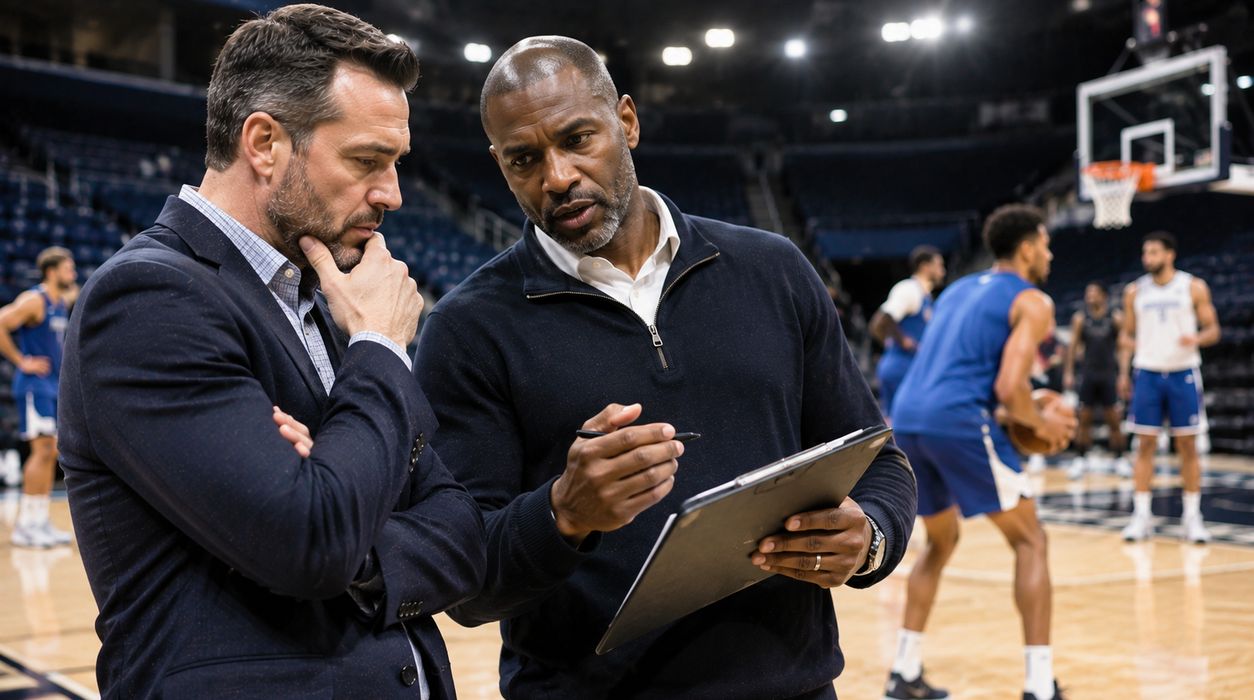
An NBA team might have enough money to sign another player, an owner willing to pay the luxury tax, and an open roster spot. Yet the front office could still be prohibited from completing the deal.
The reason may be the NBA hard cap.
Unlike the league’s ordinary salary cap, which teams can exceed through permitted exceptions, a hard cap creates a firm spending limit after a team makes certain transactions.
For the 2026–27 season, that limit can be tied to either the first apron of $209.015 million or the second apron of $221.686 million.
Understanding the distinction is essential for following NBA trades, free agency, and roster construction.
Here’s how NBA hard-cap rules work, which transactions trigger them, and why being above an apron is not necessarily the same as being hard-capped.
What Is a Hard Cap in the NBA?
An NBA hard cap is a spending ceiling that a team cannot exceed during the applicable salary-cap year after triggering a particular restriction.
The NBA normally operates under a soft salary cap.
That means teams can exceed the regular salary cap through permitted exceptions, including Bird rights and certain other contract mechanisms.
A hard cap works differently.
Once a team triggers a hard cap at a particular apron, it must keep its team salary at or below that level.
The restriction applies even if the team’s owner is willing to spend more money.
For example, imagine a franchise triggers the first-apron hard cap by acquiring a player through a sign-and-trade.
Its team salary must remain at or below the first-apron threshold for the applicable period.
The team cannot simply pay an additional luxury tax to exceed that hard cap.
The governing framework comes from the NBA and NBPA’s collective bargaining agreement.
What Is the NBA Hard Cap for 2026–27?
There is no single hard-cap amount that automatically applies to every NBA team.
Instead, the applicable limit depends on the transaction a team makes.
For 2026–27, the NBA announced these financial thresholds:
| Threshold | Amount |
|---|---|
| Minimum team salary | $148,465,000 |
| Salary cap | $164,961,000 |
| Luxury tax line | $200,428,000 |
| First apron | $209,015,000 |
| Second apron | $221,686,000 |
A team hard-capped at the first apron cannot exceed $209.015 million in applicable team salary.
A team hard-capped at the second apron cannot exceed $221.686 million.
These amounts are fixed for the 2026–27 salary-cap year, although future seasons will have different thresholds.
The NBA publishes the annual figures in its official salary-cap announcements.
What Is the Difference Between a Soft Cap and a Hard Cap?
The distinction comes down to flexibility.
Under a soft cap, teams may exceed the regular salary cap when they qualify for specific exceptions.
For example, a team already above the cap may be able to re-sign an eligible free agent using Bird rights.
Under a hard cap, the team cannot exceed the applicable apron limit, even through transactions that would otherwise be permitted.
Consider a team with $205 million in applicable salary.
It is already above the regular salary cap and luxury tax line.
However, it remains below the first apron.
If it triggers a first-apron hard cap, it has only $4.015 million of remaining room before reaching that limit.
The team must account for any additional salary before completing another transaction.
This is why a franchise can be financially capable of paying a player but legally unable to add that contract.
What Is the NBA First Apron?
The first apron is a spending threshold above the luxury tax line.
For 2026–27, it is $209.015 million.
It sits $8.587 million above the luxury tax threshold.
The first apron limits certain roster-building methods, including acquiring players through sign-and-trade arrangements and using particular salary-cap exceptions.
It can also function as a hard cap when a team uses a transaction that triggers that restriction.
A team that remains below the first apron does not automatically become hard-capped.
The trigger is the relevant transaction, not merely the team’s current payroll.
For example, a franchise might spend $207 million without having triggered a hard cap.
Another team with a similar payroll could be hard-capped because it used the non-taxpayer mid-level exception.
The difference affects what each team can do next.
What Triggers the First-Apron Hard Cap?
Several transactions can trigger a first-apron hard cap under the current collective bargaining agreement.
The most familiar examples include acquiring a player through a sign-and-trade, using the non-taxpayer mid-level exception, and using the bi-annual exception.
Certain trade constructions and other restricted acquisition methods can also trigger the first-apron limitation.
These rules prevent teams from using roster-building tools intended for lower-spending franchises while simultaneously exceeding the associated spending boundary.
Importantly, the transaction must be permitted when completed.
A team already above the first apron cannot simply acquire a sign-and-trade player and promise to reduce payroll later.
It must satisfy the applicable requirements as part of the transaction.
The rules also distinguish between acquiring a player and being the team that signs and trades away its own free agent.
Those are not necessarily treated identically.
How Does a Sign-and-Trade Create a Hard Cap?
A sign-and-trade occurs when a team signs its own eligible free agent to a new contract and immediately trades that player to another franchise.
This mechanism can help a player join a preferred destination while allowing the former team to receive assets.
However, the receiving team becomes subject to the first-apron hard cap.
Imagine Team A wants to acquire a free agent but lacks sufficient cap space.
Team B holds the player’s rights and agrees to sign him before trading him to Team A.
If the transaction qualifies under NBA rules, Team A must remain at or below the first apron.
That restriction can affect additional signings later in the season.
The receiving team must therefore calculate not only the immediate salary involved but also the room it will need for future roster moves.
What Is the Non-Taxpayer Mid-Level Exception?
The non-taxpayer mid-level exception allows eligible teams above the salary cap to sign players without using ordinary cap space.
For 2026–27, the full non-taxpayer mid-level amount is $15.044 million.
Using this exception triggers the first-apron hard cap.
That means the team must remain below the first-apron ceiling after the signing and during the applicable salary-cap year.
For example, a team with $195 million in applicable salary may have room to use part of the exception.
However, it cannot use the exception in a way that pushes its salary beyond the $209.015 million first apron.
The exact amount available depends on its salary calculations and other commitments.
This makes the exception useful but not unrestricted.
Front offices must evaluate how much of the exception they can use without compromising later roster flexibility.
Does the Bi-Annual Exception Trigger a Hard Cap?
Yes.
Using the bi-annual exception triggers a hard cap at the first apron.
For 2026–27, the bi-annual exception is $5.477 million.
It is another mechanism that can help eligible teams sign free agents while already above the regular salary cap.
However, its use comes with restrictions.
A franchise must satisfy the exception’s eligibility requirements and remain within the applicable first-apron ceiling.
The team also cannot use the bi-annual exception in consecutive salary-cap years.
These limitations mean the exception is not simply additional spending money available to every team.
It is a roster-building tool that must fit within the organization’s broader salary-cap plan.
What Is the NBA Second Apron?
The second apron is the higher spending threshold introduced through the current collective bargaining agreement.
For 2026–27, it is $221.686 million.
That is $12.671 million above the first apron.
The second apron creates additional restrictions for the league’s highest-spending teams.
These include limitations on certain trades, salary aggregation, and the taxpayer mid-level exception.
NBA executive Dan Rube explained the purpose of these restrictions in an official NBA discussion of competitive balance and the second apron.
The goal is to limit how easily the highest-spending teams can continue acquiring additional talent.
However, the second apron does not automatically prohibit every team from exceeding that amount.
The distinction between second-apron restrictions and a second-apron hard cap remains important.
What Triggers the Second-Apron Hard Cap?
Certain transactions are permitted only when a team stays at or below the second apron.
Using the taxpayer mid-level exception is a prominent example.
For 2026–27, the taxpayer mid-level exception is $6.064 million.
A team using that exception becomes hard-capped at the second apron.
Other restricted trade mechanisms can also create second-apron hard-cap consequences, including certain salary-aggregation arrangements and transactions involving cash or previously created trade exceptions.
The precise treatment depends on the transaction and the collective bargaining agreement’s definitions.
For example, a team cannot avoid the relevant restrictions simply by describing a transaction as a routine salary swap.
Its salary-matching method and resulting team salary must comply with the applicable rules.
First Apron vs. Second Apron: What’s the Difference?
The first and second aprons restrict different levels of spending.
The first apron is the lower threshold and is associated with restrictions on particular exceptions and acquisitions.
The second apron is higher and adds more severe limitations on how teams acquire players.
| Feature | First Apron | Second Apron |
|---|---|---|
| 2026–27 threshold | $209.015 million | $221.686 million |
| Position | Above luxury tax | Above first apron |
| Example hard-cap trigger | Receiving a sign-and-trade player | Using taxpayer mid-level exception |
| Mid-level exception impact | Non-taxpayer exception requires compliance | Taxpayer exception unavailable above threshold |
| Trade flexibility | Restricted | More restricted |
| Future draft consequences | No equivalent second-apron freeze | Additional restrictions can apply |
A team above the second apron remains subject to applicable first-apron restrictions.
The rules build on one another rather than replacing one another.
Is Being Above the Second Apron the Same as Being Hard-Capped?
No.
This is one of the most common misunderstandings about NBA payroll rules.
A team can legally operate above the second apron through permitted transactions.
For example, an organization may re-sign its own eligible players using Bird rights or extend existing contracts.
Those actions can allow payroll to rise above the second apron.
However, a team that triggers a hard cap at the second apron cannot exceed that threshold.
The difference is whether the franchise has used a transaction that creates the firm spending ceiling.
Therefore, a report describing a team as a “second-apron team” does not automatically establish that it is hard-capped.
The team’s transaction history must also be considered.
Can a Hard-Capped Team Sign Minimum-Salary Players?
Yes, provided the signing complies with the team’s hard-cap limit and other applicable rules.
The minimum-player salary exception generally allows teams to sign eligible players even when they are above the regular salary cap.
However, it does not allow a hard-capped team to exceed its applicable apron ceiling.
Imagine a team is hard-capped at the first apron and has only $500,000 of room remaining.
If signing another player would increase its applicable team salary beyond the first apron, the transaction cannot proceed without an accompanying permissible adjustment.
The team may need to reduce salary first.
That could involve a trade, waiver, or another transaction, depending on the relevant salary-cap accounting rules.
The existence of a minimum-salary exception does not override the hard cap.
Can NBA Teams Re-Sign Their Own Players While Hard-Capped?
They may be able to, but the resulting salary must remain within the applicable hard cap.
Bird rights are a major feature of the NBA’s soft salary-cap system.
They allow qualifying teams to re-sign certain players despite being above the regular salary cap.
However, Bird rights do not permit a team to exceed a hard cap it has already triggered.
For example, a franchise might hold full Bird rights to a veteran free agent.
If the team has triggered a first-apron hard cap, the new contract must fit within that limit.
The organization may need to create additional room before completing the signing.
This is why front offices consider future contract negotiations before choosing to use a hard-cap-triggering exception.
How Do Hard Caps Affect NBA Trades?
A hard cap can make otherwise attractive trades impossible.
Consider a team hard-capped at the first apron.
It has $205 million in applicable salary and wants to acquire a player earning $18 million.
The team offers outgoing contracts totaling $14 million.
That would increase its salary by approximately $4 million, subject to NBA accounting rules.
The resulting amount would approach the $209.015 million first apron.
If the transaction pushes applicable salary above the limit, it cannot be completed in that form.
The team may need to send out more salary, change the players involved, or pursue another transaction.
This illustrates why trade negotiations involve more than comparing player salaries.
The structure of the deal matters as much as the basketball value.
What Is Salary Aggregation in an NBA Trade?
Salary aggregation means combining multiple outgoing player salaries to satisfy the salary-matching requirements for an incoming player.
For example, a team might want to trade two players earning $10 million each for one player earning $20 million.
In an ordinary permitted trade, combining those salaries may help satisfy the applicable matching rules.
However, second-apron restrictions limit the use of salary aggregation.
Teams operating above the second apron generally cannot aggregate outgoing salaries to acquire a player through that mechanism.
Certain transactions using restricted aggregation methods can also trigger a second-apron hard cap.
The exact result depends on the team’s financial position and the structure of the trade.
The restriction makes it harder for expensive teams to combine smaller contracts to acquire another highly paid player.
How Does the Luxury Tax Differ From a Hard Cap?
The luxury tax is a financial penalty system.
The hard cap is a transaction-related spending restriction.
For 2026–27, the luxury tax threshold is $200.428 million.
Teams above that line may owe luxury tax payments based on their payroll and applicable tax rates.
However, paying the luxury tax does not give a team permission to violate a hard cap.
An owner might be willing to pay tens of millions of dollars in tax.
That willingness cannot override a first-apron or second-apron hard cap.
The systems therefore serve different purposes.
Luxury taxes increase the financial cost of expensive rosters.
Hard caps prevent certain teams from using restricted transactions to exceed a defined spending limit.
A franchise can face both mechanisms simultaneously.
Does the NBA Hard Cap Last the Entire Season?
A hard cap generally applies for the relevant salary-cap year after the triggering transaction.
It does not disappear simply because the team later trades away a player or reduces payroll.
Reducing salary can create additional room beneath the hard cap, but it does not automatically eliminate the restriction.
For example, a team hard-capped at $209.015 million might reduce its salary from $207 million to $201 million.
It would then have more room beneath the first apron.
However, it would still need to remain within that first-apron ceiling during the applicable period.
This distinction matters when teams attempt to restructure their rosters before the trade deadline.
The hard cap remains part of their financial planning even after the original transaction is completed.
Why Do NBA Teams Try to Avoid Being Hard-Capped?
Avoiding a hard cap preserves flexibility.
A team without a hard cap may have more options for re-signing its own players, making trades, or managing unexpected roster needs.
Injuries can create additional pressure.
If a key player becomes unavailable, a team may need to sign a replacement.
A hard-capped franchise with little remaining room may struggle to add the necessary depth.
Teams must also consider contract incentives, salary guarantees, and other accounting details.
A transaction that appears affordable based on basic salary figures may not fit once all applicable amounts are included.
For that reason, front offices often prefer maintaining a financial cushion below the relevant apron.
Why Does the NBA Use Hard Caps?
The NBA uses hard-cap rules to control access to certain roster-building tools and encourage competitive balance.
Without these restrictions, teams with wealthy owners could potentially use multiple exceptions to keep adding expensive players.
Hard caps create consequences for using particular acquisition methods.
They also force teams to make strategic choices.
A franchise might choose between using the full non-taxpayer mid-level exception and preserving greater flexibility later in the season.
The current collective bargaining agreement combines these restrictions with luxury taxes and second-apron penalties.
Together, the mechanisms influence how teams construct rosters and distribute spending.
Whether they ultimately improve competitive balance remains an ongoing debate.
How Do Hard Caps Affect Young Players and Roster Development?
Hard caps can increase the importance of affordable young players.
Teams with limited spending room may rely more heavily on rookie-scale contracts, minimum-salary veterans, and player development.
A productive rookie can provide valuable minutes without requiring the salary of an established star.
The same principle applies to developing players who earn standard NBA contracts after spending time in the G League.
However, low-cost players are not guaranteed to provide immediate championship-level production.
Organizations still need effective scouting, coaching, and development systems.
For additional basketball coverage, readers can visit SportsVell’s NBA category.
SportsVell also has a published feature on former NBA players and their personal backgrounds.
How Do NBA Salary Rules Compare With Other Sports?
Different professional sports use different systems to manage player compensation and roster construction.
The NBA combines a soft salary cap, salary exceptions, luxury taxes, and hard-cap restrictions.
Other sports may use different contract structures, spending rules, or roster limits.
For example, SportsVell explains the financial changes in college athletics in its guide to how college football players get paid.
Baseball compensation works differently, as discussed in the site’s 2026 MLB qualifying offer guide.
Readers can also compare alternative professional sports business models through SportsVell’s Banana Ball salary guide.
These examples show why salary rules should always be evaluated within the structure of the specific league.
Frequently Asked Questions
What is the NBA hard cap in 2026–27?
A team may be hard-capped at the first apron of $209.015 million or the second apron of $221.686 million, depending on its transactions.
What is the NBA salary cap for 2026–27?
The official salary cap is $164.961 million.
What is the first apron in the NBA?
The first apron is a spending threshold above the luxury tax line. For 2026–27, it is $209.015 million.
What is the second apron in the NBA?
The second apron is the higher spending threshold, set at $221.686 million for 2026–27.
Does a sign-and-trade trigger a hard cap?
Acquiring a player through a sign-and-trade triggers a first-apron hard cap for the receiving team.
Does the non-taxpayer mid-level exception trigger a hard cap?
Yes. Using that exception triggers the first-apron hard cap.
Does the taxpayer mid-level exception trigger a hard cap?
Yes. Using the taxpayer mid-level exception triggers a hard cap at the second apron.
Can a team exceed the salary cap without being hard-capped?
Yes. The NBA uses a soft salary cap, and teams can exceed it through permitted exceptions without necessarily triggering a hard cap.
Can a hard-capped team sign minimum-contract players?
Yes, if the transaction complies with the applicable hard cap and other NBA rules.
Can a hard-capped team exceed its limit by paying more luxury tax?
No. Paying additional luxury tax does not permit a team to violate a hard cap.
Final Thoughts
The NBA hard cap is one of the most important financial rules affecting modern roster construction.
For 2026–27, the first apron is $209.015 million and the second apron is $221.686 million.
Certain transactions, including sign-and-trades and the use of specific mid-level exceptions, can make those thresholds firm spending limits.
However, being above an apron does not automatically mean a team is hard-capped.
The distinction depends on the transactions the franchise has completed.
Understanding these rules helps explain why teams sometimes decline trades, avoid certain free-agent signings, or prioritize inexpensive young players.
In today’s NBA, building a competitive roster requires more than finding talented athletes. It also requires understanding which financial decisions preserve flexibility for the future.