How Does the NFL Dynamic Kickoff Work in 2026? New Rules Explained
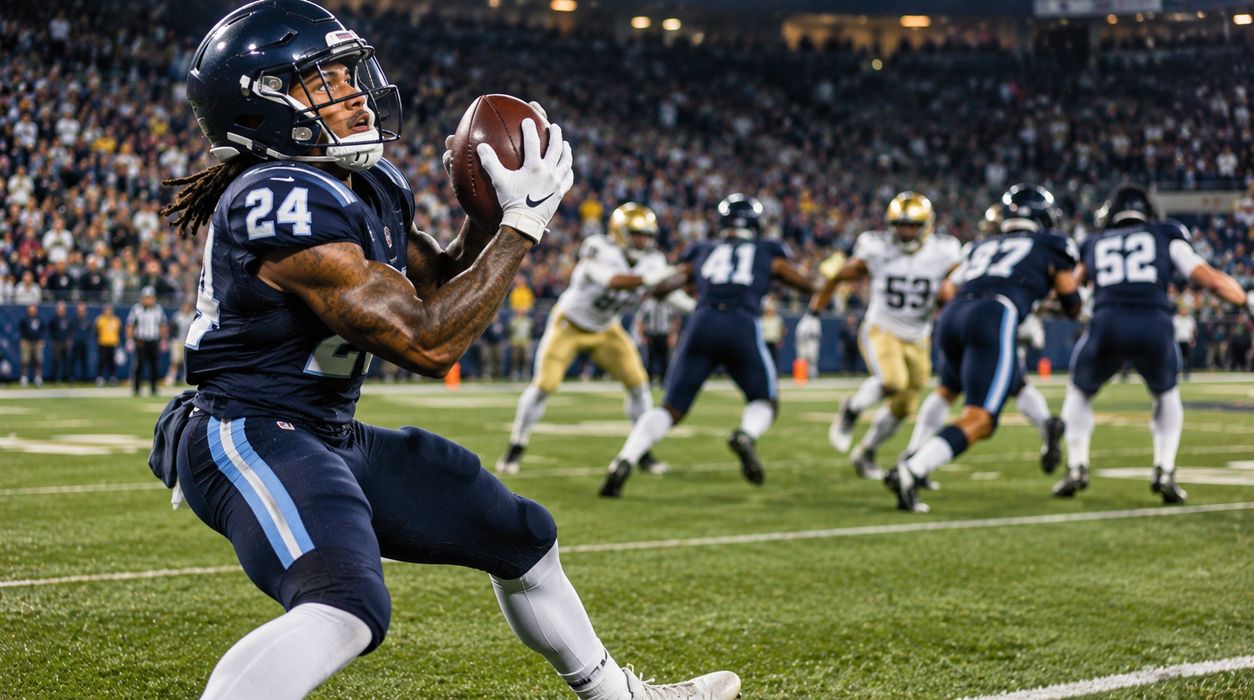
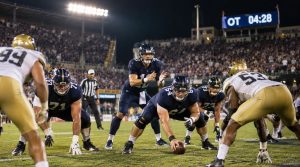
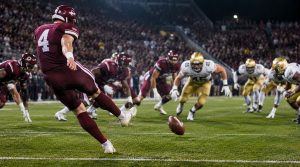
An NFL kickoff used to be one of football’s simplest plays to recognize. The kicker stood deep in his own territory, sprinting coverage players raced downfield, and a return specialist decided whether to run the ball or take a touchback.
The NFL dynamic kickoff rules in 2026 have changed that familiar picture.
Most players now line up much closer together before the kick. Coverage players must wait for a specific event before moving, and the receiving team operates inside a designated setup zone. Where the football lands also determines whether a touchback starts at the 20-yard line or the 35.
The league introduced the dynamic kickoff in 2024 to encourage more returns while reducing the long running starts associated with traditional kickoffs. The format became permanent in 2025, and the NFL approved three more kickoff-related changes for 2026.
Those updates affect receiving-team formations, kickoffs from the 50-yard line, and declared onside kicks.
Here is how the dynamic kickoff works, what changed for the 2026 season, and why the new rules matter.
What Is the NFL Dynamic Kickoff?
The dynamic kickoff is the NFL’s redesigned free-kick format.
Instead of having nearly every kicking-team player sprint from the kickoff line toward the receiving team, the league positions the coverage and blocking units much closer together.
The kicker remains behind the play, but the other 10 kicking-team players line up near the receiving team’s territory.
Most receiving-team players line up only a few yards away from those coverage players.
The football is then kicked toward a designated landing zone near the receiving team’s end zone.
Players in the restricted formations cannot begin moving until the kick satisfies the rule’s activation conditions.
The format is designed to resemble a conventional football play more closely than the old high-speed kickoff.
It also creates more opportunities for return specialists to advance the ball.
The league’s official dynamic kickoff explanation describes the objectives behind the format.
Why Did the NFL Change Its Kickoff Rules?
The NFL wanted to address two problems.
First, traditional kickoffs created situations in which players ran toward one another over considerable distances.
Those long approaches increased the speed of some collisions.
Second, teams increasingly kicked the football deep into the end zone, producing touchbacks instead of returns.
As a result, many kickoffs became routine changes of possession rather than competitive plays.
The dynamic kickoff attempts to address both concerns.
By moving the blocking and coverage units closer together, the league reduces the space available for long running starts.
By creating different touchback consequences, the rules encourage kickers to place the football where a return is more likely.
The format does not eliminate the possibility of injuries, and its effectiveness should be evaluated using actual league data.
However, the intended balance is clear: preserve a meaningful special-teams play while reducing unnecessary high-speed contact.
Where Does the Kicker Line Up in 2026?
On a standard kickoff, the football is kicked from the kicking team’s 35-yard line unless a penalty changes the spot.
The kicker is positioned separately from the other 10 members of the kicking team.
Those 10 coverage players line up with their front feet on the receiving team’s 40-yard line.
That is a major difference from the traditional kickoff.
The kicker cannot advance beyond the permitted midfield restriction until the ball touches the ground or a player in the landing zone or end zone.
Meanwhile, the coverage players must remain stationary until the ball reaches the required activation point.
This prevents them from taking a long running start while the football is still traveling through the air.
The kicker must therefore think about both distance and placement.
A kick that travels too far may surrender favorable field position through a touchback.
What Is the NFL Kickoff Setup Zone?
The setup zone is the area where most receiving-team players line up before the kickoff.
It extends from the receiving team’s 35-yard line to its 30-yard line.
At least nine receiving-team players must line up in this five-yard area.
The setup zone is positioned close to the kicking team’s coverage players.
That allows blockers and coverage players to engage after the ball activates the play without approaching one another from opposite ends of the field.
The receiving team can place one or two return specialists deeper downfield.
These players wait near the landing zone or end zone to field the kick.
The exact formation matters because teams must satisfy alignment requirements before the ball is kicked.
An illegal formation can result in a penalty even before the return develops.
What Changed About Receiving-Team Alignment in 2026?
One of the NFL’s 2026 adjustments gives receiving teams additional flexibility inside the setup zone.
Previously, at least six receiving-team players had to line up on the restraining line.
For 2026, that minimum was reduced to five.
The receiving team may now position as many as four eligible setup-zone players off the restraining line.
There is also a limit of two such players within each of the three designated lateral areas of the setup zone.
These changes allow coaches to create different blocking arrangements.
For example, a return unit might shift an additional blocker slightly behind the front line to improve its response to the kick’s direction.
The goal is to provide more tactical flexibility without abandoning the close-alignment structure.
The approved changes appear in the NFL’s official 2026 playing-rules announcement.
What Is the Landing Zone on an NFL Kickoff?
The landing zone is the area between the receiving team’s goal line and its 20-yard line.
This 20-yard section is central to the dynamic kickoff system.
A kicker generally wants the football to reach this area because the resulting play can force a return.
The landing zone also helps determine how a touchback is administered.
For example, a kick that touches the ground in the landing zone and subsequently enters the end zone can have a different result from one that flies directly into the end zone without touching the landing zone.
That distinction is easy to miss while watching a game.
Two kicks may both finish in the end zone, but the receiving team may start its next possession at different yard lines.
Understanding the landing zone makes those rulings easier to follow.
What Happens When a Kick Lands in the Landing Zone?
When the football reaches the landing zone, the play becomes active under the applicable kickoff rules.
The return specialist may catch or recover the ball and attempt to advance it.
The coverage and blocking units can begin moving once the ball satisfies the activation requirement.
For example, imagine a kicker sends the football toward the receiving team’s 8-yard line.
The returner catches it and begins running upfield.
Blockers attempt to create a lane while the coverage team tries to make the tackle.
The return ends when the ball carrier is tackled, runs out of bounds, scores, or the ball otherwise becomes dead.
The next offensive possession generally begins where the return ends, subject to penalties.
This creates a conventional field-position contest rather than an automatic touchback.
What Is the NFL Touchback Rule in 2026?
The 2026 dynamic kickoff has two important standard touchback outcomes.
A touchback can place the receiving team at its own 20-yard line or 35-yard line.
The deciding factor is often whether the kick touched the ground or a player in the landing zone before entering the end zone.
Here is the basic comparison:
| Kickoff result | Next possession |
|---|---|
| Kick touches ground or player in landing zone, then becomes a touchback in the end zone | Receiving team’s 20-yard line |
| Kick reaches the end zone without touching ground or player in landing zone and becomes a touchback | Receiving team’s 35-yard line |
| Kickoff from the 50-yard line results in a touchback | Receiving team’s 20-yard line |
These are kickoff-specific rules. They should not be confused with ordinary punt touchbacks.
The difference creates an incentive for teams to aim for the landing zone rather than routinely kicking the ball deep into the end zone.
Why Do Some NFL Touchbacks Start at the 35-Yard Line?
The 35-yard touchback is designed to discourage deep kicks that eliminate return opportunities.
Suppose a kicker drives the football directly into the end zone without first touching the ground or a player in the landing zone.
If the ball becomes a touchback under the rule, the receiving team begins at its own 35.
That gives the offense more favorable starting field position than a touchback at the 20.
For the kicking team, the difference is significant.
Surrendering an additional 15 yards can make it easier for the opposing offense to approach scoring range.
As a result, teams must weigh the risk of allowing a return against the cost of a deep touchback.
This calculation makes kickoff placement an important strategic skill.
What Changed for Kickoffs From the 50-Yard Line in 2026?
The NFL closed a specific kickoff loophole for 2026.
Under the new rule, when a kickoff is taken from the 50-yard line and results in a touchback, the receiving team starts at its own 20-yard line.
That applies regardless of which standard touchback category would otherwise apply.
Why was this necessary?
A penalty can move the kicking team’s kickoff spot forward from its usual 35-yard line.
Under the previous framework, certain kickoff choices from midfield could create an unintended field-position advantage for the kicking team.
The new rule removes that incentive.
A touchback from a kickoff at the 50 now has a consistent spot.
This change is specifically addressed in Rule 6, Section 1, Article 5 of the official 2026 NFL Rulebook.
What Happens if a Kickoff Falls Short of the Landing Zone?
A kickoff that lands or is touched short of the landing zone can result in a landing-zone violation.
The receiving team receives favorable field-position options under the applicable enforcement rules.
The standard enforcement can place the ball 25 yards from the kickoff spot, which normally means the receiving team’s 40-yard line when the kick originates at the 35.
Depending on the circumstances, the receiving team may have other available options.
This discourages kickers from deliberately sending the ball into the space between the two close-aligned units.
That space is not intended to function like the landing zone.
A short kick is therefore not automatically a clever way to pin the receiving team deep.
The rules are structured to discourage kicks that bypass the intended return area.
What Happens if the Kickoff Goes Out of Bounds?
An untouched kickoff that goes out of bounds between the goal lines is a foul.
The receiving team has options under the NFL’s free-kick enforcement rules.
For a normal kickoff from the 35-yard line, one common result is possession at the receiving team’s 40-yard line.
However, the available options depend on where the kick originated and where it went out of bounds.
A ball that travels beyond the end line is treated differently from one that goes out along the sideline before reaching the end zone.
That distinction matters when a kicker tries to direct the football toward a corner.
Precision can help a coverage unit, but an inaccurate kick may surrender valuable field position.
Can NFL Players Move Before the Ball Is Caught?
Not freely.
The dynamic kickoff restricts movement by the close-aligned coverage and setup-zone players.
Those players generally cannot move until the ball touches the ground or a player in the landing zone or end zone.
The rule is not based simply on the kicker’s foot making contact with the football.
This delayed movement is one of the defining features of the format.
It reduces the opportunity for the coverage unit to build speed while the ball is traveling.
The return specialist, meanwhile, must judge the flight of the football and prepare for the return.
Once the ball activates the play, the blocking and coverage contest develops rapidly.
Fans familiar with traditional kickoffs may initially find the stationary formation unusual, but the movement restriction is essential to the system.
Can a Team Attempt an Onside Kick in 2026?
Yes, and the NFL expanded the circumstances in which teams may attempt one.
For 2026, a team can declare an onside kick at any point in the game, regardless of whether it is winning, losing, or tied.
The kicking team must notify the officials in advance.
The play then follows the special onside-kick procedures rather than the ordinary dynamic kickoff alignment.
This is an important change from the previous restrictions.
Under the earlier system, declared onside kicks were limited to trailing teams.
The 2026 rule gives coaches more strategic freedom.
A team with an aggressive game plan can consider an onside kick even while leading.
However, the requirement to declare the attempt means the receiving team is not surprised by a disguised conventional kickoff formation.
How Is an Onside Kick Different From a Dynamic Kickoff?
A normal dynamic kickoff is designed to create a return opportunity using the special close-alignment formation.
A declared onside kick is an attempt by the kicking team to recover possession.
The formations and procedures differ.
For an onside kick, the kicking team must declare its intention to the officials.
The receiving team is then informed and can prepare for the attempt.
The kick must satisfy the NFL’s specific onside-kick rules before the kicking team can legally recover it.
An onside kick therefore serves a different strategic purpose.
Instead of prioritizing field position after the opponent receives the ball, the kicking team accepts additional risk in exchange for a chance to retain possession.
The 2026 change affects when teams may declare that attempt, not the basic distinction between the two types of kicks.
How Does the Dynamic Kickoff Affect Special Teams Strategy?
The new format changes the skills teams emphasize.
Kickers need more than maximum distance.
They must control trajectory, hang time, and placement.
Return specialists need reliable hands, quick acceleration, and the ability to identify narrow running lanes.
Blocking units must coordinate movement within a compact formation.
Coverage players must react quickly after the ball activates the play.
Coaches also need to account for the difference between a return and a 35-yard touchback.
For example, a team might prefer a controlled kick into the landing zone if it believes its coverage unit can stop the return before the 25-yard line.
Another team may choose a different approach based on weather, field conditions, or the opposing return specialist.
The best decision depends on the personnel and situation.
Does the Dynamic Kickoff Make Returns Safer?
The format is designed to reduce some of the high-speed contact associated with traditional kickoffs.
By placing the coverage and blocking units closer together and restricting their movement, the league reduces the opportunity for long running starts.
However, no kickoff format eliminates physical contact.
Return specialists still face tackles, and blockers still engage defenders.
It is also important not to confuse a rule’s safety objective with proof of a specific reduction in injuries.
Evaluating the actual impact requires reliable injury and play-by-play data.
The NFL continues to study player safety and the effectiveness of its playing rules.
The dynamic kickoff reflects an attempt to preserve an exciting football play while changing how the initial contact develops.
How Many Players Participate in a Dynamic Kickoff?
Each team fields 11 players, just as it does during ordinary NFL plays.
On the kicking team, one player serves as the kicker while the other 10 form the close-aligned coverage unit.
On the receiving team, at least nine players occupy the setup zone, leaving one or two deeper return specialists.
That means 22 players participate in the kickoff.
The difference is their positioning, not the number of players.
For a broader explanation of NFL rosters, starters, and special-teams units, SportsVell’s guide to how many players are on a football team explains how those groups fit together.
Special teams are an important part of the roster because teams need players who can contribute in coverage, blocking, and return situations.
Why Does Starting Field Position Matter?
Field position influences how far an offense must travel to score.
An offense starting at its own 35-yard line needs fewer yards to reach the opposing end zone than one beginning at its own 20.
That difference can influence play selection.
A coach backed up near the goal line may prefer a conservative approach to avoid a turnover or safety.
With more room to operate, the offense may have additional options.
Kickoff strategy is therefore connected to offensive strategy.
A strong return can provide an immediate advantage before the quarterback takes a snap.
SportsVell’s Green Bay Packers vs. Dallas Cowboys player statistics analysis provides an example of how special-teams moments can affect a closely contested NFL game.
How Do Field Dimensions Affect the Landing Zone?
The landing zone is measured using the receiving team’s goal line and 20-yard line.
Those markings are part of the standard NFL field.
The playing field extends 100 yards between the goal lines, with a 10-yard end zone at each end.
The dynamic kickoff does not change the field’s overall dimensions.
Instead, it assigns new importance to specific existing yard lines.
The receiving team’s 40-yard line marks the coverage unit’s alignment, while the 35- and 30-yard lines define the setup zone.
For more detail about field measurements, see SportsVell’s football field dimensions and acreage guide.
Understanding those measurements makes the kickoff formation easier to visualize.
Does the Dynamic Kickoff Affect Game Length?
The dynamic kickoff does not change the NFL’s basic regulation clock.
Games still have four 15-minute quarters.
However, more return opportunities can change how individual possessions develop.
A returned kickoff may produce a longer live play than an immediate touchback.
Penalties and replay reviews can also affect the time required to complete a game.
Those effects do not mean the NFL has changed its regulation game length.
Fans looking for a complete breakdown can read SportsVell’s guide to how long an NFL football game lasts.
The kickoff is only one component of a game that also includes offensive drives, defensive possessions, timeouts, and other stoppages.
What Should Fans Watch During a 2026 Kickoff?
The easiest way to understand the new system is to focus on three details.
First, watch where the players line up.
The coverage unit should be close to the receiving team’s setup zone rather than sprinting from the kicking team’s 35.
Second, watch where the football first touches the ground or a player.
That can determine whether the return develops and which touchback rule applies.
Third, pay attention to the kicking spot.
A kickoff from the 50-yard line has a special touchback provision in 2026.
These observations can explain most ordinary kickoff rulings without requiring fans to memorize every enforcement detail.
The new format may look unusual, but its structure becomes familiar after watching several returns.
How Has the NFL Kickoff Changed Since 2024?
The dynamic kickoff has evolved over three seasons.
In 2024, the league introduced the new formation on a trial basis.
The system brought the coverage and blocking units closer together and created the landing zone.
In 2025, the league made the format permanent and adjusted important touchback and onside-kick provisions.
The 35-yard touchback became a major incentive for kicking teams to avoid routine deep kicks.
In 2026, the NFL made three more kickoff-related changes.
Receiving teams gained additional formation flexibility.
Touchbacks on kickoffs from the 50-yard line received a specific 20-yard spot.
And declared onside kicks became available regardless of the score or game situation.
These changes show that the NFL is still refining the system.
Frequently Asked Questions
What is the NFL dynamic kickoff rule in 2026?
It is a kickoff format that places most coverage and blocking players close together, restricts their movement, and uses a designated landing zone to encourage returns.
Where is the kickoff taken from?
A standard kickoff is taken from the kicking team’s 35-yard line unless a penalty changes the spot.
What is the NFL kickoff landing zone?
It is the area between the receiving team’s goal line and 20-yard line.
Why do some touchbacks start at the 35?
A kickoff that reaches the end zone without first touching the ground or a player in the landing zone can produce a touchback at the 35-yard line.
When is a kickoff touchback placed at the 20?
A kick that touches the landing zone before becoming a touchback in the end zone generally results in possession at the 20. A touchback on a kickoff from the 50 also goes to the 20 under the 2026 rule.
What changed about receiving-team alignment in 2026?
The minimum number of setup-zone players on the restraining line dropped to five, and up to four may align off that line, subject to additional restrictions.
Can a winning team attempt an onside kick?
Yes. In 2026, teams can declare an onside kick regardless of the score, provided they follow the required procedures.
Can players move as soon as the kicker kicks the ball?
No. The restricted players must wait until the ball touches the ground or a player in the landing zone or end zone.
Does the dynamic kickoff apply to punts?
No. Punts are governed by separate scrimmage-kick rules.
Why did the NFL introduce the dynamic kickoff?
The league wanted to encourage more returns while reducing the long running starts associated with traditional kickoff collisions.
Final Thoughts
The NFL dynamic kickoff has changed one of football’s most recognizable plays.
In 2026, kickers must think carefully about placement, return specialists have new opportunities, and coaches must understand how the landing zone affects field position.
The biggest updates involve receiving-team alignment, touchbacks on kickoffs from the 50-yard line, and greater freedom to declare onside kicks.
The standard 35-yard touchback remains an important incentive to avoid simply sending every kickoff deep into the end zone.
For fans, the simplest way to understand the rule is to watch where the players line up, where the ball first lands, and whether the receiving team returns it.
Those three details explain why the dynamic kickoff looks different—and why special teams remain an important part of the NFL.