How Does the NFL Practice Squad Work in 2026? Salary and Roster Rules
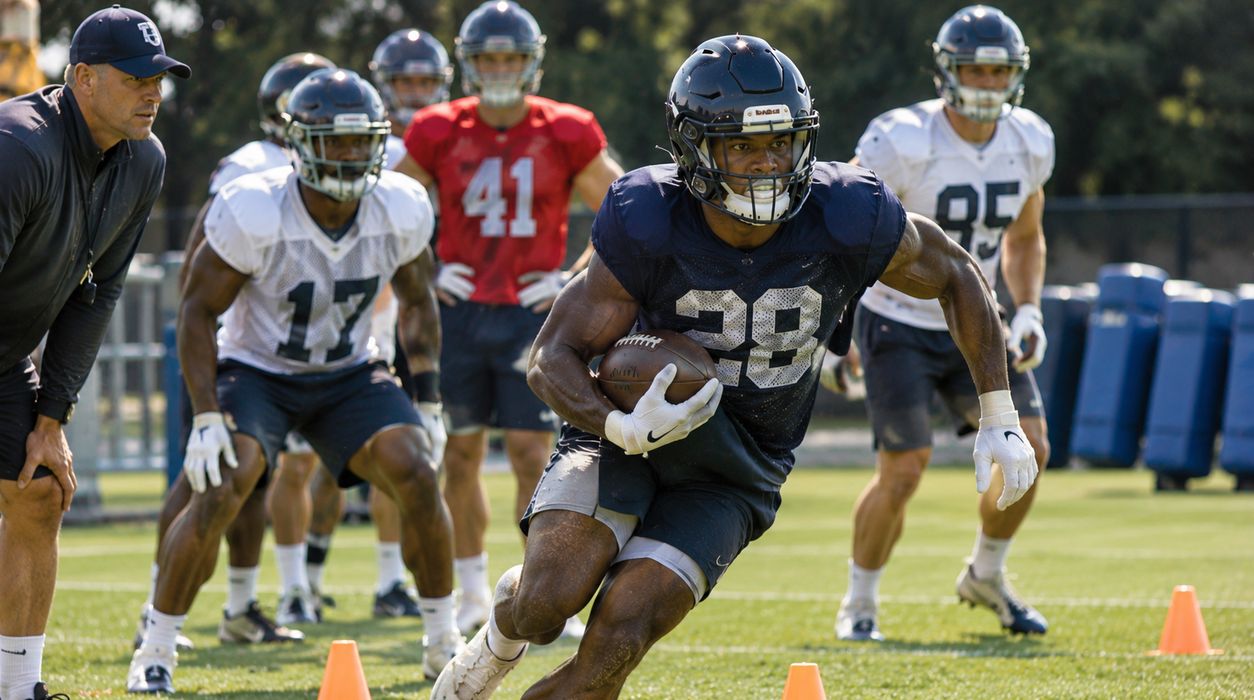
Every August, hundreds of NFL players learn that they did not make their team’s 53-man roster. For some, that means searching for another opportunity. For others, it means joining the practice squad.
The practice squad is more than a group of players waiting on the sidelines. It helps teams prepare for opponents, develop young talent, and replace injured starters during a demanding season.
The NFL practice squad rules for 2026 allow teams to carry 16 standard practice squad players, plus a possible 17th player who qualifies for the International Player Pathway designation.
Players earn weekly salaries, practice with the team, and may receive temporary game-day elevations.
However, practice squad contracts offer less security than standard active-roster contracts, and other teams can sometimes sign those players away.
Here’s how the system works in 2026, including roster limits, salary figures, veteran eligibility, game-day elevations, international players, and weekly protections.
What Is an NFL Practice Squad?
An NFL practice squad is a group of players under contract with a team who are not part of its standard 53-man active roster.
These players attend meetings, participate in practices, study the playbook, and help the coaching staff prepare for upcoming opponents.
They often work as scout-team players.
For example, a practice squad quarterback might imitate an opposing quarterback’s playing style during defensive practice.
A wide receiver might run the routes that the next opponent frequently uses.
The goal is to help the starters prepare for realistic game situations.
Practice squad players also develop their own skills.
A rookie who needs additional strength, technique, or experience can continue training with NFL coaches without occupying an active-roster spot.
The NFL explains the roster framework in its official practice squad and contract rules.
How Many Players Are on an NFL Practice Squad in 2026?
Each NFL team can carry up to 16 standard practice squad players.
A team may also have a 17th player if that player qualifies for the International Player designation.
That means the maximum is generally 16 or 17, depending on whether the team uses the international exemption.
The practice squad is separate from the 53-man active roster.
A team carrying 53 active players and 16 practice squad players therefore has 69 players across those two groups.
With the international exemption, the total becomes 70.
Additional players may be under contract on injured reserve or other reserve lists.
These numbers explain why an NFL organization employs more players than fans see on game day.
What Is the Difference Between the Practice Squad and Active Roster?
The active roster contains the players eligible to be selected for games.
The practice squad provides additional depth and development opportunities.
An active-roster player can participate in games when included among the team’s game-day active players.
A practice squad player cannot participate unless the team elevates or signs him to the appropriate roster.
Active-roster contracts also operate under different salary and roster rules.
Practice squad players receive weekly compensation under the collective bargaining agreement.
They can be released and replaced as teams adjust their needs.
For a complete explanation of NFL roster numbers, see SportsVell’s guide to how many players are on a football team.
Understanding the distinction is important because being employed by an NFL team does not automatically mean a player is eligible to appear in a game.
How Much Do NFL Practice Squad Players Make in 2026?
NFL practice squad salaries depend on the player’s experience and eligibility category.
For the 2026 season, the collective bargaining agreement establishes two main compensation structures.
Players in the standard younger-player eligibility categories receive a fixed weekly salary of $13,750.
Players in the veteran category receive a negotiated weekly salary ranging from $18,350 to $22,850.
The exact veteran amount depends on the player’s contract with the team.
| Practice squad salary category | Weekly pay in 2026 |
|---|---|
| Standard younger-player category | $13,750 |
| Veteran minimum | $18,350 |
| Veteran maximum | $22,850 |
These are weekly amounts, not annual salaries.
The figures appear in Article 33, Section 3 of the NFL–NFLPA collective bargaining agreement.
How Much Can a Practice Squad Player Earn in a Full Season?
The NFL regular season spans 18 weeks.
A player who remains on the practice squad throughout all 18 regular-season weeks can earn a substantial amount.
At $13,750 per week, the total is $247,500.
A veteran earning $18,350 per week would receive $330,300 over 18 weeks.
At the maximum veteran rate of $22,850, the total would be $411,300.
These calculations assume the player remains under contract for the entire period.
A player released after several weeks would not automatically receive the full-season amount.
Postseason weeks, temporary elevations, and other applicable contract provisions can also affect compensation.
The important point is that practice squad salaries are paid on a weekly basis rather than guaranteed for an entire season.
Are NFL Practice Squad Salaries Guaranteed?
Practice squad contracts generally do not provide the same long-term financial security as standard active-roster contracts.
The collective bargaining agreement restricts practice squad compensation to the applicable weekly amounts, subject to specific provisions.
A player may earn significant money while employed, but that does not mean the team guarantees an entire season of pay.
For example, a player earning $13,750 weekly who remains on the squad for six weeks would receive $82,500 in base practice squad compensation.
If the team releases him afterward, he does not automatically collect another 12 weeks of salary.
This creates financial uncertainty.
Players must continue competing for their positions even after signing a practice squad contract.
For many young athletes, the opportunity to develop and eventually reach the active roster is as important as the immediate paycheck.
Who Is Eligible for an NFL Practice Squad?
Practice squad eligibility includes several categories of players.
The rules allow players without an accrued NFL season, including many rookies and undrafted free agents.
They also permit certain players with limited game experience during their accrued seasons.
Additional spots are available for players with up to two accrued seasons.
Teams can also carry a limited number of experienced veterans without a restriction on their accrued seasons.
These categories prevent the practice squad from becoming an unrestricted second active roster.
At the same time, they allow teams to retain experienced players who can provide valuable depth.
A player’s eligibility depends on the collective bargaining agreement’s definitions of accrued seasons and qualifying game appearances.
Simply counting calendar years since entering the NFL is not always sufficient.
Can Veteran Players Join an NFL Practice Squad?
Yes.
The NFL permits up to six players with unlimited accrued seasons within the standard practice squad structure.
That means experienced veterans can continue their careers on practice squads.
A veteran quarterback, offensive lineman, or defensive back may join a squad after failing to secure a standard roster position.
Experienced players can be especially useful because they already understand NFL systems and professional preparation.
For example, a veteran offensive tackle might help a team prepare for injuries while also mentoring younger linemen.
However, teams must still satisfy the eligibility limits governing the rest of the squad.
The practice squad cannot consist entirely of unrestricted veterans.
The six-veteran allowance gives teams flexibility while preserving developmental opportunities.
What Is an Accrued Season in the NFL?
An accrued season is a specific NFL service-time designation.
It is not necessarily the same as a calendar year spent under contract.
Generally, a player earns an accrued season by spending the required number of regular-season games on qualifying roster statuses.
Accrued seasons affect several aspects of an NFL career, including free agency, minimum salaries, and practice squad eligibility.
For example, a rookie who spends a year primarily on the practice squad may not earn the same service credit as a player who spends sufficient time on the active roster.
That difference can affect which practice squad category applies in a later season.
It can also influence contract negotiations.
Teams therefore review official service-time records rather than estimating eligibility based on when a player was drafted.
What Is the International Player Pathway Practice Squad Exemption?
The International Player Pathway Program helps athletes from outside the United States and Canada pursue NFL careers.
For 2026, teams may carry a qualifying international player as a 17th practice squad member.
The extra spot does not reduce the standard 16-player allowance.
The program creates opportunities for athletes who may have developed through rugby, international football programs, or other sports.
A qualifying international player must meet specific citizenship, residency, education, and NFL eligibility requirements.
The NFL has expanded the program to provide additional development opportunities across the league.
The current rules are described on the NFL’s official International Player Pathway page.
Can International Practice Squad Players Be Elevated in 2026?
Yes.
This is an important detail because some older descriptions of the international exemption suggest that these players cannot participate in games.
The NFL’s updated 2026 guidance provides greater flexibility.
Qualifying international practice squad players may be elevated, signed to the 53-man roster, released, or placed on the applicable injured practice squad status through standard procedures.
They can also be signed to another team’s active roster under the normal rules.
The additional roster spot is intended to support development without permanently preventing a player from earning game opportunities.
An international player who demonstrates readiness may therefore receive an opportunity to compete.
Teams must still comply with the standard elevation limits and other roster requirements.
What Is a Game-Day Elevation in the NFL?
A game-day elevation allows a team to temporarily move a practice squad player onto its active/inactive list for a particular game.
The player does not need to receive a permanent 53-man roster spot.
After the game, the player generally returns to the practice squad automatically under the standard elevation procedure.
This is useful when a team needs temporary depth.
For example, imagine a team has two injured wide receivers.
Instead of permanently releasing another player to create a roster opening, the team may elevate a practice squad receiver for that week’s game.
The player can then participate if included among the game-day active players.
The procedure provides flexibility without requiring a permanent roster change.
How Many Times Can a Practice Squad Player Be Elevated?
A player can receive up to three standard regular-season elevations during the same league year before a different roster transaction is required.
After those three elevations, the team generally must sign the player to its 53-man active roster if it wants to use him again.
That creates an important distinction between a temporary elevation and a permanent promotion.
An elevation is designed for short-term roster needs.
A promotion places the player on the standard roster.
If a player is promoted and later released, the team may be able to re-sign him to the practice squad, subject to waivers, eligibility, and the applicable rules.
The elevation count can then be affected by the new practice squad contract.
Coaches must track these details throughout the season.
How Many Practice Squad Players Can Be Elevated for One Game?
Teams can generally elevate up to two practice squad players for a game.
Those players temporarily supplement the standard roster.
The arrangement helps teams address injuries or unusual positional needs.
For example, a team might elevate a defensive tackle and a wide receiver before facing an opponent with a particularly demanding matchup.
The coaching staff still must comply with game-day active-player limits.
An elevated player is not automatically guaranteed to participate in the game.
He must be included among the players permitted to dress.
The ability to elevate two players gives teams useful flexibility, especially late in the season when injuries become more common.
Do Practice Squad Players Earn More When Elevated?
Yes.
A standard elevation changes the player’s compensation for the applicable week.
Instead of receiving only the ordinary practice squad rate, the player receives the relevant prorated active-roster minimum salary under the collective bargaining agreement.
The amount depends on the player’s credited seasons.
For example, a player with more NFL service may qualify for a higher minimum salary than a rookie.
The elevation pay calculation is different from simply adding a flat bonus to the player’s practice squad paycheck.
The team must apply the agreement’s salary provisions.
This makes a game-day elevation financially meaningful.
It also gives players an opportunity to demonstrate their abilities in an actual NFL game.
Can Another NFL Team Sign a Practice Squad Player?
Yes.
Practice squad players generally can negotiate and sign with another team’s active roster.
However, they cannot simply move directly from one team’s practice squad to another team’s practice squad while remaining under contract.
The acquiring team must offer an active-roster opportunity.
There are also restrictions involving upcoming opponents.
For example, a team generally cannot sign a practice squad player from its next opponent after the applicable weekly deadline.
These rules help prevent last-minute roster moves that could create competitive concerns.
A player who receives a legitimate active-roster offer may decide that the opportunity is worth leaving his current team.
This is one reason practice squad management requires constant attention from NFL front offices.
What Are Practice Squad Player Protections?
NFL teams can designate up to four practice squad players for weekly protection.
Protected players cannot be signed away by another team during the applicable protection period.
This gives organizations a way to retain players they expect to need for an upcoming game.
For example, a team might protect a backup quarterback and several players at positions affected by injuries.
The protections are temporary.
They do not create permanent control over the player for the entire season.
Teams can change their protected-player selections from week to week.
That makes the process another part of roster strategy.
A player who is not protected may still be valuable, but he remains more exposed to an active-roster offer from another franchise.
Can a Practice Squad Player Refuse an Offer From Another Team?
A practice squad player is not automatically required to accept every opportunity from another franchise.
A player may prefer to remain with his current organization because of coaching relationships, development opportunities, location, or potential future playing time.
However, the ability to negotiate with another team does not mean he can sign any type of contract.
The receiving organization generally must offer an active-roster position.
A player and his representatives must consider the immediate opportunity and the longer-term career implications.
For example, joining a struggling team might provide faster playing time.
Remaining with a familiar organization could offer better development.
The right decision depends on the player’s individual circumstances.
How Do Practice Squad Players Help During the Week?
Practice squad players are essential to weekly preparation.
They often imitate the upcoming opponent’s offensive and defensive schemes.
A scout-team quarterback may copy the tendencies of a mobile opposing quarterback.
A receiver may practice the routes used by a star opponent.
Defensive players may simulate blitz packages or coverage adjustments.
These repetitions help starters prepare for the game.
Practice squad players also participate in position drills and strength training.
Their performance can influence how coaches evaluate their readiness for a future promotion.
A player who consistently performs well during practice may become the first option when an injury creates an opening.
The practice squad is therefore both a preparation resource and a talent-development system.
Do Practice Squad Players Travel With the Team?
Travel arrangements can vary by team and situation.
Some practice squad players travel for particular games, especially when the coaching staff expects they may be needed.
Others remain at the team’s facility or follow a different weekly schedule.
Being on the practice squad does not automatically mean a player will dress for every game.
Game participation requires the appropriate roster transaction and active-player designation.
Players may still attend meetings, review film, and participate in preparation activities.
The practical experience can help them understand professional game-day routines.
However, travel should not be confused with game eligibility.
A player can accompany a team without being permitted to take the field.
What Happens When a Practice Squad Player Gets Injured?
Practice squad players can suffer injuries during training or team activities.
The NFL has procedures for handling injured practice squad players, including applicable practice squad injured designations.
The exact transaction depends on the player’s medical status and the league’s roster rules.
An injured player may be unable to participate in practices or accept an immediate active-roster opportunity.
Teams must follow the relevant reporting, contract, and medical requirements.
Injuries also create opportunities for other practice squad players.
If an active-roster starter becomes unavailable, a healthy practice squad replacement may receive an elevation or promotion.
This is one reason teams value positional depth.
The practice squad helps organizations respond when injuries disrupt their original roster plans.
Can Practice Squad Players Participate in the Playoffs?
Yes, provided they satisfy the applicable postseason roster and elevation requirements.
Teams can retain practice squad players during the playoffs.
Those players continue preparing with the team and may be needed if injuries occur.
Postseason elevation procedures have their own applicable provisions, so fans should not assume every regular-season limitation works identically after the regular season ends.
A practice squad player who receives an eligible postseason elevation may participate in a playoff game.
That opportunity can be especially important because postseason rosters face significant pressure.
Teams need reliable backups at nearly every position.
For an overview of football game structure, SportsVell’s guide to how long a football game lasts explains regulation periods and overtime.
Why Do NFL Teams Keep Veteran Players on Practice Squads?
Veterans provide experience that young players may not yet possess.
An experienced offensive lineman understands blocking adjustments and defensive fronts.
A veteran defensive back may recognize route combinations quickly.
A backup quarterback can help younger players study defensive coverage.
These skills can make veterans valuable during practice even when they are not starting games.
Teams also benefit from having experienced emergency replacements available.
However, veteran practice squad spots are limited.
Organizations must balance experience against the need to develop younger talent.
A team rebuilding for the future may prefer more developmental players.
A championship contender may prioritize veterans who can contribute immediately if injuries occur.
How Does the Practice Squad Help Undrafted Rookies?
Undrafted rookies often face a difficult path into the NFL.
They must compete against drafted players and established veterans for limited roster positions.
The practice squad gives some of them additional time to improve.
A rookie wide receiver might need better route-running technique.
A defensive lineman might need to develop strength or learn a more complicated defensive system.
Instead of leaving the organization entirely, the player can continue working with professional coaches.
He also becomes familiar with the team’s terminology and expectations.
That experience can make a future promotion easier.
Readers interested in the financial transition from college to professional football can explore SportsVell’s guide to how college football players get paid.
Why Does the Practice Squad Matter During the NFL Season?
An NFL roster rarely remains unchanged from September through January.
Injuries, performance concerns, and tactical decisions force teams to make adjustments.
The practice squad provides a group of players who already understand the team’s systems.
That can be more efficient than signing an unfamiliar free agent every time a roster opening appears.
Practice squad depth also influences special teams.
A backup linebacker or defensive back may become useful on kickoff coverage or punt returns.
These contributions can affect field position and close games.
For examples of how roster depth and individual performances influence matchups, SportsVell’s Green Bay Packers vs. Dallas Cowboys player-statistics analysis offers additional football coverage.
The practice squad may receive little attention, but it supports the team’s ability to compete throughout the season.
How Is an NFL Practice Squad Different From College Football?
College football teams do not operate under the same professional practice squad system.
College rosters are organized around school eligibility, scholarship rules, and competition regulations.
NFL practice squad players are professional athletes working under contracts governed by the league’s collective bargaining agreement.
They receive weekly compensation and may be signed to another team’s active roster.
College athletes operate under a different framework involving scholarships, name-image-likeness opportunities, and permitted institutional payments.
The systems serve different purposes.
The NFL practice squad supports an existing professional franchise.
College programs develop athletes while competing within collegiate eligibility rules.
SportsVell’s football field size guide provides another useful comparison between different levels and formats of the sport.
Frequently Asked Questions
How many players are allowed on an NFL practice squad in 2026?
Teams may carry 16 standard practice squad players, plus a qualifying 17th international player.
How much do NFL practice squad players make in 2026?
The standard younger-player rate is $13,750 weekly. Eligible veterans earn between $18,350 and $22,850 per week.
Can NFL veterans join a practice squad?
Yes. Teams may carry up to six players with unlimited accrued seasons within the standard practice squad.
How many times can a practice squad player be elevated?
A player can generally receive three standard regular-season elevations before a different roster transaction is required.
Can practice squad players play in NFL games?
Yes, if they are properly elevated or signed to the active roster and included among the game-day active players.
Can another team sign a practice squad player?
Yes. Another team can generally sign the player to its active roster, subject to applicable restrictions.
Can practice squad players be protected?
Yes. Teams may designate up to four practice squad players for weekly protection.
Do practice squad players get paid during the playoffs?
Practice squad players can receive compensation during applicable postseason weeks under the collective bargaining agreement.
Can international practice squad players play in 2026?
Yes. Qualifying international players may be elevated or signed to the active roster under the applicable 2026 procedures.
Is a practice squad contract guaranteed for the full season?
No. Practice squad compensation generally depends on the weeks the player remains under contract and the applicable agreement provisions.
Final Thoughts
The NFL practice squad is an important part of modern roster construction.
For 2026, teams can carry 16 standard practice squad players and potentially a 17th qualifying international player.
Weekly salaries range from $13,750 for the standard younger-player category to as much as $22,850 for eligible veterans.
Teams can temporarily elevate players for games, protect selected players each week, and promote developing athletes when roster openings appear.
The system gives franchises additional depth while providing players with a pathway toward a permanent NFL roster position.
For fans, understanding the practice squad makes weekly transactions, injury replacements, and unexpected game-day appearances much easier to follow.