What Is Injured Reserve in the NFL? 2026 IR Return Rules Explained
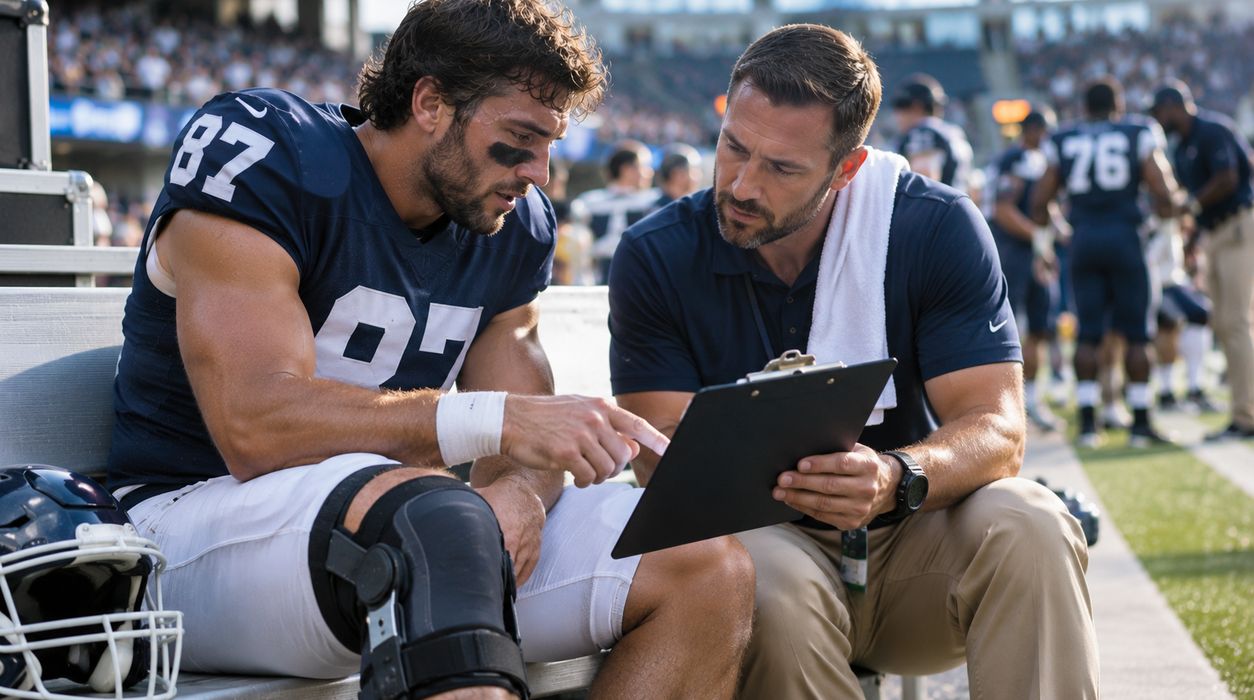
An NFL player suffers a knee injury in Week 3. His team expects him to miss several games, but the coaching staff believes he could return before the season ends.
Should the team keep him on its 53-man roster or place him on injured reserve?
That decision affects much more than the player’s recovery. It determines whether the team can sign a replacement, when the injured player becomes eligible to return, and how many roster transactions the organization may need later.
The NFL injured reserve rules for 2026 allow eligible players to return after missing at least four team games. Teams have eight regular-season return designations, with two additional designations available for playoff teams.
There is also an important 2026 change involving the Physically Unable to Perform list. Certain Reserve/PUP players can begin practicing earlier than before, although their minimum absence remains four games.
Here is how injured reserve works, including return eligibility, roster limits, practice windows, preseason designations, and the difference between IR and PUP.
What Is Injured Reserve in the NFL?
Injured reserve, commonly called IR, is an NFL roster designation for players who are unable to participate because of a football-related injury.
When a team places a player on Reserve/Injured, that player no longer counts against the standard 53-man active roster limit.
This allows the organization to fill the opening with another healthy player.
For example, a team might place an injured linebacker on IR and sign a replacement from its practice squad.
The injured linebacker remains under contract and can continue receiving medical treatment and rehabilitation.
However, he cannot participate in games while on injured reserve.
Some players eventually return during the season. Others remain on IR until the season ends.
The difference depends on the timing of the transaction, the player’s recovery, and the team’s available return designations.
How Long Must an NFL Player Stay on Injured Reserve in 2026?
An eligible player must miss at least four team games before returning from injured reserve.
The rule counts games rather than calendar weeks.
That distinction is important because NFL teams have bye weeks.
Imagine a player goes on IR before his team’s Week 5 game.
The team then plays in Weeks 5, 6, and 7, has a bye in Week 8, and plays again in Week 9.
The bye does not count as a missed game.
The player would need to satisfy the four-game requirement before becoming eligible for activation.
A four-game absence might therefore last longer than four calendar weeks.
The NFL established the four-game minimum in 2022, replacing the previous three-game requirement.
The rule remains part of the 2026 roster system.
Does Injured Reserve Mean a Player Is Out for the Season?
Not necessarily.
A player placed on IR may be eligible to return later in the season.
However, not every injured reserve placement carries return eligibility.
Timing matters, particularly during the preseason.
A player placed on IR before the applicable final-roster deadline generally cannot return that season unless he qualifies for a specific exception.
The league also limits how many players each team can designate for return.
Therefore, a player may be medically ready to play but remain unavailable because the team cannot use another designation.
When fans see that a player has been placed on injured reserve, they should check whether the transaction permits a future return.
The words “injured reserve” alone do not establish that the player’s season is over.
How Many Players Can Return From Injured Reserve in 2026?
Each NFL team has eight regular-season return designations.
These designations cover eligible returns from Reserve/Injured and Reserve/Non-Football Injury or Illness.
A designation is not necessarily the same as one individual player returning.
A player may receive up to two return designations during the same season.
Each use counts against the team’s total.
For example, if a player returns from IR, suffers another qualifying injury, and later receives a second designation, that player has used two of the team’s available designations.
The limit makes roster management important.
Teams must decide which injured players are most likely to contribute after recovery.
Using too many designations early could leave fewer options for important players injured later.
What Is the 21-Day Practice Window?
When an eligible player is ready to resume football activities, the team can open his return-to-practice window.
This begins a period of up to 21 days.
During that window, the player may practice while remaining on the applicable reserve list.
He does not immediately need to occupy a spot on the 53-man roster.
The team uses the period to evaluate his health, conditioning, and readiness.
For example, a defensive end returning from a shoulder injury might begin with individual drills before participating in more demanding team activities.
The coaching staff can assess whether he can handle game-speed contact.
The 21-day window gives teams flexibility, but it also creates a deadline.
The team must decide whether to activate the player before the window expires.
What Happens When the 21-Day Window Expires?
If the team does not activate the player within the permitted 21-day window, he generally remains on the reserve list for the rest of the season.
The team cannot simply restart the same practice window whenever it wants.
This makes the timing of the designation important.
Opening the window too early can create pressure to activate a player before he is fully ready.
Waiting too long can delay a potentially valuable return.
Medical staff, coaches, and front-office personnel must coordinate their decisions.
The player may feel healthy during individual drills but still need additional conditioning before participating in a full game.
Teams therefore try to begin the practice window when they believe activation is realistically possible.
How Does a Player Return to the Active Roster?
Returning to practice is not the same as returning to the active roster.
After satisfying the applicable absence requirement and opening the practice window, the player must be formally activated.
The team must also have room on its roster.
If all 53 active-roster spots are occupied, another transaction may be necessary.
For example, the organization could release a player or move another injured player to a reserve list.
Once activated, the returning player becomes eligible for game-day selection.
However, activation does not guarantee that he will play immediately.
Coaches may decide to make him inactive for a game while he continues building conditioning.
SportsVell’s guide to how many players are on a football team explains the difference between the active roster, game-day players, and practice squad.
Can Teams Place Unlimited Players on Injured Reserve?
There is no general limit on the number of injured players a team can place on Reserve/Injured.
The important restriction concerns how many can return through the applicable designation system.
A team might have 12 players on IR during a difficult season.
That does not mean all 12 can automatically return.
The organization must consider the available return designations, each player’s eligibility, and whether the injury occurred during a period that permits a return.
Some players may remain on IR for the entire season.
Others may be designated and eventually activated.
This distinction explains why an injured reserve list can become much larger than the number of players a team is permitted to bring back.
What Changed About Preseason IR Designations?
The NFL previously required teams to carry certain injured players through the initial roster reduction before placing them on IR if they wanted them eligible to return.
The rules were adjusted to provide more flexibility.
In 2026, a team may designate up to two eligible players for return when placing them on an applicable reserve list during the business day of the final roster reduction.
Those designations count against the team’s allotment immediately.
They still count even if the players never return to practice.
The exception is particularly useful for players injured late in training camp.
Instead of keeping an injured player on the initial 53-man roster simply to preserve return eligibility, the team can use one of the permitted cutdown-day designations.
The details are included in the NFL’s official 2026–27 important dates and roster calendar.
What Is the Difference Between IR and PUP?
IR and PUP are different roster designations.
IR is generally used for players who suffer football-related injuries and need to be removed from the active roster.
PUP stands for Physically Unable to Perform.
The PUP system is primarily relevant to players who are physically unable to participate when training camp begins.
A player placed on Active/PUP during camp can remain in that status while recovering.
If he is still unable to participate at the final roster deadline, the team may move him to Reserve/PUP if eligible.
Reserve/PUP players do not count against the 53-man roster.
Both systems can provide opportunities for eventual activation, but their eligibility requirements and timing are different.
What Changed About the PUP List in 2026?
The NFL approved an important Reserve/PUP adjustment for 2026.
Eligible players can begin their 21-day return-to-practice period after their team’s second regular-season game.
Previously, the practice period could not begin that early.
However, the change does not eliminate the four-game minimum before activation.
A player may begin practicing after Game 2 but still must wait until the team has completed Game 4 before becoming eligible for the active roster.
For example, a player recovering from offseason surgery might resume controlled practice activities after the second game.
The team can evaluate his readiness while he remains unavailable for game action.
The change gives clubs additional preparation time.
It was included in the NFL’s official 2026 playing-rule and bylaw announcements.
Can a Player Move From IR to PUP?
IR and PUP are not interchangeable lists.
A player’s eligibility for PUP depends on his medical status and participation history during the relevant preseason period.
Teams cannot simply move an injured player between the two lists whenever it would create a more convenient roster outcome.
For example, a player who participated in training camp practices and then suffered an injury generally would not qualify for PUP based on that new injury.
IR may be the appropriate designation instead.
The team must follow the league’s eligibility and transaction rules.
This is why reports sometimes describe two injured players differently even when both are expected to miss several games.
Their injuries may have occurred at different times, creating different roster options.
What Is the NFL Non-Football Injury List?
The Non-Football Injury or Illness list, often shortened to NFI, is used for qualifying medical conditions that did not result from football activities.
For example, an injury suffered away from team football activities may be handled differently from one sustained during practice.
The NFL has both active and reserve NFI procedures.
Eligible Reserve/NFI players may return under the applicable rules, including the four-game minimum and return-designation requirements.
However, compensation rules can differ from those for football-related injuries.
A player on NFI is not automatically entitled to the same salary treatment as a player injured while performing football duties.
The specific outcome depends on the collective bargaining agreement and the player’s contract.
Do NFL Players Get Paid While on Injured Reserve?
Players generally continue receiving compensation under their contracts while on IR for qualifying football-related injuries.
However, the exact amount depends on contract terms and applicable injury-related provisions.
Some contracts contain salary guarantees, injury protections, or other negotiated conditions.
The situation may differ for a player on NFI.
It may also differ when a player is released through an injury settlement.
Therefore, there is no single dollar amount that every injured reserve player receives.
An established veteran with a multimillion-dollar contract and a younger player earning a minimum salary can have very different financial arrangements.
The key distinction is that IR is a roster status, not a separate universal salary category.
What Is an NFL Injury Settlement?
An injury settlement is an agreement between a team and an injured player when the organization intends to release him.
The settlement generally provides compensation related to the expected recovery period.
The player is then released under the applicable procedures.
This is different from remaining on injured reserve under an existing contract.
For example, a player injured during training camp might be waived with an injury designation.
If he clears waivers, he may revert to the team’s injured reserve list.
The team and player could subsequently negotiate an injury settlement.
The transaction may allow the player to seek another opportunity after the applicable restrictions expire.
Injury settlements are especially common around roster cutdown periods.
How Does Injured Reserve Affect the Practice Squad?
When an injured player leaves the 53-man roster, the team may need a replacement.
The practice squad often provides the fastest solution.
A practice squad player already understands the team’s playbook, terminology, and weekly preparation.
For example, if a starting cornerback goes on IR, the team might promote a practice squad defensive back.
That player may be more familiar with the defensive system than a free agent signed from another organization.
Teams can also use temporary game-day elevations for eligible practice squad players.
However, elevations and permanent promotions follow different roster rules.
The replacement does not automatically keep the position once the injured starter returns.
Teams must manage both immediate depth and future roster flexibility.
How Do Injured Reserve Rules Affect the Playoffs?
Playoff teams receive two additional return designations for the postseason.
That increases the potential total to 10 across the regular season and postseason.
The additional designations can be valuable for teams with players recovering late in the year.
However, the extra postseason opportunities do not automatically make every injured player eligible to return.
The player must still satisfy the relevant minimum absence and transaction requirements.
For example, a player who was placed on IR shortly before the playoffs may not have missed enough games to qualify for activation immediately.
The team must consider the remaining schedule and the player’s medical readiness.
A postseason designation is useful only when the player is otherwise eligible and healthy enough to return.
Can a Player Be Designated for Return Twice?
Yes.
Under the applicable rules, an individual player may receive up to two return designations during the same season.
Each designation counts against the team’s available total.
Imagine a running back returns from a shoulder injury in October.
He later suffers another qualifying injury and returns to IR.
If the team wants to bring him back again, a second designation may be available.
However, that second designation consumes another slot.
The player must also satisfy the applicable requirements associated with the new placement.
This prevents teams from repeatedly moving the same player on and off IR without consequences for the return-designation system.
Does a Bye Week Count Toward the Four-Game Minimum?
No.
The minimum is measured in team games, not calendar weeks.
A bye week does not satisfy one of the four required games.
For example, if a player is placed on IR before a game and the team has a bye during his recovery, he must still wait until four actual team games have elapsed.
This is particularly important for fantasy football managers and fans tracking projected return dates.
A player described as missing four games may be unavailable for five or more calendar weeks.
The team’s schedule determines the earliest eligible activation date.
SportsVell’s football game-length guide explains other timing distinctions that can confuse fans.
Can an NFL Player Practice While on IR?
A player on IR generally cannot participate in regular team practice until the club opens the applicable return-to-practice window.
Once that window begins, the player may practice while remaining on the reserve list.
That does not make him eligible for a game.
Formal activation is still required.
During recovery, players may participate in permitted rehabilitation and conditioning activities under team medical supervision.
The distinction between rehabilitation and football practice matters because the league regulates when a reserve player can return to team activities.
A player might be running, lifting weights, or performing individual rehabilitation exercises before he is formally cleared to practice.
Those activities should not be confused with activation.
Why Do NFL Teams Use Injured Reserve?
IR allows teams to manage injuries without permanently sacrificing roster depth.
An injured player who cannot contribute for several games would otherwise occupy a valuable active-roster position.
Moving him to IR creates room for a replacement.
That can be particularly important at positions requiring several healthy backups, such as offensive line, defensive line, and defensive back.
However, placing a player on IR also means accepting the minimum absence requirement.
A coach cannot use IR for a minor injury and immediately bring the player back the following week.
The team must balance the value of the roster opening against the possibility of losing the player for at least four games.
How Does IR Affect Team Strategy?
An injury can change an entire team’s approach.
Losing a starting quarterback may force a coaching staff to simplify its offense.
Losing an offensive tackle can affect pass protection and play-calling.
A shortage of defensive backs may require changes in coverage assignments.
The front office must decide whether to rely on existing backups, promote practice squad players, or sign free agents.
These decisions affect both short-term performance and long-term roster planning.
SportsVell’s college football player compensation guide provides another perspective on how player availability and financial structures differ across levels of football.
The NFL’s injured reserve system is specifically designed for professional roster management.
How Can Fans Track Injured Reserve Returns?
Fans should pay attention to four developments.
First, confirm when the player was placed on IR.
Second, count the team’s games rather than calendar weeks.
Third, watch for the official announcement that the player has been designated to return to practice.
Fourth, monitor whether the team activates him before the practice window expires.
An encouraging medical update does not necessarily mean the player is eligible to play.
Likewise, returning to practice does not guarantee immediate activation.
For readers exploring NFL rules and team management, SportsVell’s NFL category brings together football coverage.
The site’s football field dimensions guide also provides useful background on the playing environment to which recovering athletes must return.
Frequently Asked Questions
What does IR mean in the NFL?
IR means injured reserve, a roster designation for players unable to participate because of qualifying football-related injuries.
How many games must an NFL player miss on IR in 2026?
An eligible player must miss at least four team games.
Can an NFL player return from injured reserve?
Yes, if the player is eligible, medically ready, and the team has an available return designation.
How many IR returns can an NFL team make?
Teams have eight regular-season return designations, plus two additional designations for playoff teams.
How long is the NFL IR practice window?
The return-to-practice window lasts up to 21 days.
Does a bye week count toward the four-game IR requirement?
No. Only actual team games count.
Can a player return from IR twice in one season?
A player may receive up to two return designations, with each counting against the team’s allotment.
What is the difference between IR and PUP?
IR is generally used for football-related injuries requiring removal from the active roster. PUP applies to eligible players unable to participate when training camp begins.
What changed about PUP in 2026?
Eligible Reserve/PUP players may begin their practice window after their team’s second game, but activation must wait until after the fourth game.
Do injured reserve players count against the 53-man roster?
No. Players on IR do not occupy spots on the standard 53-man active roster.
Can an NFL team place unlimited players on IR?
There is no general limit on IR placements, but return designations are limited.
Do NFL players receive their salaries while on IR?
Players generally receive compensation according to their contracts and applicable injury provisions.
Final Thoughts
The NFL injured reserve rules for 2026 give teams a way to replace injured players without automatically ending their seasons.
Eligible players must miss at least four team games before returning, and teams have eight regular-season return designations.
Playoff teams receive two additional designations, bringing the potential total to 10.
The 21-day practice window helps teams evaluate returning players before activation.
Meanwhile, the 2026 Reserve/PUP change allows certain players to resume practice after their team’s second game while preserving the four-game activation requirement.
For fans, the most important lesson is simple: placement on injured reserve does not always mean a player’s season is finished.
The timing of the injury, return eligibility, roster decisions, and medical recovery determine when—or whether—the player gets back on the field.