
Can You Be Offside From a Goal Kick, Throw-In, or Corner Kick? (2026–27 Guide)
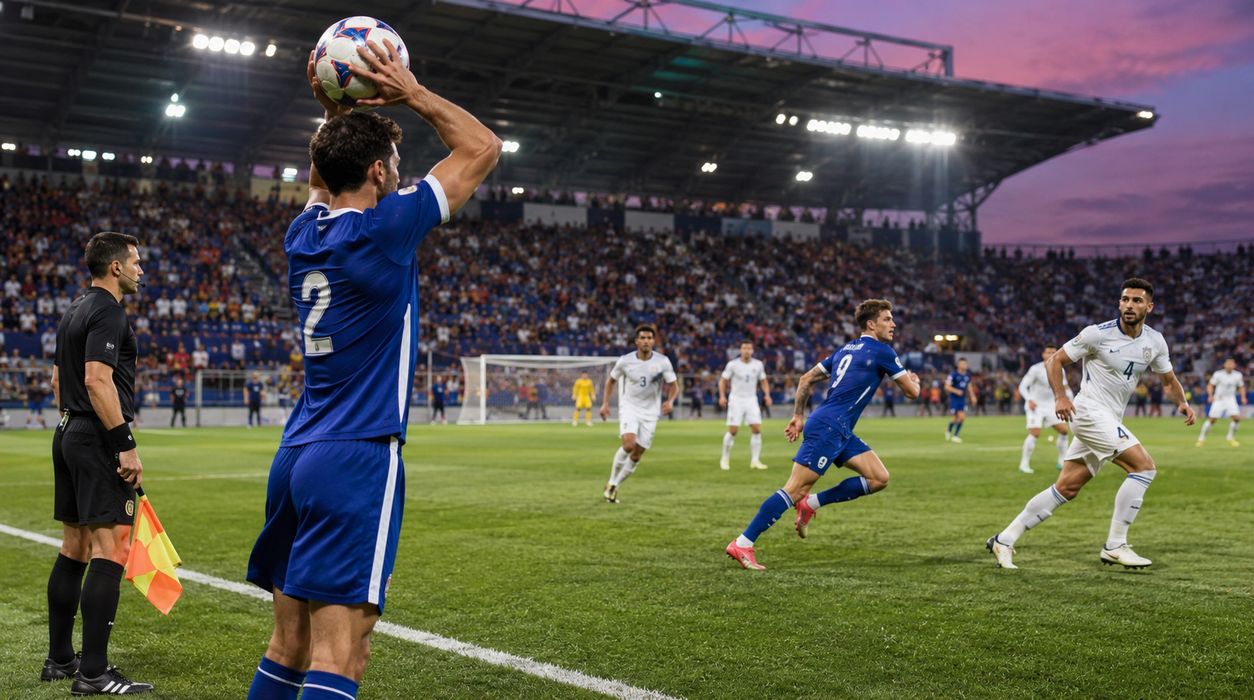
Imagine a striker standing behind the entire opposing defense. A teammate takes a long goal kick, and the striker runs onto the ball with nobody between them and the goalkeeper.
The assistant referee keeps the flag down.
The striker scores, but several defenders immediately complain about offside.
Was the goal legal?
Yes. You cannot be penalized for offside when receiving the ball directly from a goal kick, throw-in, or corner kick.
These three exceptions are specifically protected under Law 11 of the International Football Association Board (IFAB) Laws of the Game.
The rule remains in effect for the 2026–27 soccer season.
However, the exception applies only to receiving the ball directly from the restart. Once another teammate plays or touches the ball, normal offside rules can apply again.
Understanding that difference is important for players, coaches, referees, and fans.
This guide explains all three offside exceptions, provides practical match examples, and answers common questions about what happens after the ball is back in play.
Can You Be Offside From a Goal Kick?
No. A player cannot commit an offside offense by receiving the ball directly from a goal kick.
This is true even if the receiving player is standing beyond the second-last defender when the goal kick is taken.
Under IFAB Law 11: Offside, a player receiving the ball directly from a goal kick is exempt from the offside offense.
For example, imagine a goalkeeper taking a long goal kick toward a striker positioned deep in the opposition’s half.
The striker is closer to the opposing goal line than the ball and the second-last defender.
Normally, that position could lead to an offside offense if a teammate passed the ball during open play.
However, because the striker receives the ball directly from a goal kick, the referee allows play to continue.
Can You Score Directly After Receiving a Goal Kick?
Yes.
A striker can legally receive a long goal kick behind the opposing defense and score.
Consider this situation:
- The goalkeeper takes a goal kick.
- A striker waits behind the opposing defenders.
- The ball travels directly to the striker.
- The striker controls the ball.
- The striker shoots and scores.
The goal is valid, assuming no other offense occurred.
The striker’s position when the goal kick was taken does not create an offside offense.
What Happens After the First Touch?
The exception does not protect every subsequent pass.
Suppose the striker receives the goal kick legally and then passes to another teammate.
At the moment of that new pass, the referee evaluates the receiving teammate’s position under the normal offside rules.
If the second attacker is in an offside position and becomes involved in active play, an offside offense may occur.
This is why coaches often teach players that the exception applies to the direct restart, not to the entire attacking move.
Can You Be Offside From a Throw-In?
No. There is no offside offense when a player receives the ball directly from a throw-in.
This is one of the most useful exceptions for attacking teams.
A player can stand behind the opposing defense and receive a legal throw-in without being penalized for offside.
The exception applies regardless of how far forward the player is positioned.
Example: A Long Throw-In Behind the Defense
Imagine a team winning a throw-in near the halfway line.
A winger moves behind the opposition’s back line.
The player taking the throw-in launches the ball forward.
The winger receives it and runs toward the penalty area.
Although the winger was beyond the defenders when the throw was taken, there is no offside offense.
The ball came directly from a throw-in.
This creates a valuable attacking opportunity, especially when the opposition fails to recognize the exception.
Can You Score From a Throw-In?
A player who receives a throw-in can score after touching or playing the ball.
However, a goal cannot be scored directly from a throw-in without another player touching it.
Under IFAB Law 15: The Throw-In, if a throw-in enters the opponents’ goal directly, the referee awards a goal kick.
If the throw-in enters the thrower’s own goal directly, the opponents receive a corner kick.
For example, if a player throws the ball into the penalty area and a teammate heads it into the net, the goal can count.
But if the throw goes straight into the net without touching anyone, it cannot count as a goal.
These are separate rules: the offside exception and the restriction on scoring directly from a throw-in.
Does Offside Apply After a Throw-In Is Received?
Yes.
Once a teammate receives the throw-in and subsequently plays or touches the ball, normal offside considerations apply to that new play.
Imagine a striker receiving a long throw-in behind the defense.
The striker controls the ball and passes sideways to another attacker.
If that second attacker was in an offside position when the pass was made and then becomes involved in active play, the referee can penalize the offense.
The original throw-in exception does not carry over to the next pass.
Can You Be Offside From a Corner Kick?
No. A player cannot commit an offside offense by receiving the ball directly from a corner kick.
This rule allows attacking players to position themselves close to the goal without worrying about an offside decision on the initial delivery.
For example, a player can stand near the far post while a teammate delivers a corner.
If the player receives the corner directly, there is no offside offense.
However, offside can become relevant after another teammate touches the ball.
Why Is There No Offside From a Corner Kick?
A corner kick is one of the three specific restarts exempted under Law 11.
The exemption is not based on whether the player appears to be in an offside position.
Instead, the Laws explicitly state that receiving the ball directly from a corner kick is not an offside offense.
In ordinary circumstances, the ball’s position at the corner also means most attackers in the field of play cannot be nearer the opponents’ goal line than the ball.
Nevertheless, the explicit exemption removes any uncertainty about the initial corner delivery.
Can You Be Offside From a Short Corner?
Yes, after the initial corner has been received and another teammate plays the ball.
Consider this example:
- Player A takes a short corner to Player B.
- Player B controls the ball.
- Player A runs toward the goal line.
- Player B passes the ball back to Player A.
- Player A is in an offside position when Player B makes the pass.
If Player A then becomes involved in active play, the referee awards an indirect free kick for offside.
The original corner was exempt, but Player B’s return pass was not.
This example is particularly important because short-corner routines frequently involve quick exchanges between two players.
Goal Kick vs. Throw-In vs. Corner Kick: Offside Comparison
All three restarts have the same basic exemption, but their procedures and attacking possibilities differ.
| Restart | Offside From Direct Reception? | Offside After Another Teammate Plays Ball? |
|---|---|---|
| Goal kick | No | Yes, if normal offside conditions are met |
| Throw-in | No | Yes, if normal offside conditions are met |
| Corner kick | No | Yes, if normal offside conditions are met |
| Direct free kick | Yes, potentially | Yes |
| Indirect free kick | Yes, potentially | Yes |
| Normal pass during open play | Yes, potentially | Yes |
The table highlights an important distinction.
Not every restart provides an offside exemption.
Free kicks are particularly easy to confuse with goal kicks because both involve a player kicking a stationary ball.
However, their offside treatment differs.
What Is the Offside Rule in Soccer?
To understand the exceptions, it helps to understand the basic rule.
A player is in an offside position when any part of their head, body, or feet is in the opponents’ half and nearer the opponents’ goal line than both the ball and the second-last opponent.
The halfway line itself is not part of the opponents’ half for this purpose.
The hands and arms are excluded when judging offside position.
Importantly, being in an offside position is not automatically an offense.
The player must become involved in active play in one of the ways described by Law 11.
When Does an Offside Position Become an Offense?
A player in an offside position can be penalized for:
- Interfering with play by playing or touching a ball passed or touched by a teammate.
- Interfering with an opponent, such as by clearly obstructing their line of vision or challenging for the ball.
- Gaining an advantage by playing the ball after certain rebounds, deflections, or deliberate saves.
The referee normally judges the player’s position at the moment a teammate plays or touches the ball.
This timing is essential.
A striker might be onside when a pass is made and run beyond the defenders before receiving it.
That is not an offside offense merely because the striker is ahead of the defense when controlling the ball.
Likewise, a player may stand in an offside position without being penalized if they do not become involved in active play.
Does the Goalkeeper Count as One of the Last Two Defenders?
Yes.
The rule refers to the second-last opponent, not specifically the last outfield defender.
The goalkeeper normally counts as one of the opponents when determining the offside line.
However, if the goalkeeper moves far upfield, two outfield defenders might become the relevant opponents.
For a broader explanation of team positions, see SportsVell’s guide to how many players are on a soccer team.
Can You Be Offside in Your Own Half?
No.
A player cannot be in an offside position while located entirely in their own half, including on the halfway line.
This can create another interesting attacking situation.
Imagine a striker standing just inside their own half when a teammate plays a long pass.
The striker sprints forward and receives the ball behind the opposition’s defenders.
There is no offside offense because the striker was not in an offside position when the pass was made.
However, a player who was in an offside position when a teammate played the ball can subsequently move into their own half and commit an offside offense there by becoming involved in play.
The referee judges the original position and the subsequent involvement, not simply where the player eventually receives the ball.
What Happens If a Defender Touches the Ball?
A defender’s touch can affect an offside decision, but the details matter.
Under Law 11, a deliberate play by a defender can reset the offside consideration, provided it is not a deliberate save.
A mere deflection does not have the same effect.
Example: Deliberate Play
A midfielder passes toward a striker who is in an offside position.
A defender sees the ball, has time to control it, and deliberately attempts a pass.
The defender mishits the pass, sending the ball to the striker.
If the defender’s action qualifies as a deliberate play rather than a deflection or save, the striker is not penalized for gaining an advantage from the earlier offside position.
Example: Deflection
Now imagine the midfielder’s shot striking a defender’s leg unexpectedly.
The ball rebounds to the striker, who was in an offside position when the shot was taken.
If the striker plays the ball, an offside offense can occur.
The difference depends on whether the defender deliberately played the ball or merely deflected it.
These distinctions are explained in the official IFAB Law 11 guidance.
Can You Be Offside From a Goalkeeper’s Punt?
Yes.
This is different from receiving the ball directly from a goal kick.
A goal kick is a specific restart awarded after the ball crosses the goal line under the conditions described by Law 16.
A goalkeeper’s punt normally occurs during open play after the goalkeeper has caught or controlled the ball.
If the goalkeeper punts the ball toward a teammate who is in an offside position, the normal offside rule applies.
For example, a goalkeeper catches a cross and immediately punts the ball toward a striker beyond the second-last defender.
If the striker becomes involved in active play, an offside offense may be called.
The fact that the goalkeeper kicked the ball does not make it a goal kick.
That distinction is one of the most common sources of confusion.
How Do Teams Use Offside Exceptions Tactically?
The three exceptions can create useful attacking opportunities.
Long Goal Kicks
A team can position a fast striker high upfield during a goal kick.
Because the initial reception is exempt, the striker can run onto a long delivery without being penalized for offside.
Defenders must anticipate the kick and track the attacker’s movement.
Long Throw-Ins
A long throw-in can function like a dangerous cross.
Teams may send tall players into the penalty area or use a quick throw behind the defensive line.
The defending team cannot rely on an offside trap against the initial throw.
Corner-Kick Routines
Teams use corners to create space through movement, screens, and coordinated runs.
The direct corner delivery is exempt from offside.
However, short corners require more attention because the next pass can create an offside situation.
Good coaching involves teaching players when the exemption ends.
Why Defensive Organization Matters
Defenders need to recognize the type of restart before positioning themselves.
An offside trap that works during open play may be ineffective against a direct throw-in or goal kick.
Players must adjust their marking and communication accordingly.
Soccer’s 11-player structure makes coordinated movement especially important. American football also has 11 players per side, although its formations and positioning rules are entirely different. SportsVell compares those structures in how many players are on a football team.
Common Offside Mistakes Fans Make
Mistake 1: Every player behind the defense is offside.
A player must meet the positional requirements and become involved in active play. The three direct-restart exceptions also apply.
Mistake 2: You can be offside from a throw-in.
You cannot commit an offside offense by receiving the ball directly from a throw-in.
Mistake 3: A goalkeeper’s punt is the same as a goal kick.
A punt during open play is not a goal kick, so normal offside rules apply.
Mistake 4: Corner kicks are exempt throughout the entire attack.
The exemption concerns receiving the ball directly from the corner. Later passes can produce offside offenses.
Mistake 5: A defender’s touch always cancels offside.
A deliberate play may change the decision, but a deflection or deliberate save does not automatically reset offside.
Mistake 6: The goalkeeper must be the last opponent.
Offside is judged using the ball and the second-last opponent, regardless of whether that opponent is the goalkeeper.
Why Understanding Offside Matters for Young Players
Young players often learn offside as a simple instruction to stay behind the defense.
That is an incomplete explanation.
Good coaching should emphasize the timing of a teammate’s touch, the player’s position, and whether the player becomes involved in active play.
Players should also learn the three restart exceptions early.
A striker who understands the throw-in exemption may recognize a chance to run behind the defense.
A defender who understands it will avoid relying on an ineffective offside trap.
These decisions are part of learning the game rather than simply memorizing rules.
Soccer’s tactical education also differs from other sports. For example, college American football involves its own eligibility, roster, and player-development systems. SportsVell discusses one part of that environment in do college football players get paid.
Frequently Asked Questions
Can you be offside from a goal kick in 2026–27?
No. A player cannot commit an offside offense by receiving the ball directly from a goal kick. The exception is established under IFAB Law 11.
Can you be offside from a throw-in?
No. Players receiving the ball directly from a throw-in are exempt from offside. Normal offside rules can apply after a subsequent touch by a teammate.
Can you be offside from a corner kick?
No. Receiving the ball directly from a corner kick cannot constitute an offside offense.
Can you be offside from a short corner?
Yes, potentially. The initial pass from the corner is exempt, but a subsequent return pass or other teammate’s touch can create an offside offense.
Can you be offside from a free kick?
Yes. Unlike goal kicks, throw-ins, and corner kicks, free kicks do not have a general offside exemption.
Can a goalkeeper kick the ball to an offside striker?
Yes, but the type of kick matters. A direct goal kick is exempt. A goalkeeper’s punt or other kick during open play is subject to normal offside rules.
Can you score after receiving a throw-in behind the defense?
Yes. A player can receive a legal throw-in behind the defense and then score. However, the ball cannot enter the goal directly from the throw-in without another player’s touch.
Can you be offside if you are level with the second-last defender?
No. A player level with the second-last opponent is not in an offside position.
What is the punishment for offside?
The referee awards an indirect free kick to the opposing team from the location where the offside offense occurred, subject to the relevant Laws.
Does VAR review offside decisions?
In competitions using VAR, eligible offside incidents can be reviewed when connected to a reviewable situation, such as a goal or penalty decision. VAR does not review every ordinary offside call.
Final Thoughts
So, can you be offside from a goal kick, throw-in, or corner kick?
No. All three are explicit exceptions under IFAB Law 11.
A player may receive the ball directly from any of these restarts without committing an offside offense, even when positioned beyond the opposing defense.
However, the protection does not continue indefinitely.
Once another teammate plays or touches the ball, normal offside rules can apply to the new phase of play.
For players, understanding these exceptions creates attacking opportunities.
For defenders, it prevents costly positioning mistakes.
And for fans, it makes controversial-looking goals easier to understand.
The next time a striker runs behind the defense to receive a long goal kick or throw-in, remember that the assistant referee may be absolutely correct to keep the flag down.
For more explanations of soccer rules, match tactics, and other sports, visit SportsVell.