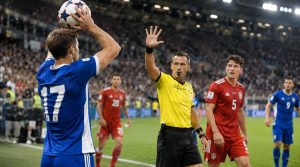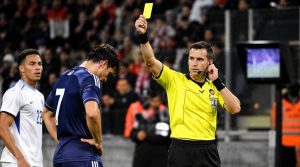
What Happens If a Goalkeeper Holds the Ball for More Than 8 Seconds? (2026–27 Rules)
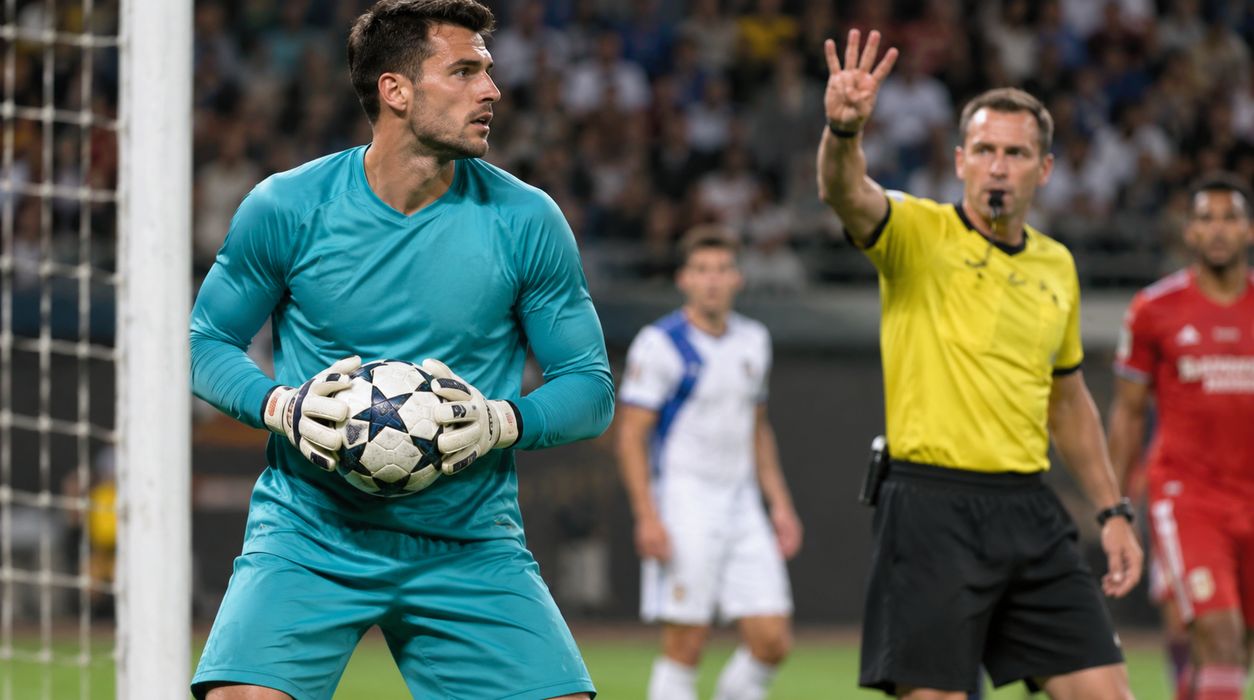
A goalkeeper catches a cross, drops to the ground, and waits for teammates to move upfield. The opposing fans start whistling. The referee raises one hand and begins counting down.
What happens if the goalkeeper refuses to release the ball?
Under the goalkeeper 8-second rule, the opposing team receives a corner kick if a goalkeeper controls the ball with their hands or arms inside their penalty area for more than eight seconds.
That is the rule for the 2026–27 soccer season. It replaced the old six-second restriction, which was difficult to enforce consistently and rarely produced the intended punishment.
The change gives referees a clearer way to deal with time-wasting while allowing goalkeepers enough time to distribute the ball safely.
However, there are important details about when the countdown begins, what counts as possession, and what happens when an opponent interferes.
Here is everything players, coaches, and fans need to know.
What Is the Goalkeeper 8-Second Rule in Soccer?
The goalkeeper eight-second rule limits how long a goalkeeper can control the ball with their hands or arms inside their own penalty area.
According to Law 12 of the IFAB Laws of the Game, a goalkeeper who exceeds that limit concedes a corner kick.
The referee decides when the goalkeeper has established clear control and starts the eight-second count.
During the final five seconds, the referee raises a hand and visibly counts down using their fingers.
This provides a clear warning before the goalkeeper is penalized.
The rule applies to normal 11-a-side soccer, where each team has one goalkeeper and ten outfield players. If you are unfamiliar with the positions, SportsVell’s guide to how many players are on a soccer team explains the basic team structure.
Quick Summary of the 2026–27 Rule
| Situation | Official Decision |
|---|---|
| Goalkeeper holds the ball for eight seconds or less | Play continues |
| Goalkeeper holds the ball for more than eight seconds | Corner kick to opponents |
| Goalkeeper bounces the ball during possession | Countdown continues |
| Goalkeeper falls to the ground while holding the ball | Countdown may already be running |
| Opponent illegally prevents the goalkeeper from releasing | Free kick to goalkeeper’s team, unless advantage applies |
| Goalkeeper repeatedly commits the eight-second offense | Yellow card may be issued |
| Goalkeeper releases the ball and handles it again before another player touches it | Indirect free kick to opponents |
The most important distinction is that the eight-second violation results in a corner kick rather than the indirect free kick associated with the former six-second rule.
Why Did Soccer Change the Goalkeeper Rule From Six to Eight Seconds?
For years, the Laws of the Game contained a six-second restriction.
In practice, enforcement was inconsistent.
Goalkeepers frequently held the ball longer than six seconds without punishment, especially when protecting a narrow lead late in a match.
Referees were reluctant to award an indirect free kick inside the penalty area for an offense that often appeared relatively minor.
That created a problem.
The rule existed to prevent time-wasting, but its penalty was severe enough that referees rarely applied it.
The International Football Association Board (IFAB) introduced a different approach for the 2025–26 season.
Instead of six seconds followed by an indirect free kick, the updated rule allowed eight seconds and introduced a corner-kick sanction.
The longer limit gave goalkeepers a more realistic opportunity to find a teammate. The new punishment was also easier to administer.
The change remained part of the Laws for 2026–27.
What Did the Trials Show?
Before introducing the change, IFAB tested the approach in more than 400 competitive matches in England, Italy, and Malta.
Its published trial summary reported that:
- Across 179 matches in Malta, no goalkeeper exceeded the limit.
- Across 160 matches in England and 80 in Italy, there were five violations in four matches.
- About 72.5% of surveyed participants felt the game became faster.
- About 87.6% considered the referee’s visual countdown helpful.
These results suggested that a visible warning could discourage delays without requiring referees to award corner kicks frequently.
IFAB’s official goalkeeper possession background and Q&A explains the reasoning and trial findings.
When Does the Eight-Second Countdown Start?
The countdown starts when the referee is satisfied that the goalkeeper has clear control of the ball with their hands or arms.
It does not necessarily begin when the goalkeeper stands up or starts looking for a teammate.
Consider a common match situation.
A goalkeeper catches a weak shot and immediately falls to the ground, even though no opponent is challenging them.
They remain there for three seconds before standing up.
Those three seconds can count toward the eight-second limit.
The goalkeeper cannot automatically gain extra time by staying on the ground.
The same principle applies when a goalkeeper catches a cross, gathers a loose ball, or controls a shot.
Once clear hand or arm control has been established, the clock begins.
What Counts as Goalkeeper Control?
IFAB identifies several situations in which the goalkeeper is considered to control the ball.
These include:
- Holding the ball between both hands or arms.
- Holding the ball between a hand or arm and another surface, such as the ground or body.
- Holding the ball in an outstretched open hand.
- Bouncing the ball on the ground.
- Throwing the ball into the air while retaining control.
The countdown continues during these actions.
For example, bouncing the ball three times does not reset the eight seconds.
Similarly, tossing the ball slightly upward and catching it again does not create a new possession period.
These actions remain part of the same controlled possession.
How Does the Referee’s Five-Second Countdown Work?
The referee does not need to display all eight seconds.
Instead, the referee visually counts down the final five seconds.
When approximately five seconds remain, the referee raises a hand and begins indicating the remaining time with their fingers.
The visible signal serves two purposes.
First, it tells the goalkeeper that they must release the ball soon.
Second, it allows teammates to recognize that they need to move into useful passing positions.
A goalkeeper preparing a long distribution might otherwise wait for defenders and midfielders to spread across the field.
The countdown encourages that movement to happen quickly.
Is There a Stadium Countdown Clock?
No separate stadium clock is required by the rule.
The referee determines when control begins and monitors the time.
The referee’s judgment is therefore central to enforcement.
Fans should not assume that a television graphic or a stopwatch started at the moment of the catch necessarily matches the referee’s assessment.
The official decision depends on when the referee considers the goalkeeper to have established control.
What Happens If a Goalkeeper Holds the Ball for Nine Seconds?
If the goalkeeper controls the ball for more than eight seconds, the referee awards a corner kick to the opposing team.
Imagine a goalkeeper catching the ball in the 87th minute while their team leads 2–1.
They hold it while walking toward the edge of the penalty area.
The referee begins the visible countdown.
The goalkeeper continues waiting, and the eight-second limit expires.
The referee stops play and awards the opponents a corner kick.
The attacking team now receives a chance to deliver the ball into the penalty area.
The goalkeeper’s attempt to protect a narrow lead has instead created an attacking opportunity for the opposition.
Which Side Is the Corner Taken From?
The corner kick is taken from the side of the field closest to the goalkeeper’s position when the offense is penalized.
For example, if the goalkeeper is near the right side of their penalty area, the corner will generally be awarded from that side.
This is not a free choice for the attacking team.
The restart location is determined by the goalkeeper’s position at the time of the violation.
Does the Goalkeeper Receive a Yellow Card?
Not automatically.
A goalkeeper who exceeds the eight-second limit ordinarily concedes a corner kick without receiving a yellow card.
However, repeated violations can lead to disciplinary action.
That distinction matters because many fans assume every time-wasting offense automatically results in a booking.
The eight-second offense has its own specific restart and disciplinary guidance.
A first violation does not automatically produce a caution.
If the goalkeeper repeatedly commits the same offense, the referee may caution them.
Other forms of misconduct, including excessive delaying of a restart, may also be dealt with under the relevant disciplinary provisions.
The key point is that the corner kick is the standard punishment for the initial eight-second possession offense.
Can a Goalkeeper Reset the Eight Seconds by Bouncing the Ball?
No.
Bouncing the ball does not restart the countdown.
A goalkeeper might catch the ball, walk forward, bounce it twice, and then prepare a long kick.
All of that remains one continuous period of hand or arm control.
The same applies when the goalkeeper throws the ball into the air and catches it again.
A goalkeeper cannot create unlimited possession by repeatedly changing how the ball is held.
What If the Goalkeeper Drops the Ball?
Once the goalkeeper genuinely releases the ball from hand or arm control, the eight-second possession restriction no longer applies.
However, another rule becomes important.
If the goalkeeper releases the ball and then handles it again before another player touches it, the referee awards an indirect free kick to the opponents.
For example, a goalkeeper places the ball on the ground and begins dribbling.
An opposing striker approaches.
The goalkeeper cannot simply pick the ball up again to escape the pressure unless another player has touched it in the meantime.
Releasing the ball changes the situation, but it does not give the goalkeeper unlimited opportunities to regain hand possession.
What If an Opponent Blocks the Goalkeeper From Releasing the Ball?
The eight-second rule does not allow attacking players to interfere illegally with a goalkeeper’s distribution.
Suppose a goalkeeper catches a cross and prepares to throw the ball.
An attacker deliberately stands in the goalkeeper’s path and prevents the release.
If the attacker causes an offense by preventing the goalkeeper from releasing the ball, the referee can award a free kick to the goalkeeper’s team, unless advantage can be played.
Under IFAB’s official guidance, the restart depends on the nature of the interference.
If the attacker makes prohibited contact, the restart is a direct free kick.
If the attacker illegally prevents the release without contact, the restart is an indirect free kick.
The goalkeeper should not be punished for a delay caused by an opponent’s illegal interference.
This protects the goalkeeper’s right to distribute the ball without obstruction.
Does the Eight-Second Rule Apply Outside the Penalty Area?
No.
The specific eight-second possession rule applies when a goalkeeper controls the ball with their hands or arms inside their own penalty area.
Outside that area, a goalkeeper generally has the same restrictions on deliberate handball as other players.
A goalkeeper cannot legally carry the ball beyond the penalty-area boundary while maintaining hand or arm contact.
If a goalkeeper commits a handball offense outside the penalty area, the referee applies the relevant handball rules rather than the eight-second possession restriction.
The location and nature of the offense determine the restart and any disciplinary action.
How Is the Eight-Second Rule Different From Other Soccer Time Limits?
Soccer has several rules designed to maintain the pace of play.
The goalkeeper possession limit is one example.
For 2026–27, IFAB also introduced additional measures to address delayed throw-ins, goal kicks, substitutions, and certain injury-related interruptions.
The official IFAB announcement on 2026–27 match-flow measures explains these changes.
A major distinction is that the goalkeeper’s eight-second possession countdown concerns a ball already controlled with the hands during play.
A delayed goal kick or throw-in concerns a restart before the ball is back in play.
These are different situations with different countdown procedures.
For readers comparing how sports regulate time, SportsVell’s article on how long a football game lasts explains how American football uses a game clock and play clock rather than soccer’s continuous match clock.
Both sports try to control delays, but their timing systems work differently.
How Does the Rule Affect Goalkeeper Tactics?
The rule changes more than the referee’s decisions.
It also influences how teams organize themselves after regaining possession.
1. Faster Distribution
Goalkeepers must make decisions sooner.
A goalkeeper who catches the ball cannot wait indefinitely for the perfect long pass.
They need to identify available teammates and choose a distribution method before the limit expires.
2. Better Defensive Positioning
Defenders must recognize when their goalkeeper has secured possession.
Center backs may move wider, while fullbacks create passing angles.
Midfielders also need to position themselves quickly.
A team that organizes efficiently can move the ball out of its defensive third without unnecessary pressure.
3. More Opportunities for High Pressing
Opponents may use the countdown to prepare their pressing shape.
However, they cannot illegally prevent the goalkeeper from releasing the ball.
A well-organized attacking team can position players to challenge the next pass rather than obstruct the goalkeeper.
4. Less Time-Wasting Late in Matches
Teams protecting a lead sometimes try to reduce the number of attacking opportunities available to their opponents.
Holding the ball for too long becomes a risky strategy when the penalty is a corner kick.
A late corner can create a dangerous scoring chance.
Consequently, the rule encourages goalkeepers to manage possession without unnecessary delays.
5. More Importance on Communication
Goalkeepers and defenders need clear communication.
A quick instruction from the goalkeeper can help a teammate move into space.
Good communication reduces hesitation and makes it easier to release the ball before the countdown ends.
How Does Soccer’s Timing System Compare With Other Sports?
Soccer uses a running match clock, with additional time added for certain interruptions.
That makes it different from many major American sports.
In the NFL, for example, the game clock stops for numerous events, while a separate play clock controls the time between snaps.
SportsVell explains this distinction in its guide to how many players are on an American football team, which also outlines the different on-field structure of the sport.
Field dimensions create another interesting comparison.
Soccer fields can vary within the limits established by the Laws of the Game, while American football uses standardized field dimensions at its major levels.
For a comparison, see SportsVell’s explanation of how many acres are in a football field.
Although these sports have different rules and playing areas, they share an important goal: preventing one team from gaining an unfair advantage through unnecessary delays.
Common Mistakes About the Goalkeeper Eight-Second Rule
Several misunderstandings continue to circulate among soccer fans.
Mistake 1: The goalkeeper still has only six seconds.
The former six-second rule was replaced by the eight-second limit beginning in 2025–26.
Mistake 2: The punishment is an indirect free kick.
The standard restart for exceeding the eight-second hand-possession limit is now a corner kick.
Mistake 3: The countdown starts when the goalkeeper stands up.
It begins when the referee determines that clear hand or arm control has been established.
Mistake 4: Bouncing the ball restarts the countdown.
Bouncing remains part of the same possession.
Mistake 5: Every violation results in a yellow card.
A caution is not automatic. Repeated violations may lead to a booking.
Mistake 6: Attackers can block the goalkeeper until eight seconds expire.
Illegal interference with the goalkeeper’s release can result in a free kick for the goalkeeper’s team.
Understanding these differences makes controversial decisions easier to follow.
Frequently Asked Questions
How long can a goalkeeper hold the ball in 2026–27?
A goalkeeper can control the ball with their hands or arms inside their own penalty area for up to eight seconds. Holding it for more than eight seconds results in a corner kick to the opponents.
What happens if the goalkeeper holds the ball for nine seconds?
If the referee determines that the eight-second limit has been exceeded, the opposing team receives a corner kick from the side closest to the goalkeeper’s position when penalized.
Is the goalkeeper eight-second rule new?
The rule was introduced for the 2025–26 season and remains in effect for 2026–27. It replaced the previous six-second restriction.
Does the referee have to warn the goalkeeper?
The referee visually counts down the final five seconds with a raised hand. This is part of the rule’s prescribed procedure.
Can the goalkeeper bounce the ball to gain more time?
No. Bouncing the ball does not interrupt or restart the eight-second count.
Can a goalkeeper be sent off for holding the ball too long?
A single eight-second violation does not automatically result in a red card. Repeated violations can result in cautions, and a player who accumulates two yellow cards is sent off.
Does the rule apply in the FIFA World Cup?
Yes. The Laws of the Game apply to FIFA competitions, subject to the applicable competition regulations. The eight-second goalkeeper possession restriction is part of those Laws.
Can a goalkeeper put the ball down and pick it up again?
Generally, once the goalkeeper has released the ball into play, they cannot handle it again before another player touches it. Doing so results in an indirect free kick to the opponents.
Final Thoughts
The goalkeeper eight-second rule is designed to make soccer faster, fairer, and easier to officiate.
For the 2026–27 season, the essential rule is straightforward: a goalkeeper who controls the ball with their hands or arms inside their penalty area for more than eight seconds concedes a corner kick.
The referee determines when possession begins and visibly counts down the final five seconds.
Bouncing the ball does not reset the timer, and falling to the ground does not automatically delay its start.
Goalkeepers must distribute the ball efficiently, while opponents must respect their right to release it without illegal interference.
For fans, the rule offers a clearer explanation of why a referee may suddenly award a corner kick when the ball never crossed the goal line.
For players and coaches, it reinforces a simple principle: controlling possession is important, but keeping the game moving matters too.
For more soccer and sports explanations, explore the latest guides on SportsVell.